I’m not sure how I feel about the fact that so many people (myself included) have their first experience learning about a specific animal through anthropomorphic cartoon characters. On the one hand, I appreciate the utilization of real-world animals in storytelling because it hopefully makes people appreciate and respect those animals more as they now play a role in our favorite shows or books, and we feel connected to them. But on the other hand, the real-world wonderment and awe of the evolutionary traits and adaptations of the animals portrayed often take a back seat to the plane flying, sword swinging, and fedora-wearing characters of the fictionalized animals. I’m not saying that everyone around the world will or should have firsthand experience with all living creatures….that’s impossible and potentially deadly. But when the animals share your habitat and ecosystem, it is kind of sad that our introduction to them is not from the natural world but rather from a television set, or nowadays a smartphone or tablet.
I say this begrudgingly, but even I, until recently, was not all that intrigued by chipmunks in the slightest, especially after having grown up watching “Chip n Dale Rescue Rangers.” When your first exposure to chipmunks involves one wearing a Hawaiian shirt performing slapstick comedy and the other one wearing a leather bomber jacket fighting off a myriad of bad guys…the real-world ground squirrels just don’t live up to the hype. But my daughter, who also experienced her first exposure to chipmunks via television, has decided they are her spirit animal. She has a running bit where she will bend her arms up with her hands hanging mid-chest and make the nibbling sounds and gnawing motions with her mouth and refers to herself as “Chippy.” She has since seen many chipmunks in forested areas around the city: Forest Park, Willmore Park, the Saint Louis Zoo, and often in the English Garden at the Missouri Botanical Gardens.
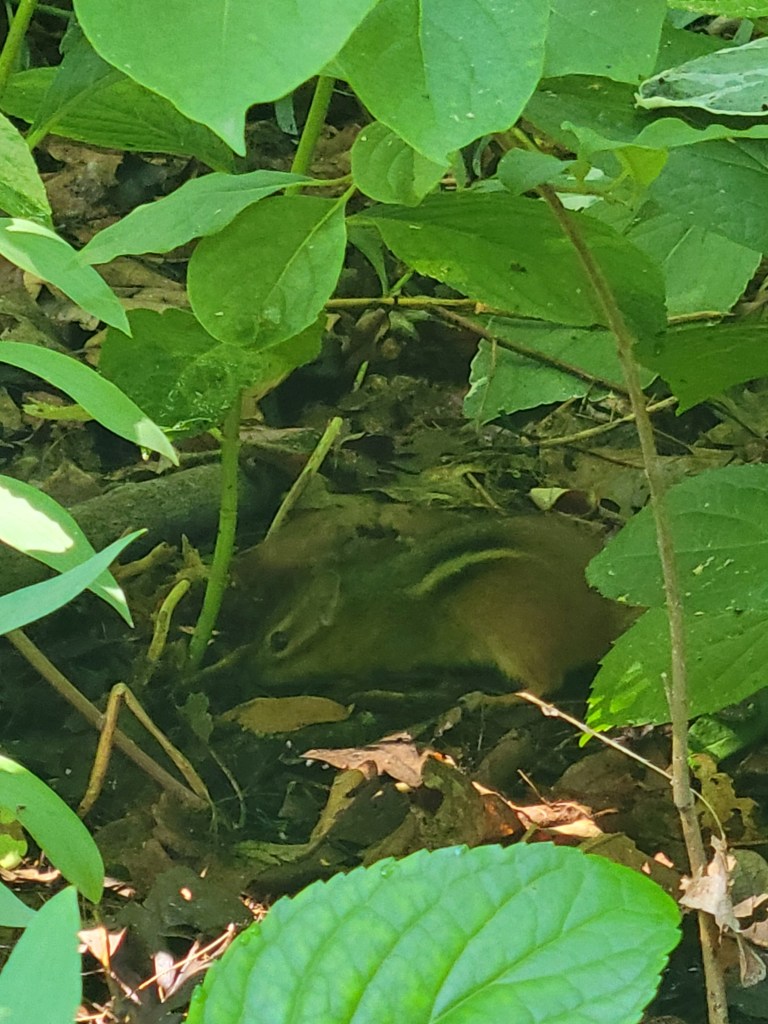
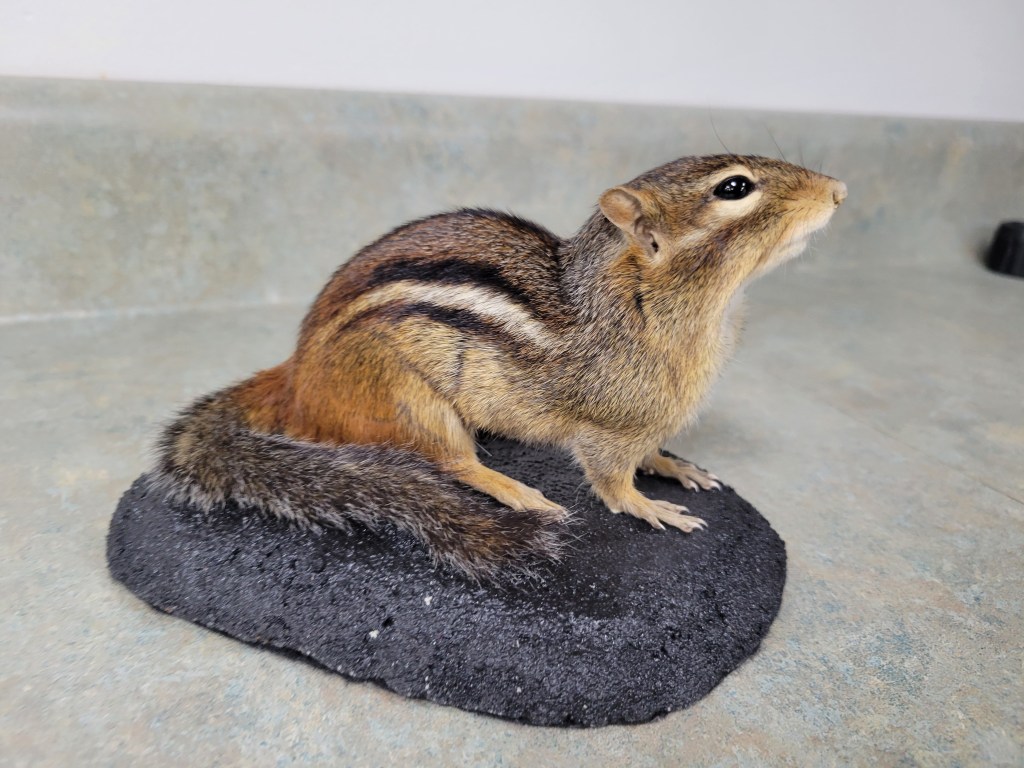
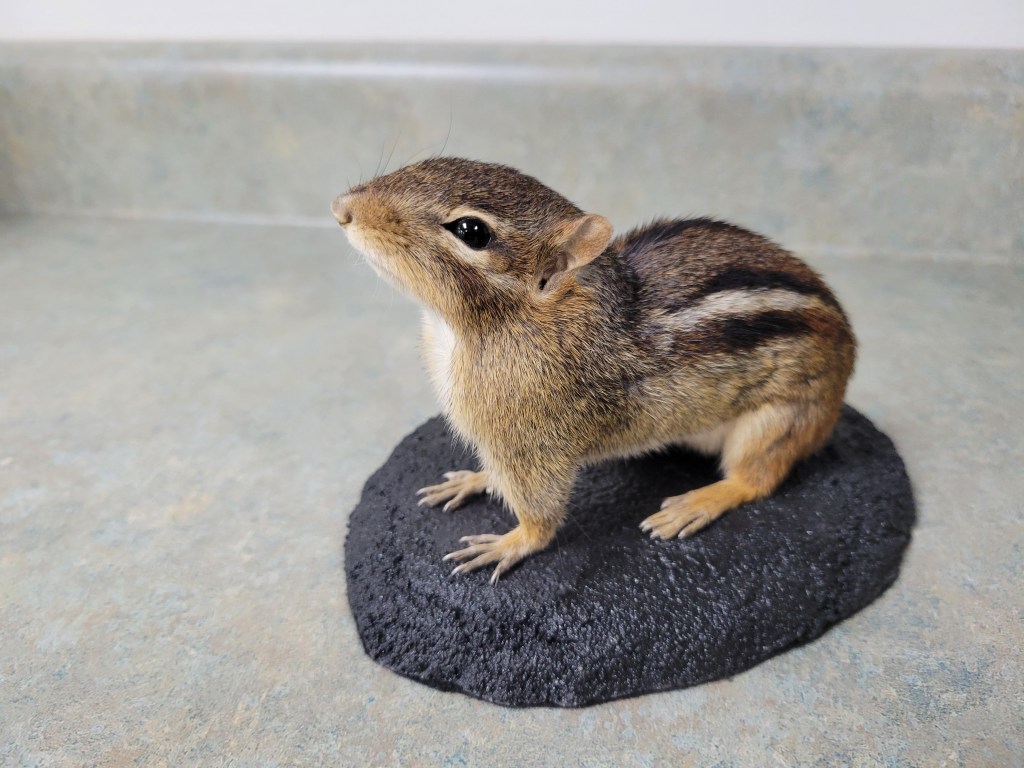
Missouri has only one species of chipmunk: the Eastern Chipmunk (Tamias striatus), which can be found throughout the state, although populations are larger in the Ozarks. Adult chipmunks are small creatures tipping the scales at only 2-5 ounces and reaching max lengths of about 12 inches, with 2-4 of those inches being tail. Eastern Chipmunks have rusty reddish-brown fur on their upper body overlayed with 5 dark brown (almost black) stripes running down their backs, contrasting with very light brown stripes. These stripes end as the tail, which is short, semi-flattened, and covered in hair but not bushy. There is also a tawny stripe on each side of the face, starting behind their whiskers and ending at their ears. Their bellies and lower body fur is much lighter and is what I would call an off-white tan mix.
The Eastern Chipmunk can be found exclusively in North America, and their range spans from the Midwest all the way to the East Coast and up into Canada. They are diurnal creatures, meaning they are most active during the day and sleep at night. They spend those hours awake working overtime to prepare their winter stash of nuts. Acorns are highly prized by chipmunks, and they can gather over 150 nuts in one day! We have all seen the images of Chipmunks stuffing their cheeks with food, but what I didn’t know until doing research for this article is that they actually have cheek pouches. Look, I heard about their cheek pouches before, but I just thought it meant they have extra stretchy cheek skin. Apparently, they have literal pouches! Let’s paint the picture: on the side of their faces, right next to their mouth opening, there is a little hole that leads to a fur-lined pouch that acts like a flesh shopping bag. Crazier still is how much they can actually store in those cheek pouches…up to a dozen acorns…now that’s nuts!!! Despite their love of nuts, they are not picky eaters and are also fond of insects, bulbs, berries, and even bird eggs; it seems they are really just protein junkies.
They are excellent winter preppers and have multiple cache spots where they store food for winter. Although chipmunks prepare for winter in the spring and summer, their caching ramps up once the leaves start to fall and Starbucks rolls out those seasonal pumpkin lattes. When winter rolls around, chipmunks get cozy in their tunnels and hibernate…maybe. According to the sources I’ve read, it appears some chipmunks will hibernate, some stay active all winter, and some come out and poke around if it isn’t too cold, then go back to hibernating. This is not region-specific but more individual chipmunk behavior, as these differences in behavior have been observed in the same locations.
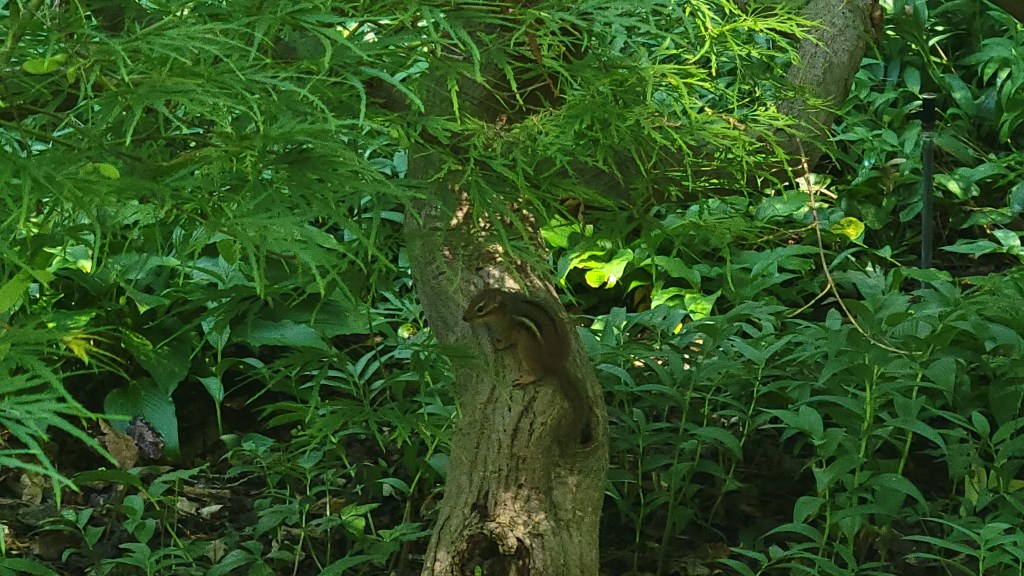
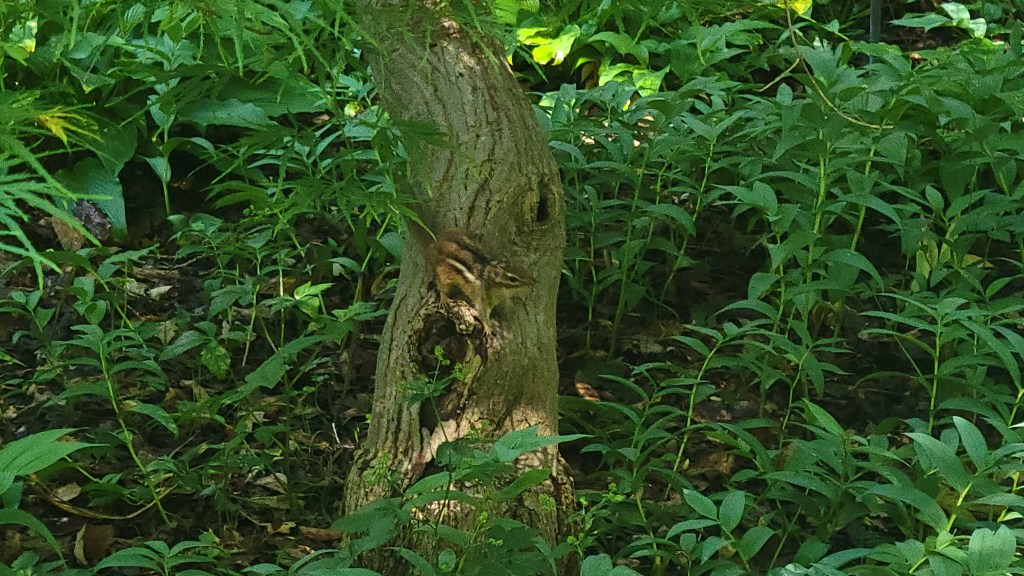
Chipmunks prefer to live in forest borderlands and are fond of fallen trees, hollowed logs, rocky cliffs, and even piles of junk. These environments provide plenty of places not only to hide food but also provide coverage for their nesting and bedding chambers. Chipmunks will build their homes underground, with some tunnels extending up to 20 feet before reaching their nesting chamber. Although chipmunks are solitary by nature and are highly territorial, they will guard their tunnel entrances and will make a chirping sound as a warning to other chipmunks. Despite being territorial and wanting nothing to do with another member of their species until mating season occurs, they still let out warning and alarm sounds that differ depending on the threat. For example, when there is an aerial threat, they make a high-pitched and fast chucking sound, whereas if the predator is a terrestrial one, they make a softer squeaking sound with less frequency; you can hear these calls here. It has also been observed that birds often pay close attention to the calls of chipmunks as well to avoid predation themselves.
As mentioned briefly, chipmunks only tolerate each other when pheromones…I mean love is in the air. Mating season begins in early spring, and the gestation period is roughly a month long. The first batch of young is born around late April and early May, and a second batch is born in late summer. Most females will birth two litters a year, each litter containing between 1-8 young. The young will stay with their mother in the den for about 5 weeks before venturing out on their own. This seems like the appropriate point in this article to sprinkle a bit of nature trivia knowledge, so here you go: a group of chipmunks is called a “scurry.” If chipmunks can avoid predation, they can expect to live up to about 5 years in the wild before making their journey to the great acorn stash in the sky.
Chipmunks play a very important part in the ecosystem; for starters, they are a great source of protein for the predators that can catch them. And those tunnels that they dig aerate the soil, which helps with all the heavy rainfall we have had lately. And lastly, they help regrow certain plants and trees, thanks to their eating and hoarding habits. I will admit that once again, I have grown to appreciate another animal I never really thought about. It isn’t that I didn’t respect them or know their value, but I just never really cared to learn about them. Having children has opened my eyes to seeing the world through their eyes, which are far less hardened and more in tune with what actually matters in the world than my old peepers are.
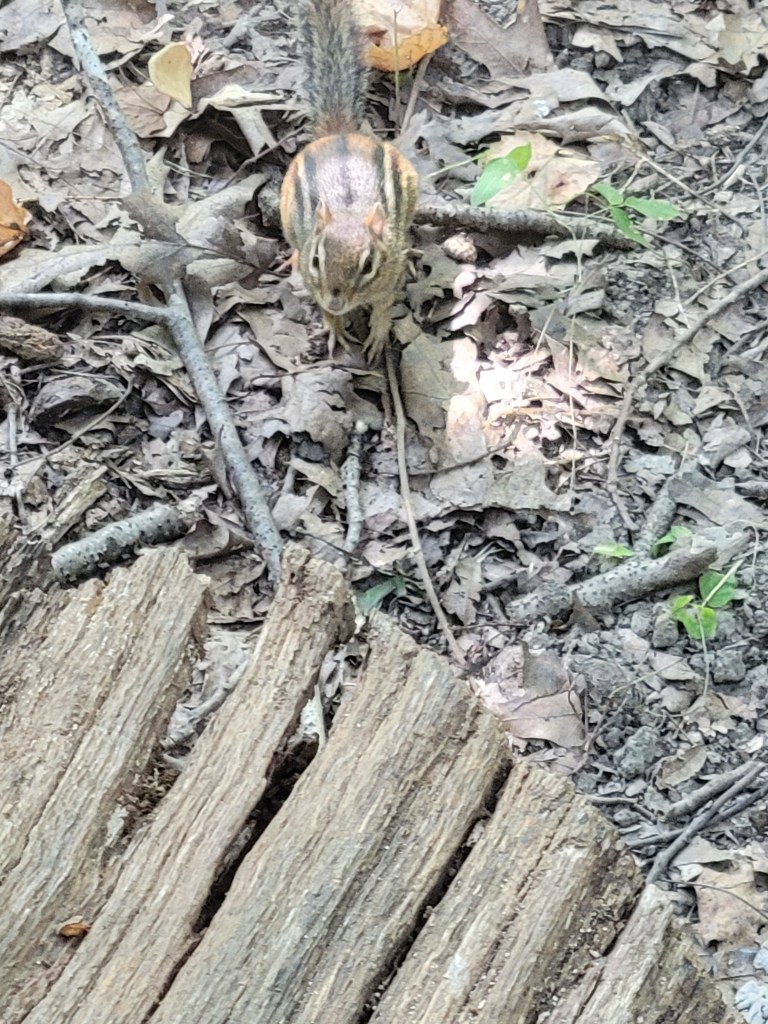
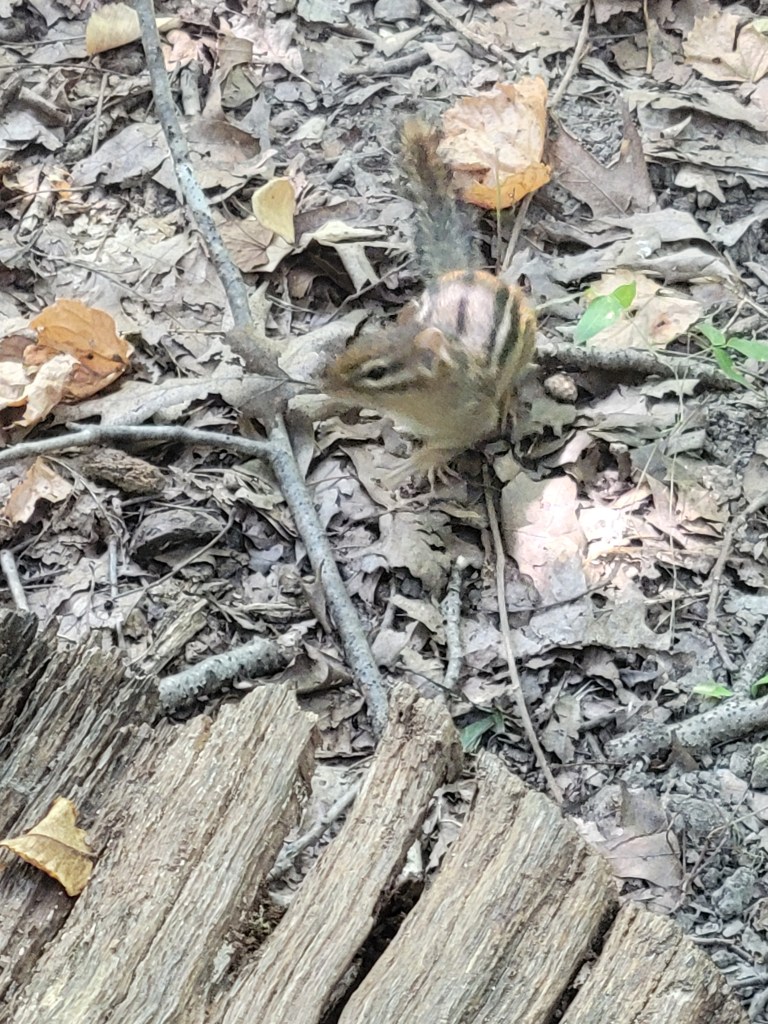
When my daughter was about 3 years old, we were walking around the block getting our exercise in, and she started to cry. She was in full-blown tears, and I asked what was wrong. She pointed across the street to a tree that had been recently cut down, and the larger logs were set by the sidewalk waiting to get picked up. She then looked at me with those water-filled blue eyes and said, “They hurt that tree…where will the animals live!?” I knelt down and gave her a hug, reassuring her everything would be okay and the squirrels, birds, and bugs would find a new home. All the while, I couldn’t help but recognize how numb we as humans become with age. Sure, the tree was dying, and it had to go, no questions about it, but there are real-life implications of cutting down the tree on the animals that called it home.

My daughter, my little Chippy, turned 8 today, and she has not lost any of that “feeling” or “connectedness” to the real world; if anything, it has only gotten stronger for her. She loves observing the Carpenter Ants that live around the tree in the front yard. She enjoys going outside and snuggling on summer nights with her brother and me while we watch Brown Bats fly around and stare at constellations. She screams with excitement when the Lightning Bugs come out each year and rushes outside to watch them and respectfully catch and release them. It’s amazing how much her growing has helped me grow in these last 8 years, and words can never convey how grateful and blessed I am to have such an awesome Chippy in my life. With all of that being said, even though real-life chipmunks don’t crack whips and wear cool jackets, they are still pretty dang awesome, and they are, for me, a reminder to see with my childhood eyes more often.
References:
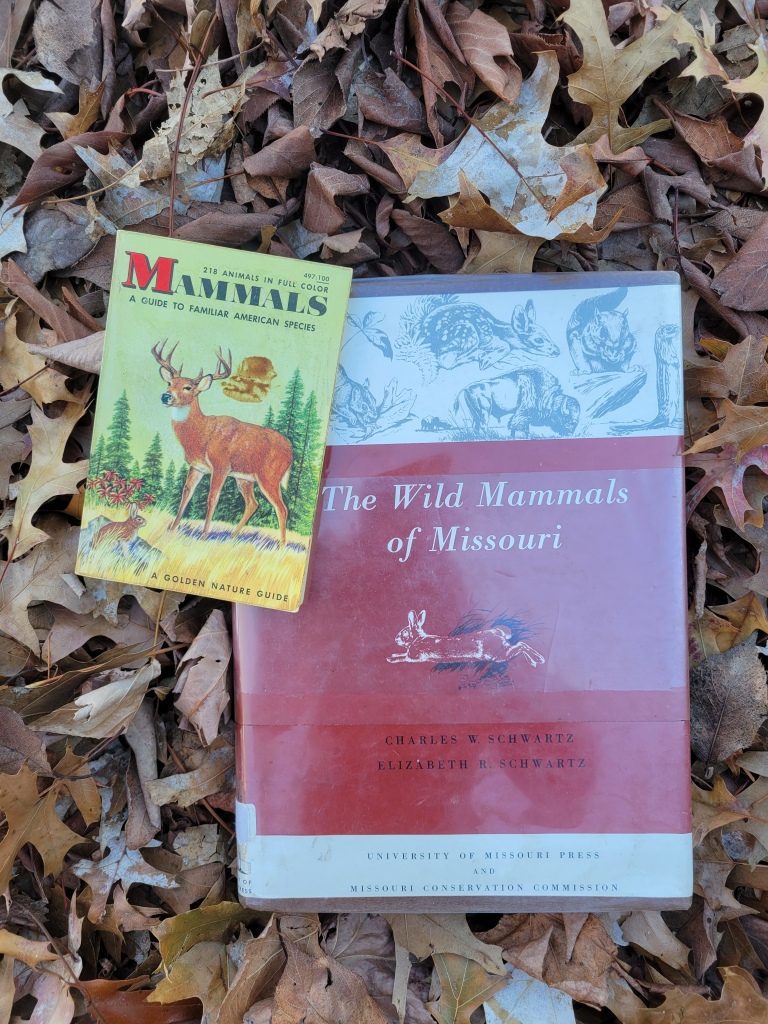
Zim, H. and Hoffmeister, D., Mammals A Guide To Familiar American Species, (1955), Simon and Schuster., New York, New York
Shwartz, C. W. and Schwartz, E. R., THE Wild Mammals of Missouri, (1956), Smith-Grieves Co., Kansas City, Missouri
https://mdc.mo.gov/discover-nature/field-guide/eastern-chipmunk


 Flora Fauna STL
Leave a reply to Anonymous Cancel reply