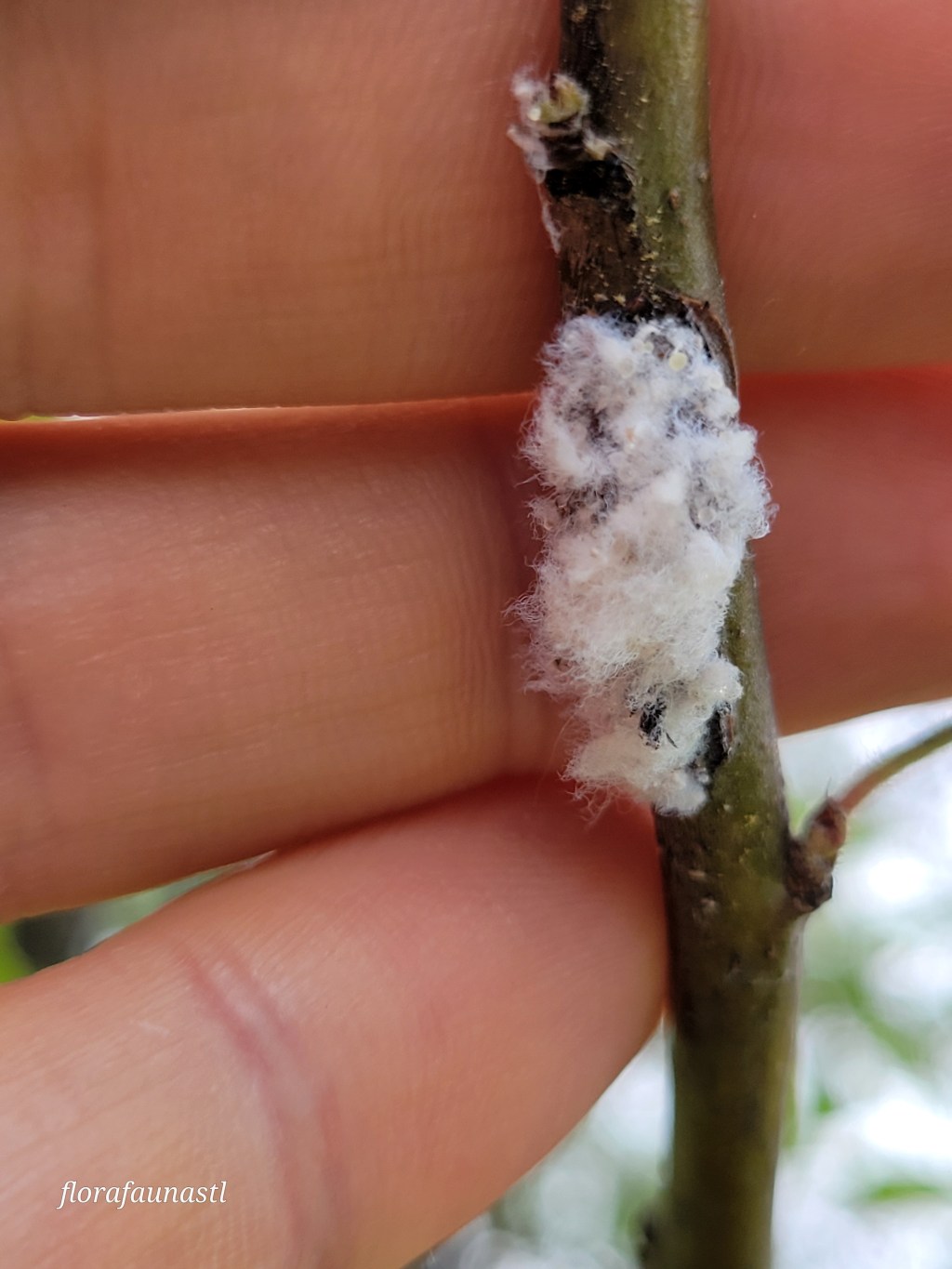
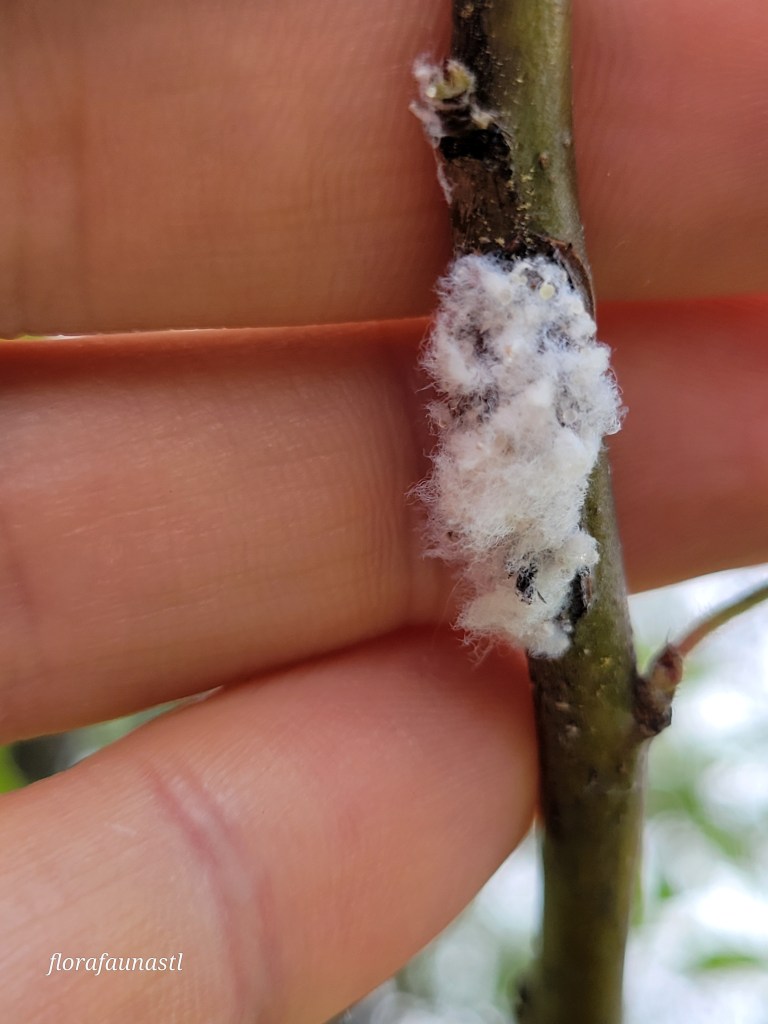
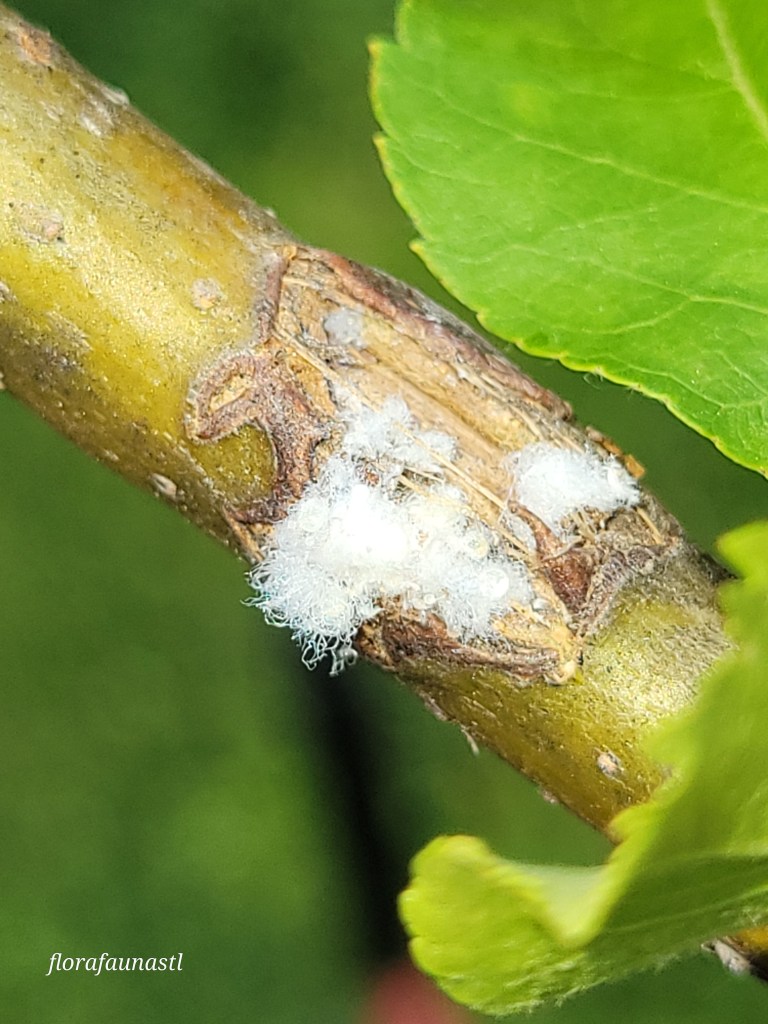
Normally when the wife says “Hey baby, what the hell is this!?” it’s in reference to a damp used towel heading for Mildew Town that I left out on the counter or something else along those lines. However, this particular utterance had a hint of concern, plus we were outside and there were no counters for old towels to fester. What she was actually worried about was one of our apple trees and the white mold that was growing all over the branches. I took a closer look and determined the white fuzzy substance was not mold, but seemed to be around some kind of insect. At first glance, I thought this might be Mealy bugs or Scale bugs but whatever it was, the Ladybug larvae were making a feast of it. I scraped some off and took it over to my microscope and quickly realized that this was not a colony of Scale bugs nor were they Mealy bugs. No, this white mass actually contained little salmon and brown-colored individuals moving within it, and they were anatomically different than Scale bugs or Mealy bugs. The fuzzy mass I collected seemed to contain different instars (developmental stages of arthropods) of whatever was living within this cotton-like mess. So off to the books I went, searching for the identity of this strange and prolific insect.

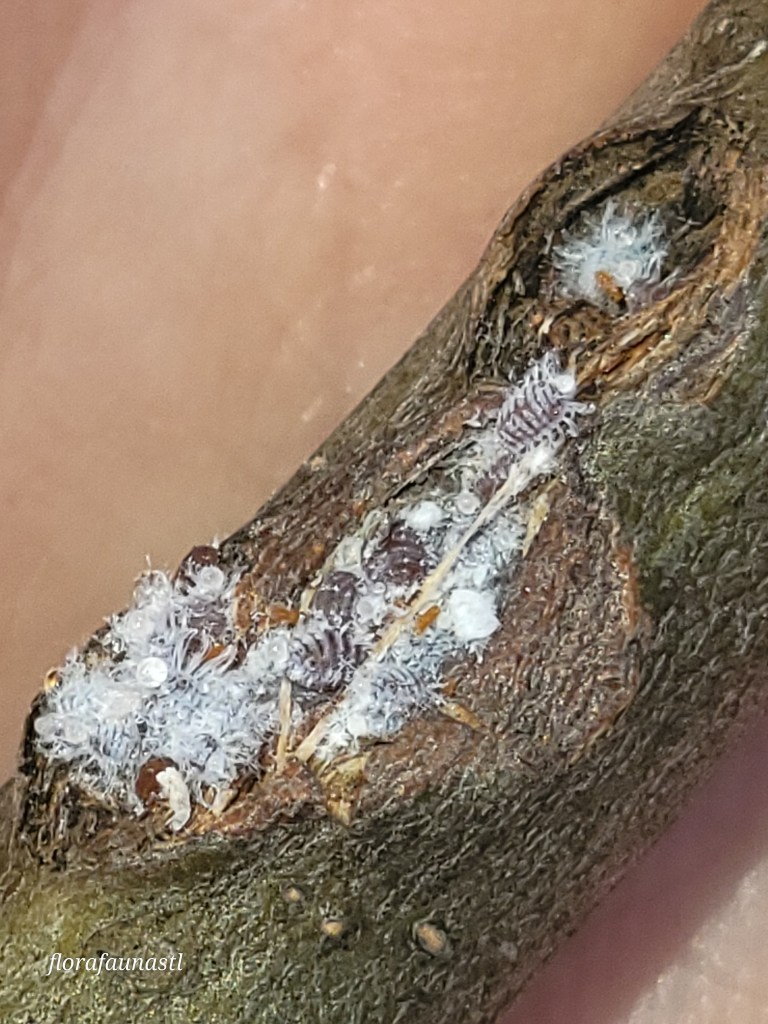
If this were a film, now would be the moment where the montage plays out to the tune of The Avalanches “Frontier Psychiatrist.” It would contain clips of me flipping through books, taking sips of coffee, pulling my hair as I throw books across the room, staring at my reflection in the window while it rains, my wife asking me to come to bed, me looking in the microscope screaming “What are you!!!!”, and my daughter telling me she doesn’t even know who I am anymore as tears stream down my face. Ultimately, most of that didn’t happen, but I was only able to surmise from my research that the insects may be some type of aphid, although I had never seen ones produce this strange white substance. So to the internet I turned, and wouldn’t you know it, this is indeed a type of aphid and one that has specific host trees (a lot of aphids are actually pretty picky) and it is appropriately named Woolly Apple Aphid (Eriosoma lanigerum), also called American Blight. I had so many questions and so much to learn about aphids in general, but about these little beady-eyed Woolly Apple Aphids in particular.
For those not in the know, aphids are part of the Hemiptera order which contains roughly 80,000 species of insects (including cicadas) which are considered true bugs. All members of this order have piercing and sucking mouth parts, which the aphids put to use shamelessly. Aphids use their tiny yet sharp mouth parts to pierce into the leaves, stems, trunks, and branches of plants and proceed to suck up that sweet, sweet sap. They do so in such huge quantities that their bodies swell up and secrete the abundance of fluids they drink, producing what is called honeydew. The honeydew looks like small spherical droplets and is a mix of the sweet sap and waste from the aphid’s body. Honeydew is very sweet and very sticky and is a delicacy sought after by many insects including wasps, bees, and ants. Fun fact alert, ants will actually farm aphids by guarding them from predators and moving the aphids to more prolific plants; in exchange, they “milk” the aphids for their honeydew. Some species of aphids have gotten so accustomed to being herded by ants they won’t actually produce honeydew unless the ants are there to stroke them, but that’s a story for a different day.

If the conditions are just right, some aphids can produce more than their body weight in honeydew per hour! This ridiculous amount of sticky byproduct is theorized to be one of the reasons for the Woolly Apple Aphids’ fuzzy appearance, as it helps to catch and redirect the honeydew droplets. Another reason for the evolutionary fuzz (which is actually a wax that is produced from the abdomen of the adults) is that it is a form of camouflage; at first glance, a colony of these aphids looks like mold to would-be predators. The fuzz also aids in their potential travel, as it is speculated they may be able to catch a ride in the breeze much like dandelion seeds do. Having observed them under the microscope, though, I will say it seems like they are kind of stuck in this mess of sticky, waxy wool and it looks itchy.
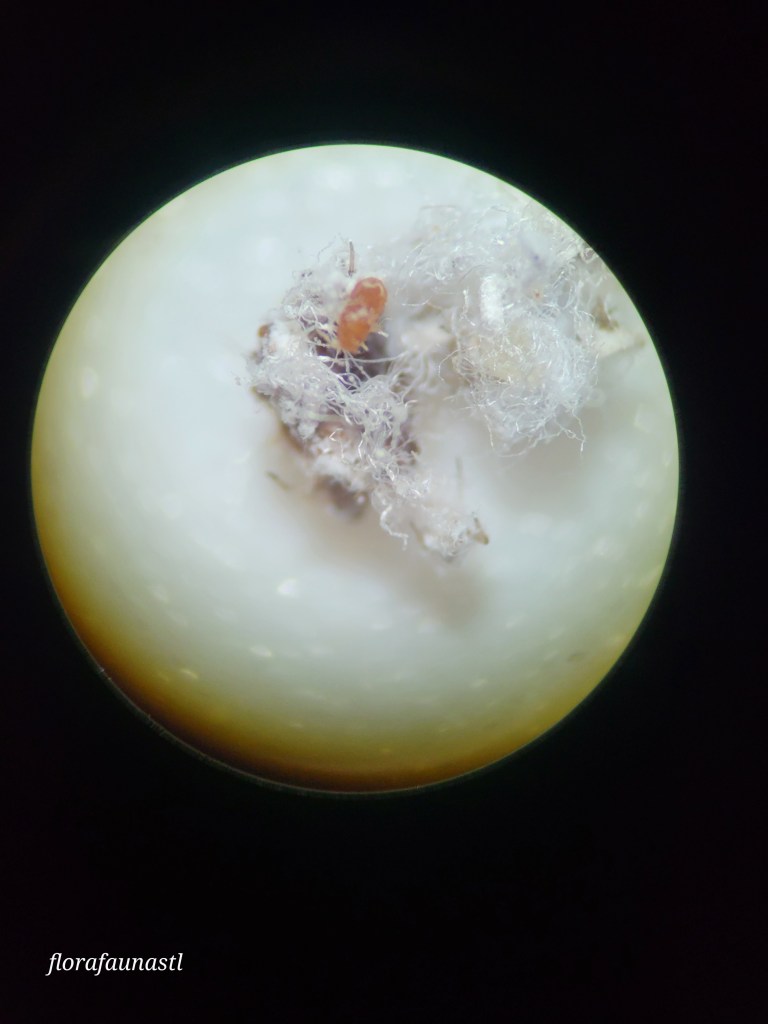
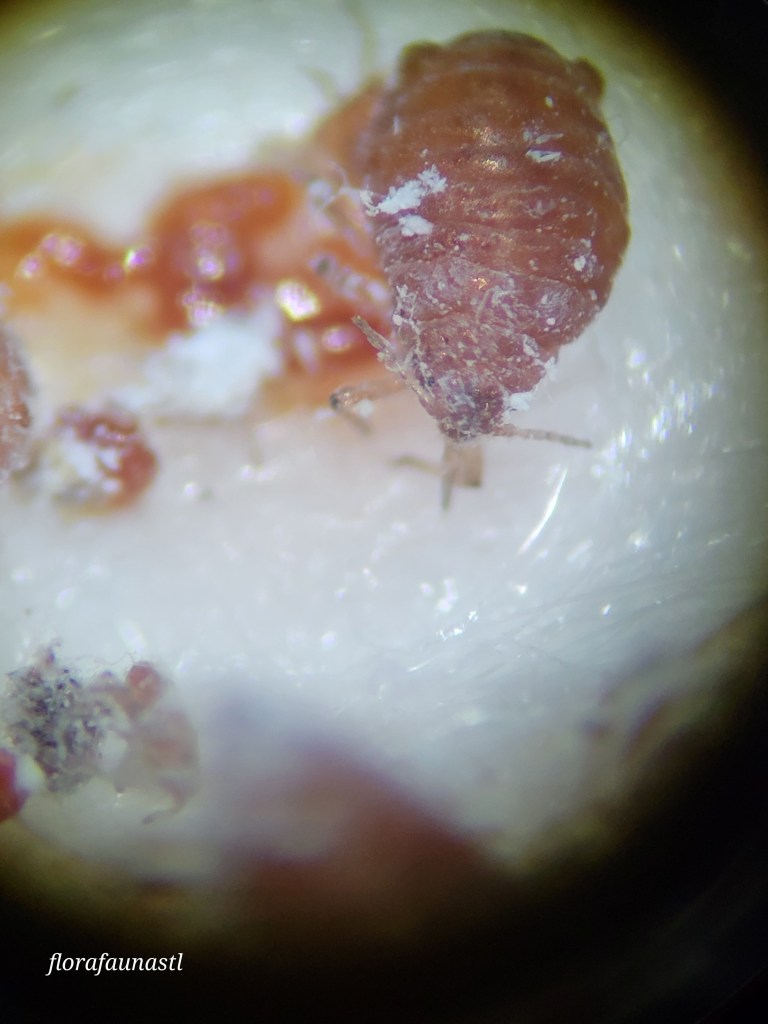
My apple tree, seemingly overnight, was covered with these Woolly Aphids and there is a reason they became so prolific so fast. Aphids engage in what is known as “telescoping of generations,” which is to say they give viviparous birth (live birth) to aphids…that are already pregnant!!! And those baby aphids, which are essentially clones of their mother, will be mature and giving birth in a week or so. This asexual reproduction is nothing new to the animal kingdom, but Woolly Aphids take it to a whole new level, producing up to 15 offspring PER DAY!!! They live about 30 days, 23 of which they are producing clones. From a mathematical standpoint, one single aphid could theoretically produce hundreds of billions of descendants within a single summer if conditions were perfect.

From spring through fall, the majority of aphids will be the cloned females that lack wings (apterous aphids) until either temperatures start to drop or their host plant (in this case, my apple tree) runs dry, at which point some of the aphids will produce male and female aphids with wings (alate aphids). These winged aphids will then take to the air in search of a new plant, sampling as they go. Once they find a plant they like they will either asexually reproduce a new batch of wingless females to start the process all over, OR they will mate with the male alate aphids and become oviparous, laying eggs instead of giving live birth, which helps spread the gene pool. Another option, and this one is real freaky, is that if the host plant will suffice longer, females will produce males and females which lack mouth parts and exist solely to produce offspring through mating, which results in the female laying eggs that overwinter.
Honestly, aphids have the strangest reproductive means of any animal I have encountered and studied thus far. The Woolly Apple Aphids’ winged variation looks like a combination of a gnat, lab mouse, and a troll doll from the 90s, and is pretty majestic for a sap sucking bug. Unfortunately, I don’t have any pictures of one as of publication, but you can look them up if you feel so inclined.
The Woolly Apple Aphid is native to North America and its original host was elm trees, but they are now fond of apple, pear, crab apple, mountain ash, and a few others. If the colonies grow to be too large on the exposed parts of the tree, they will sometimes dig into the ground and form colonies on the roots of the trees. Woolly Apple Aphids can now be found globally wherever apple trees or other varieties of their host plants can be found, having been accidentally introduced to other regions of the world as stowaways.
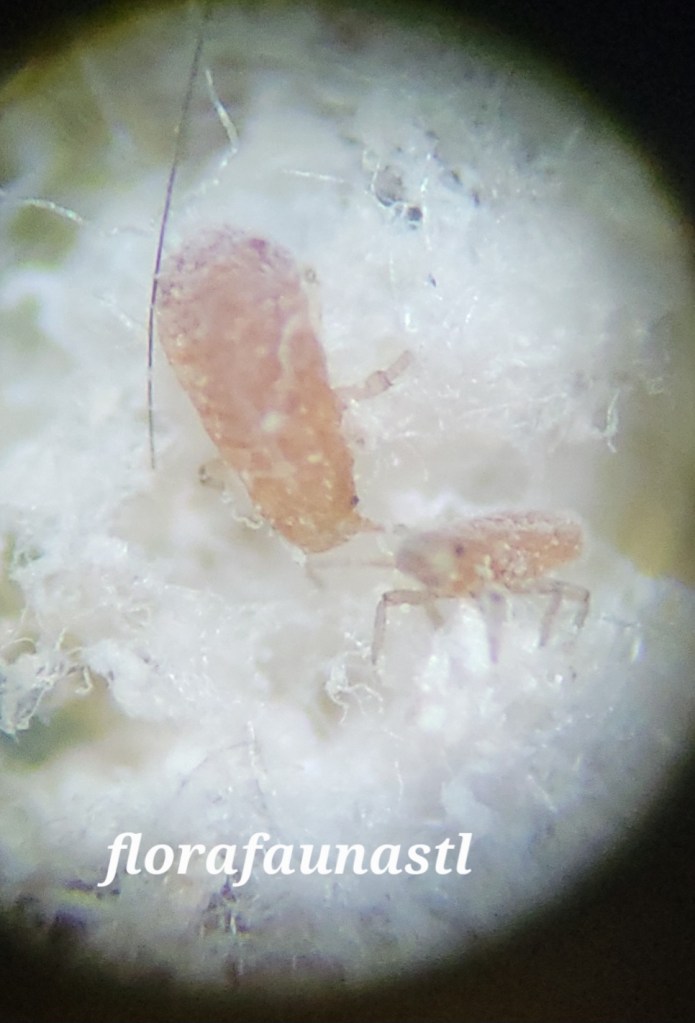
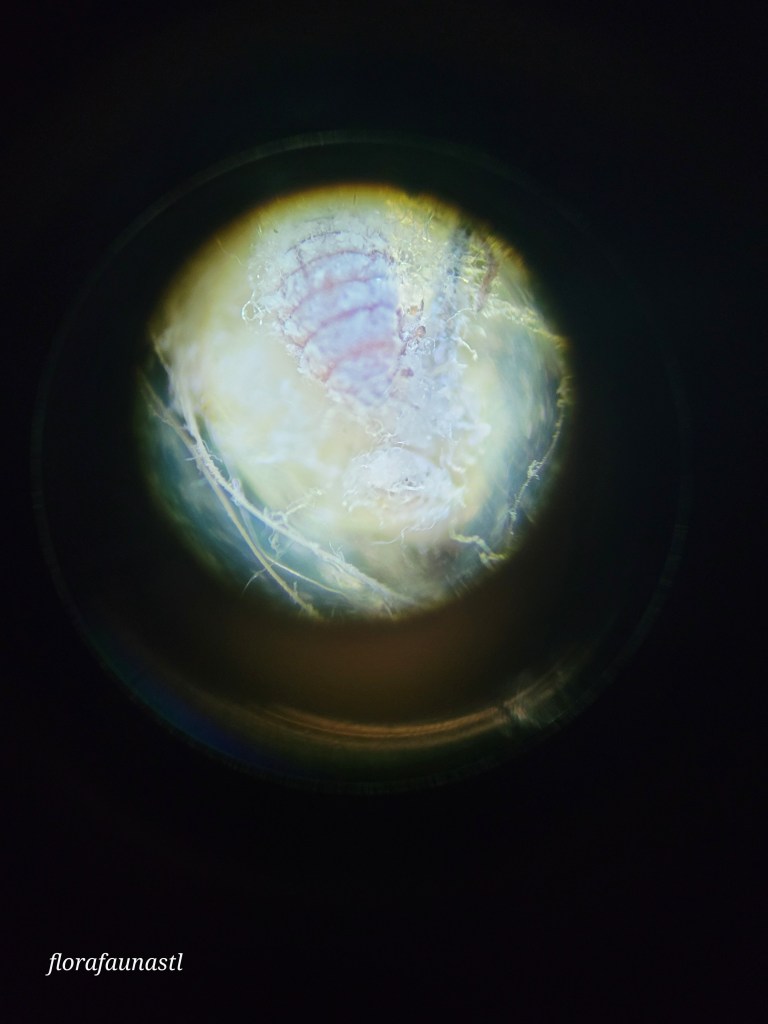
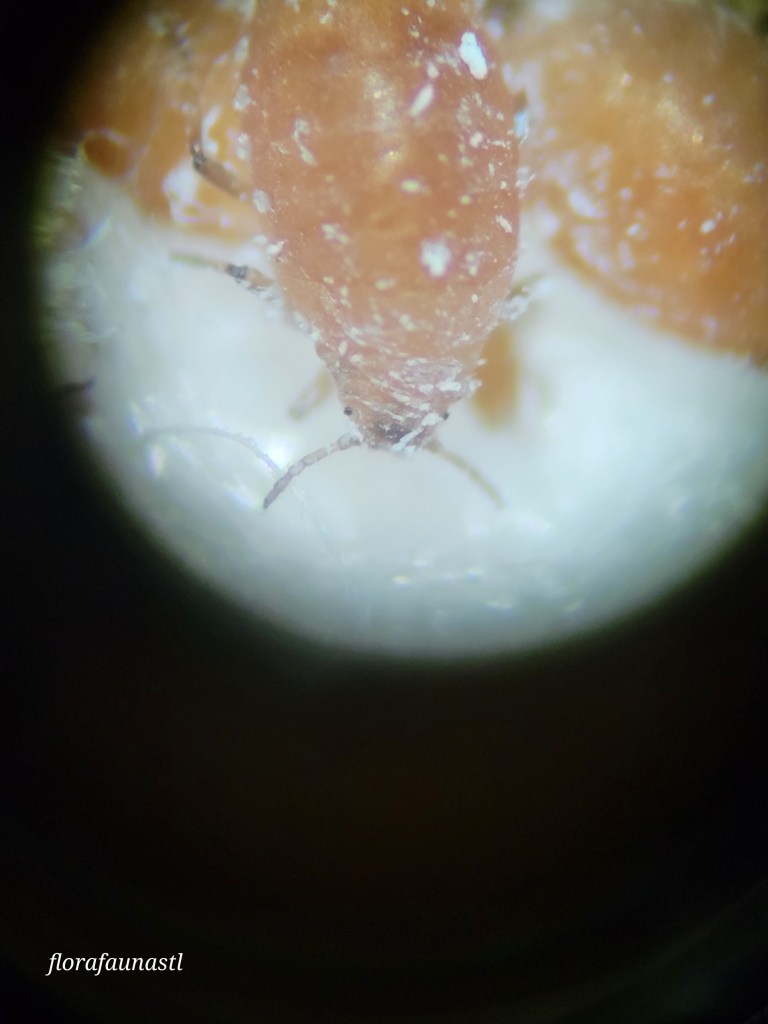
They cause a problem for orchards in several ways and are actually pretty difficult to mitigate. They carry and spread diseases to the trees inadvertently and this can slow production or potentially even kill the tree. Their honeydew, as we already know, can be prolific at an individual level and even more so at a colony level, coating leaves in its sticky substance and becoming the foundation for fungal infections on leaves and branches. At first, we were highly concerned for the well-being of our apple tree, but that turned to curiosity as I studied these aphids and observed their benefits to the natural world. Sure, they may be treating my apple tree like a Caprisun, but when you look closer, they are actually the life source for a menagerie of insects.
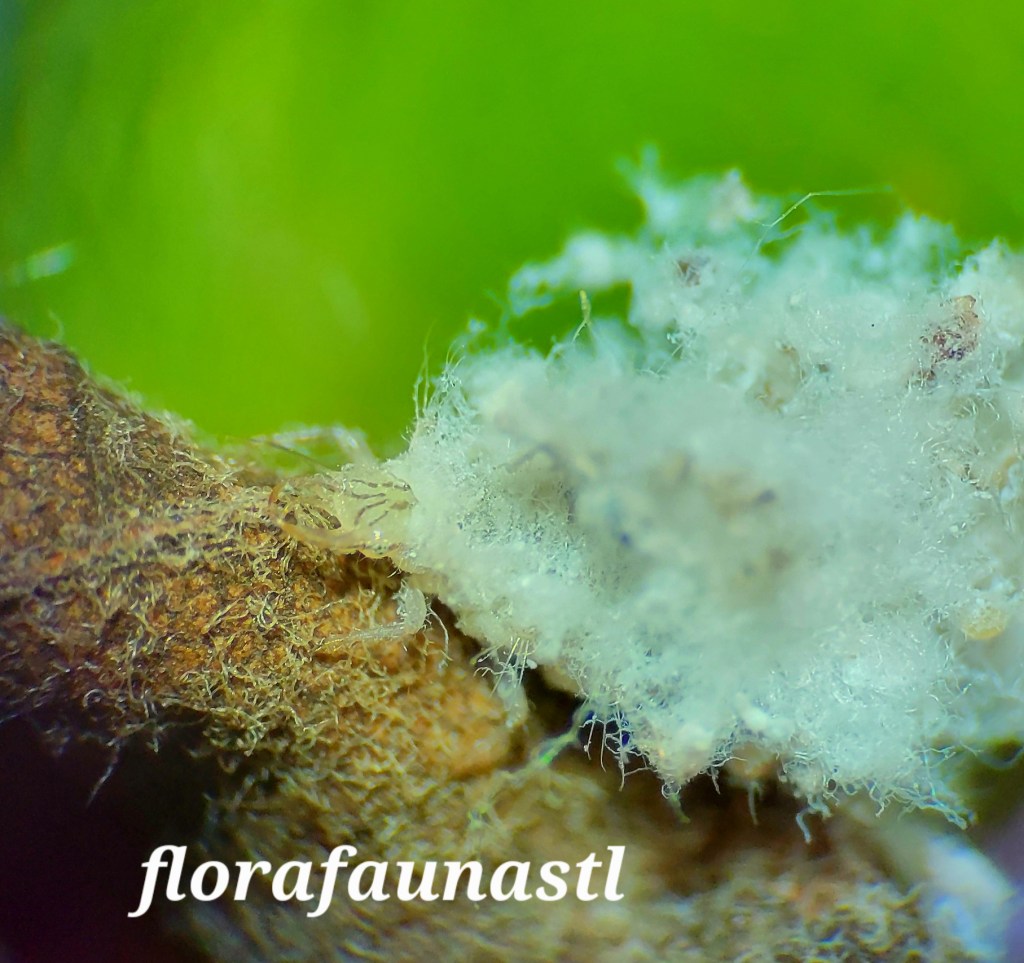
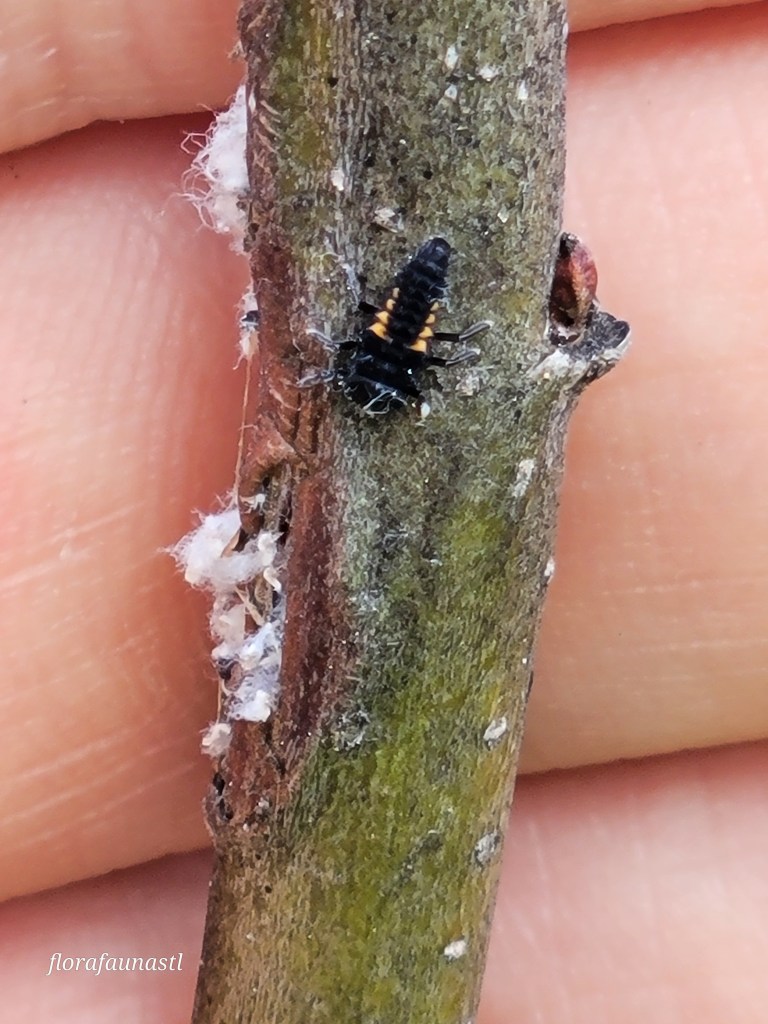
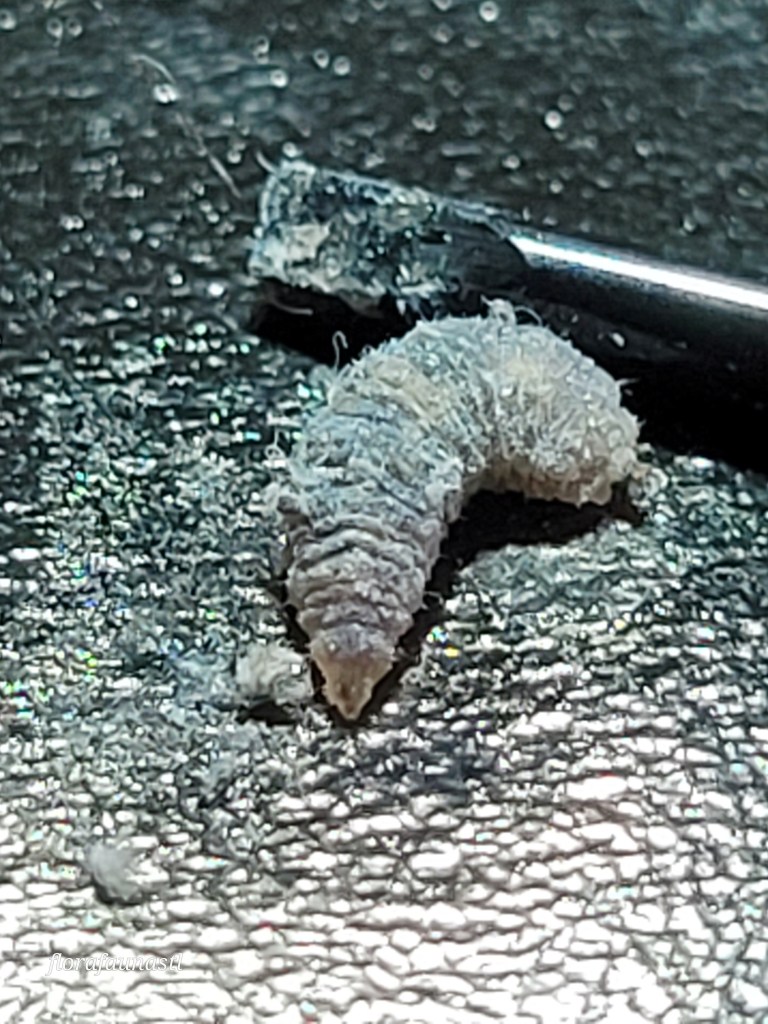
There are Ladybug larvae all over the tree, feasting on the soft jellybean bodies of these Woolly Aphids. The squirming and deadly Hoverfly larvae have been seen piercing through the aphids and sucking them down like juice boxes on a hot summer day. And my absolute favorite aphid annihilator is the Green lacewing larvae, which literally walks around carrying the remains of its prey on its back, how gnarly is that!!! Sounds vicious and savage, but man, these guys are adorable and are called “trash bugs” because they carry all this junk around on their backs like little insect hoarders. They are also very picky about how it’s arranged; as you can see in this video, he didn’t like how I poked his corpse backpack and had to fix it.
The animosity we had towards these aphids forming a strong colony on our tree evolved into something more akin to a blend of admiration and awestruck. The reproductive habits of aphids coupled with their voracious appetites would make a great science fiction story. You have to admit Attack of The Giant Woolly Aphids has a great ring to it! For now, they can stay on the tree and enjoy their time, but if they keep growing in numbers, which I am sure they will, you may see me down at Soulard Market selling my Woolly Apple Aphid wax sweaters, which are naturally honeydew resistant.
References:
https://content.ces.ncsu.edu/woolly-apple-aphid
https://extension.psu.edu/tree-fruit-insect-pest-woolly-apple-aphid/
https://en.wikipedia.org/wiki/Aphid
https://en.wikipedia.org/wiki/Telescoping_generations
https://en.wikipedia.org/wiki/Eriosoma_lanigerum
Woolly Alder Aphid (Family Aphididae)
https://www.stlouis-mo.gov/government/departments/parks/soulard/index.cfm


 Flora Fauna STL
Leave a reply to Tyler Hicks Cancel reply