
Storm Blair is slated to ring in the new year with anywhere from 2-8 inches of snow and ice for St. Louis. My fellow St. Louisans have ransacked every grocery store in the greater metro area, mainly buying all the ingredients to make French toast for the impending snowmageddon. With the stockpiling mostly done, there isn’t much for us to do besides wait for the snow. Many of us are prepared to wait out the storm along with our family, friends, pets, and perhaps even some unwanted and unseen pests. Yes, today we are talking about the American cockroach (Periplaneta americana), which ironically enough is not native to the Americas. This particular species is from Africa and came over with trade ships in the first quarter of the 1600s. Due to its warm native range, and being cold-blooded, they don’t prefer cold weather and will often seek refuge in our warm, cozy homes to wait out winter. During winter they can be found in moist warm environments, like basements, sewers, restaurants, grocery stores, garages, food processing plants, etc. During the warmer months they can also be found outside, around trash heaps, and generally in and around human dwellings that provide food and shelter.
Cockroaches are omnivores and eat a wide array of “foods.” The rule of thumb for determining what a roach will or won’t eat, however, really comes down to whether or not it was once a living organism. If the answer is yes, then it is fair game for roach consumption. Their grocery list includes: fruits, vegetables, meats, rotting foods, decaying animals, dead insects (even other roaches), wallpaper, cardboard, leather, feces, soap, toothpaste, glue, book bindings, leather, old decaying wood, fingernail clippings, hair, spiders, smaller insects, and if food is scarce…their own offspring. Cockroaches do favor sugary foods and yeast over all else, and are particularly attracted to beer as it provides both.
This was a fact I learned way back in middle school when my friend and I would set bread out in a jar on the sidewalk and pour some of mom’s red wine or beer on it to attract roaches. We would wait 15 minutes on a warm and humid St. Louis summer night, and our bait would be covered in roaches. Someone go ahead and cue up the “Best Mom” award, as she not only allowed but even encouraged me to go out and explore. Not only that, but she actually let us bring roaches into the basement, so long as they were in cages and couldn’t get out. We had four different species of roaches and even had a few egg cases hatch. We watched the roaches grow and tracked their molts. As all roaches grow, they go through molts; American cockroaches go through about 13 molts before reaching adulthood. Molting is when an insect sheds its exoskeleton and grows a new one to accommodate its having grown in size. They squirm out of their exoskeleton and are white until the new exoskeleton hardens and they get their charming amber-brown color. Let’s just say it was a fascinating and educational summer that fueled my curiosity about the natural world. The roaches were all set loose outside before the new school year, and we managed not to let (m)any escape.
You see, roaches have some pretty fascinating abilities that they have developed over the course of their more than 300 million years on Earth. For starters, they are the fastest running insect on Earth, reaching speeds of up to 3.4 mph, which is the equivalent of a person running 200 mph! They also have the ability to change directions a whopping 25 times PER SECOND! Seriously mom, there was no way Sam and I could keep all of them contained; thank God for the cats! Roaches have the ability to squeeze into extremely small spaces that are only a quarter of their body height. Thanks to this, they can easily get into our houses by simply sliding under our doors and even come in through cracks. They can withstand being squished by 900 times their body weight! This is why so often when people go to step on one or hit them with something, the roach just takes off running and is essentially unharmed.
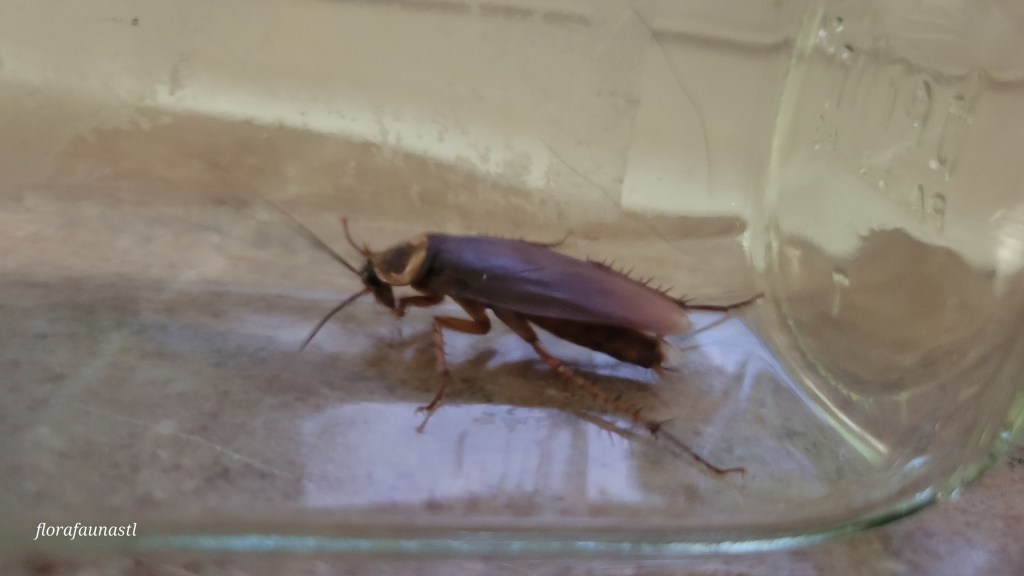
I can sense you want more random fun facts about your new favorite insect; no worries, I’ve got you!!! They can withstand 126 Gs; that is 126 times the pull of gravity. Humans (trained pilots) can withstand 12 Gs before passing out. Roaches can survive for a month without food, and yes, they can live for a few weeks without their head. Ultimately, they only die because they are unable to get the water and food they need without their mouthparts present. Roaches are able to withstand 100 times the levels of radiation that humans can, so if things ever do get bleak, at least we know the roaches will prosper…am I right?! Roaches have the ability to hold their breath for 40 minutes. They breathe through small openings that line their thorax (chest) and have the ability to close these off at will. They will often hold their breath just to help retain moisture in their bodies. This ability to hold their breath allows them to swim up through sewer lines into our buildings. It is also why whenever I catch a roach inside (which hasn’t happened since living in an apartment building in the Central West End), I just flush them back to their oasis, down the toilet.
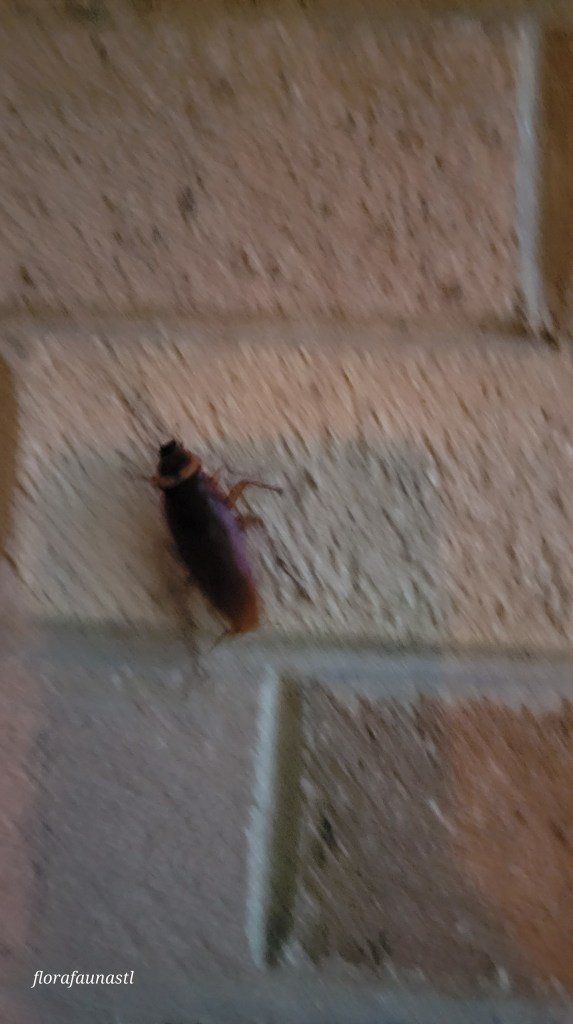
These facts pertain to roaches in general, but this article is about the American cockroach in particular, so it is time I attempt to put the spotlight on them before they scatter for the darkness. These roaches are nocturnal and WILL infest homes; however, they would much rather be in sewers, dumpsters, or food processing plants than your house, unless of course the house is not kept clean. The American cockroach is the largest of the common roaches that you will encounter, reaching lengths of up to 3 inches. These roaches are amber to dark brown in coloration with a yellowish-brown pronotum that sports two dark spots almost forming what looks like the number 8. The pronotum is the plate-like structure that covers the dorsal surface (the back) of the thorax at the anterior (head) of the roach.
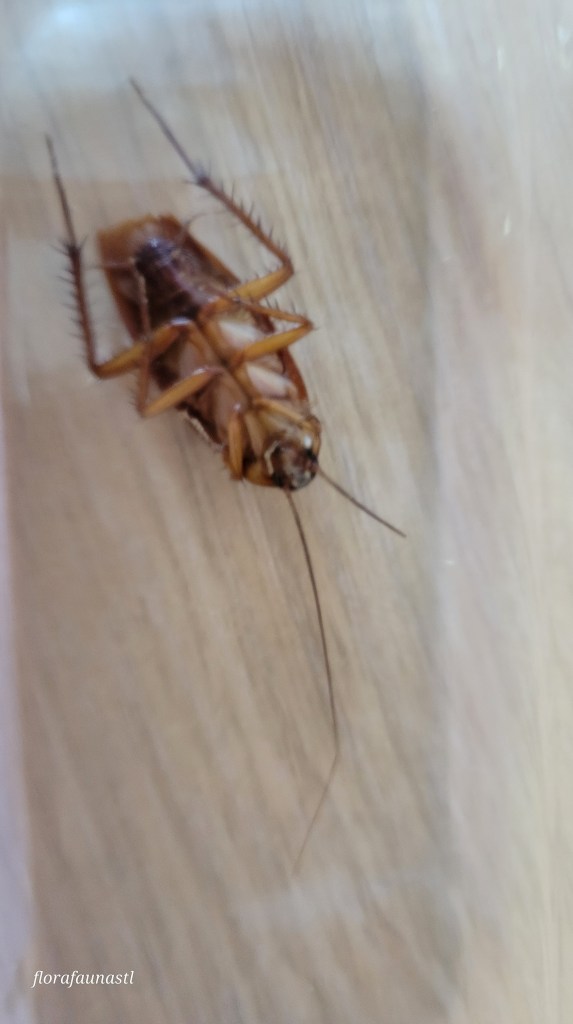
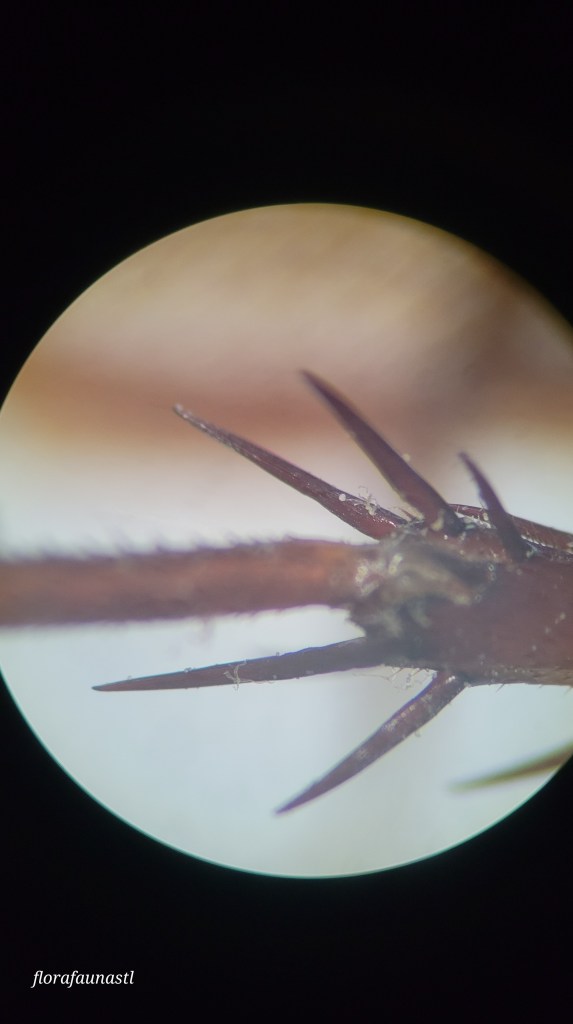
The American cockroach possesses two sets of wings. The tegmina, or forewings, are the harder and darker wings that aid in protecting the roach’s body and the hindwings. The hindwings are very thin, clear membranous wings that are used for flight. American roaches are not great at flying, but I will tell you from experience that them flying is not pleasant. When I was young, we lived in Dogtown and had a balcony you could see Turtle Park from. The apartment had no central air, and the balcony doors stayed open during the cooler summer days and nights. One night, while watching Friends, Seinfeld, or the X-Files, I heard my mother let out a shriek and my father’s trademark “ah!” yell. I looked over just in time to see this massive roach flying around the room frantically. My father tried to get it with a rolled-up magazine. It landed on the wall; my father attempted the sneak attack, it flew off again and was buzzing around the room. I can’t remember if it made it back outside alive or if my father came out the victor, but I do remember the event vividly and I will never forget the sound. They are very loud when they fly, but fear not; they cannot hurt you, despite how uncomfortable their spiky legs running across you might be.
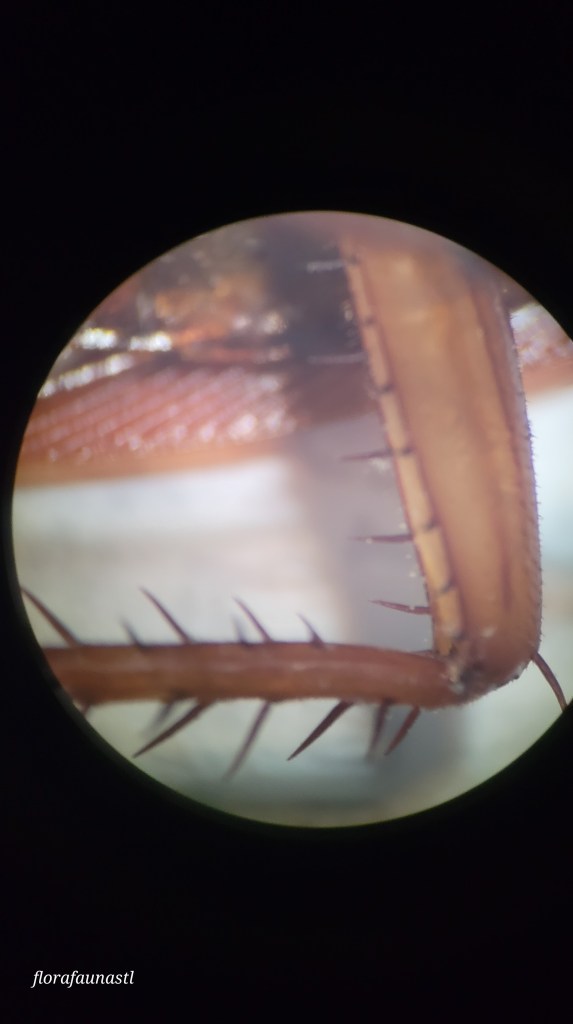
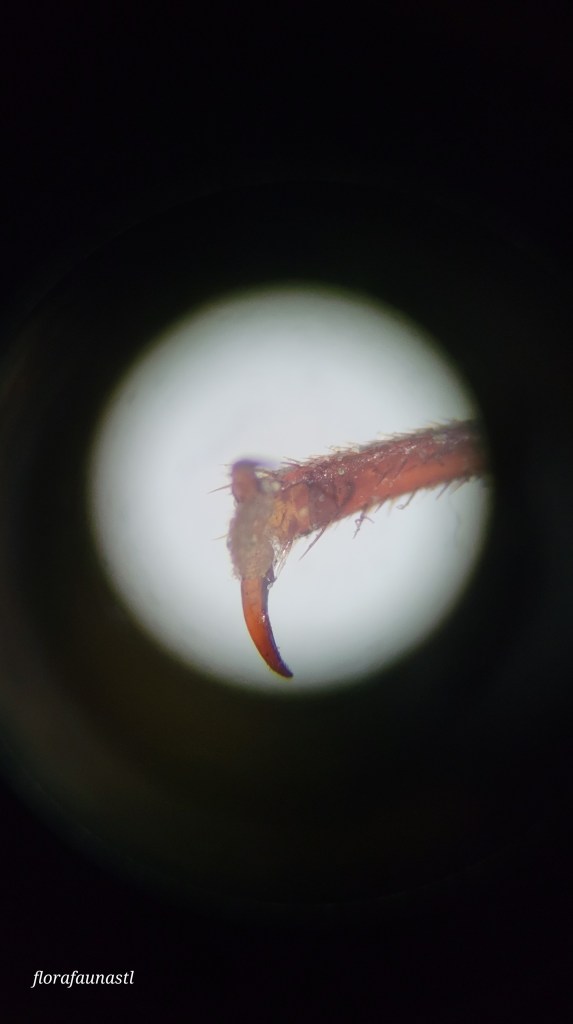
Roaches don’t have mouthparts strong enough to cause any serious damage to our skin. They do, however, have other risks that they unwittingly introduce us humans to. Because roaches prefer the “dirty” life, they can harbor and spread many diseases and illnesses to us through their waste, their saliva on food they’ve nibbled on, and simply from surfaces they scurried across. The list of bacteria and viruses they can carry is long, but to name a few, they can spread salmonella, E. coli, dysentery, cholera, typhoid fever, staphylococcus, streptococcus, polio, and many, many more. The World Health Organization states that although roaches can spread diseases, they do not consider them a real danger in the spread of disease. However, roach feces and skin sheddings can cause asthma and asthma attacks. Of course, if you have a roach infestation, it is best to work to remove them from your environment, but this is starting to become easier said than done.
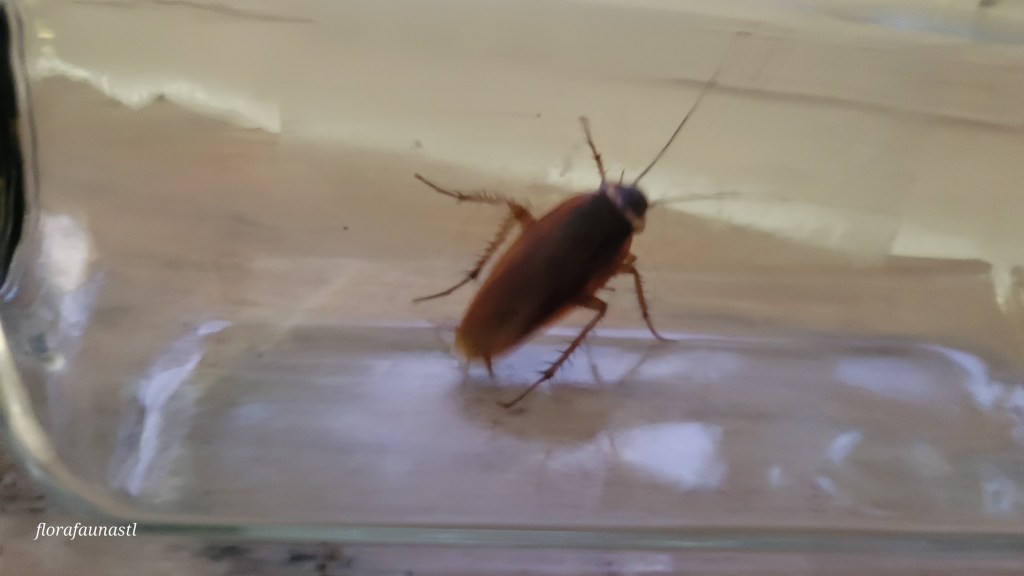
All the viruses and bacteria that roaches encounter on a daily basis do not affect them thanks to their very efficient immune systems. And those immune systems are so efficient that roaches are starting to become immune to the pesticides we use against them. Evidence is starting to show that once a roach is immune to one form of pesticide, it is often immune to many other pesticides that it hasn’t even encountered yet. This is why exterminators often have to come back multiple times to spray, as each new generation will have members immune to the first pesticide they used. This means that, in due time, roaches may eventually be immune to all the pesticides that we use. Fortunately, roaches are actually very clean insects; they groom themselves often. In fact, if a roach comes in contact with a human, the first thing it does after finding safety is clean itself. One tactic used in eliminating roaches is the use of boric acid in areas with high roach traffic. The roaches will run through the powder and clean themselves, ingesting the acids, and dying within 72 hours, and it is not something that they will gain immunity to. It works by disrupting the roach’s nervous and digestive systems, leading to death.

I am all for nature and encouraging the protection of animals, roaches included. That said, if they are in your house, you really need to get them out. The American roach can live for about 2.5 years in total. It takes the American roach roughly 600 days to reach adulthood after hatching from the ootheca. The ootheca is a hard purse-shaped egg case that contains about 16 or so eggs. Female roaches also have the ability to produce eggs in the absence of males through a process called parthenogenesis, which is yet another amazing survival tactic, although the offspring produced this way tend to be all female. Once adulthood is reached, American roaches will live another 400 days or so. That is in ideal conditions; they typically have a lifespan closer to about 700 days with predation and, well, death from us. Roaches are preyed upon by reptiles, amphibians, spiders, mice, cats, shrews, beetles, and now even man. Because of the American roach’s ability to regenerate limbs and its stellar immune system, they are used in Chinese medicine. There are American roach extracts that are used for the treatment of many ailments. There is also growing popularity in eating the roaches whole as a source of protein. Now, keep in mind, the roaches they are consuming are being farmed and not caught in the wild, so they are at least sanitary in that sense.
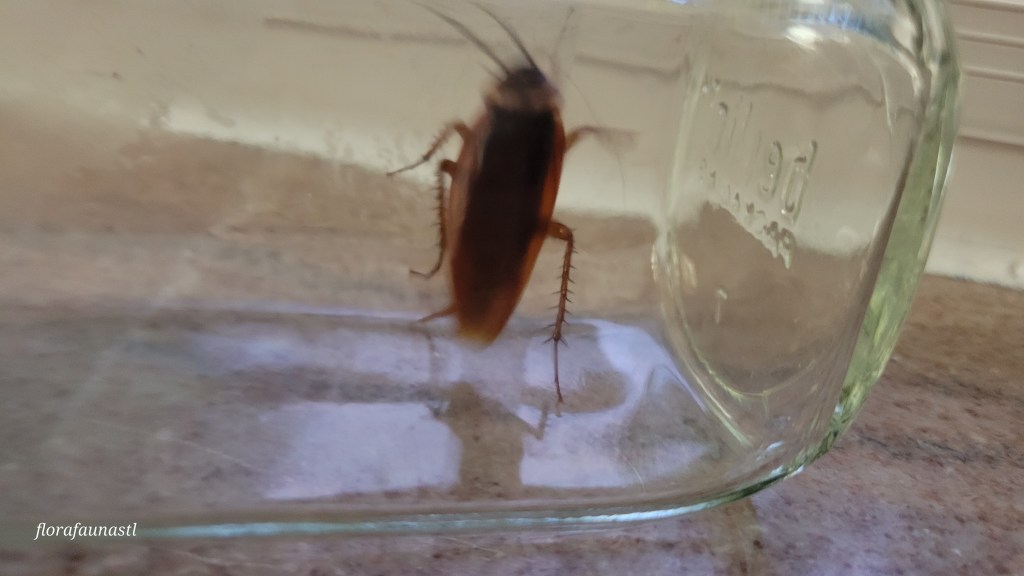
Despite roaches having a bad rap, they are vital to the ecosystem and play a crucial role in the breakdown of waste. In addition to that, they are some of the most resilient and adaptable animals on the planet. They have been around since before the dinosaurs and will be here long after humanity has run its course. I’m not expecting to have turned all of you into roach enthusiasts, but you have to admit, they are fascinating creatures that have truly mastered survival. And like it or not, in the grand scheme of things, we may just be another species they watch rise and fall.
References:

Milne, Lorus and Margery. (1980), The Audubon Society Field Guide to North American Insects and Spiders. Alfred A. Knopf, Inc., New York
Zim, H.S. and Cottam, C. (2001), Insects, St. Martin’s Press, New York
Borror, D. J. and White, R. E., (1970), Peterson Field Guides: Insects, Houghton Mifflin Company, Boston, New York
Pfadt, R. E., ( 1978), Fundamentals of Applied Entomology (3rd edition), Macmillan Publishing Co., INC., New York
https://entnemdept.ufl.edu/creatures/urban/roaches/american_cockroach.htm
https://invbrain.neuroinf.jp/modules/htmldocs/IVBPF/Cockroach/Cockroach_brain.htm
https://en.m.wikipedia.org/wiki/American_cockroach
https://www.bumblebee.org/invertebrates/Dictyoptera.htm
https://mdc.mo.gov/discover-nature/field-guide/cockroaches-termites
Cockroach Allergy


 Flora Fauna STL
Leave a reply to denisedharlingue Cancel reply