If you are like me, your first introduction to the White-tailed Deer (Odocoileus virginianus) was probably from the film “Bambi,” which introduced many children to their first existential crisis. That feeling of the fragility of life often raises its head when I travel on highways and see real-world deer who didn’t make it. Perhaps my mind is prone to take things a step too far, but after driving by a deer carcass, I’ll remember that deer are, in fact, the most dangerous animal in the United States, killing roughly 120 people a year, mostly from car accidents. Then the anxiety kicks in: “Did the person who hit that deer meet the same fate as the deer?!” and “Will a deer jump out in front of my car?!”.
But don’t worry, dear readers, statistics say you will be fine on your holiday travels; the in-laws (not mine) tend to be more dangerous than any deer. Besides, we should appreciate the fact that we even see deer at all, as the species’ numbers declined to alarmingly low levels in the late 1800s. As is almost always the case, loss of habitat and overhunting by settlers were the main culprits. It is estimated that prior to the arrival of the white man in America, the deer population was around 40 million. By the early 1900s, the total deer population was estimated to be roughly 500,000. For a more local view, in Missouri alone, the estimated number of deer before the 1800s was roughly 450,000. By the time we get to the 1920s, Missouri boasted less than 400 wild deer. Those are staggeringly low numbers, and yes, that pun was intended. The decline of deer was no laughing matter, though, and deer hunting became forbidden. Conservation efforts took place; deer were captured in northern states and released in areas where they once roamed. Missouri had deer imported from Michigan to help our local population grow. They were protected and allowed to flourish, and by God, flourish they did. Current estimates put the deer population at around 1.4 million, which equates to more than enough deer to allow for hunting. It is so many deer that at this point hunting is necessary to prevent overpopulation.

Deer have been a source of food and resources to humans for thousands of years. Native Americans relied on the deer not only for food but for their hides to make clothing and shelter. The sinew (tissue that connects muscle to bone) was used for crafting bowstrings, fishing lines, and stitching. The antlers were used for numerous purposes as well, and even the brains were used for tanning hides. Many hunters today still utilize many parts of the deer, and their meat, venison, is prized by many in North America. While on the topic of hunting deer, I recently learned the main reason for the color orange being chosen as the safety color for hunters has to do with the fact that deer can’t see orange the same way humans do. Deer are red-green color blind, which means they cannot distinguish green from red. They lack the ability to see the long wavelengths of the color orange, and it appears as a brownish-grey to them, which allows modern-day hunters to stay hidden from deer while staying visible to fellow hunters. Hunters tend to prize deer with large antlers, which are referred to as racks. A white-tailed deer from Missouri aptly named The Missouri Monarch holds the world record for the largest non-typical rack measuring in at 333 7/8 using the Boone and Crockett scoring system. You can read more anout him and how he was found here. Typically, male deer are the ones to sport the iconic antlers of this North American ungulate, but females will sometimes have antlers as well, but much smaller if present.
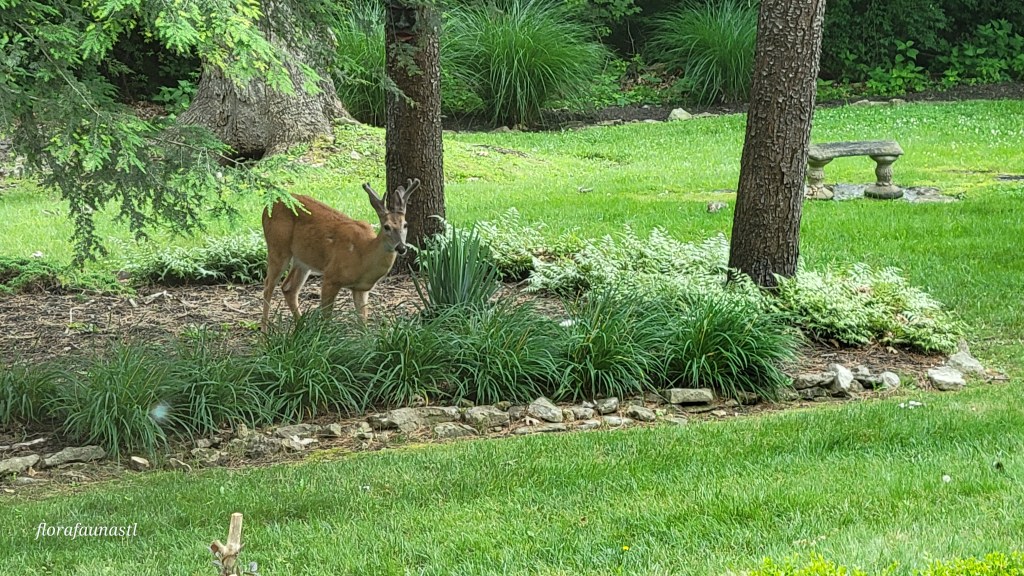
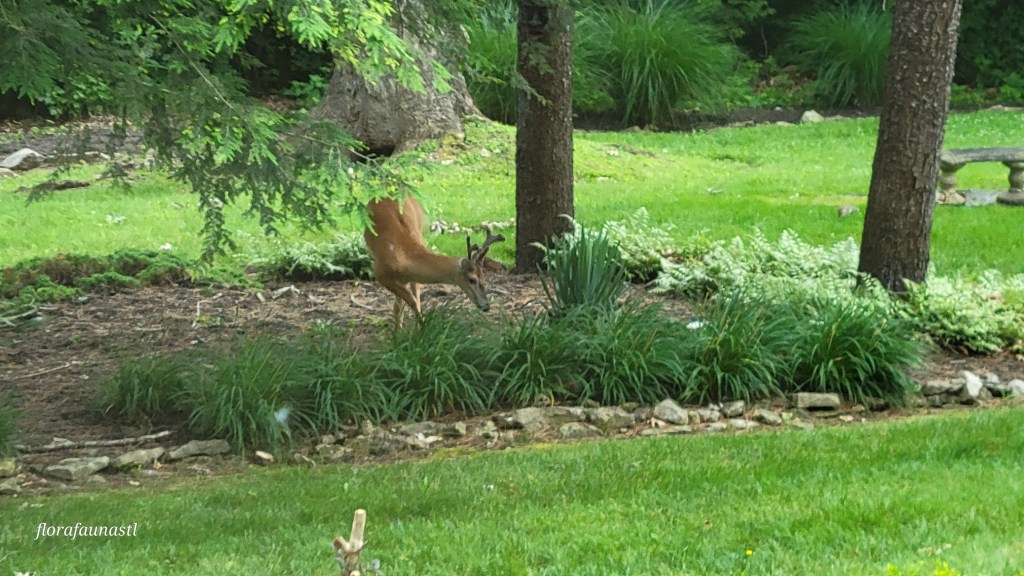
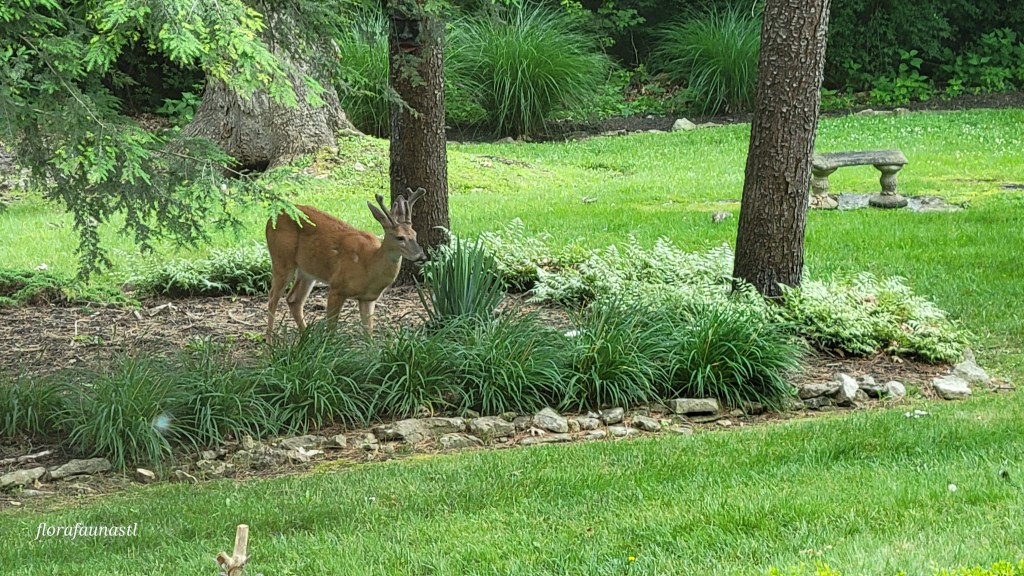
When bucks (male deer) are about 18 months old, they are sexually mature, but by year 1, they can start growing antlers. Thanks to a massive increase in testosterone production, the antlers are grown annually in spring, reaching their full size by late summer in time for the rutting (mating) season, which peaks around mid-November in Missouri. The antlers, which are made out of bone, will fall off around February. The antlers get bigger and bigger each year they are grown, so older males tend to dominate the mating battles. Bucks can be up to 3 feet tall at the shoulder and tip the scales at up to 300 lbs. These impressive stats aid them in the battle for mates. Bucks will size each other up, and if neither has a clear advantage, they will lock heads in a battle for the chance to keep their gene pool alive. Along with antler dueling, the males will body slam and jab at each other with their sharp hooves. It is not uncommon for these encounters to result in serious injuries, some of which can be fatal.

Once a buck has shown his worth, he will mate with a doe (female deer); they may stay together for a few days after mating, but the male will ultimately leave the doe to raise her young on her own. Gestation lasts around 200 days, after which the female will typically give birth to twins, although single and triplet fawn births are not unheard of. Does will give birth from late spring to early summer and do not build nests or shelters, as the roughly 5 lbs fawns are born with spotted camouflage and are able to walk. They also do not have fully developed scent glands and thus lack any distinguishable body odor, which further protects them from predation. Since we are talking about body odor already, deer have several glands that they use to mark their territory and leave scent trails for other deer. If you want to learn more about all the glands and their purposes, you can find that information here. The mother will hide her fawns and keep her distance from them, except for when she is nursing them in order to avoid leading predators to the fawns. In about 3 weeks, the fawn will start to consume vegetation. By the time the fawn’s first autumn arrives, they will have shed their white spots and developed their winter coat. The fawns become fully independent from their mother around 1 year of age and will often set out to establish their own territories. Occasionally, a family of deer can be found living together within a territory, centered around their mother. Deer territory tends to be confined to a radius of about one square mile, unless food becomes scarce or during their rut.
Deer can be found in wide ranges of territory but prefer forested areas that are close to clearings that house some of their favorite foods. Acorns are the favorite food of deer; they also enjoy apples, grains, clover, fallen leaves, pears, corn, soybeans, and many, many more foods. They are highly opportunistic and have even been seen eating carrion from time to time, which is not as uncommon as you would think in the animal kingdom; calories are calories, after all. In addition to humans, deer are also preyed upon by bears, wolves, coyotes, mountain lions, and bobcats.
There is, however, a threat to deer that is far worse than being hunted, and that is Chronic Wasting Disease (CWD). CWD is a transmissible spongiform encephalopathy (TSE) that is caused by prions. In a very watered-down explanation, prions are proteins that lack DNA and RNA, which other infectious factors like viruses, bacteria, and fungi possess. These prions can live in the environment for an uncertain amount of time and are believed to be spread through urine, decomposition, and saliva. The prions then live in the soil and are spread via indirect contact through consumption of plants that grow in soil contaminated with the prions. It is also believed that it may even spread through direct contact with an infected individual, even before symptoms appear. The symptoms, which lead to the disease being called Zombie Deer Disease, take place over a couple of years. The symptoms include lack of fear of humans/predators, increased salivation, strange and repetitive walking patterns, teeth grinding, lack of appetite resulting in malnourishment, tremors, confusion, and all-around abnormal behaviors, which eventually leads to death. This is because prions, the infectious proteins, directly infect the brains of the deer. Although there has been no definitive evidence showing that consumption of deer with CWD causes issues in humans, the CDC advises people not to consume deer with CWD. Hunters in Missouri are required to present the heads of their kills to a CWD Management Zone where they will be tested for the disease.
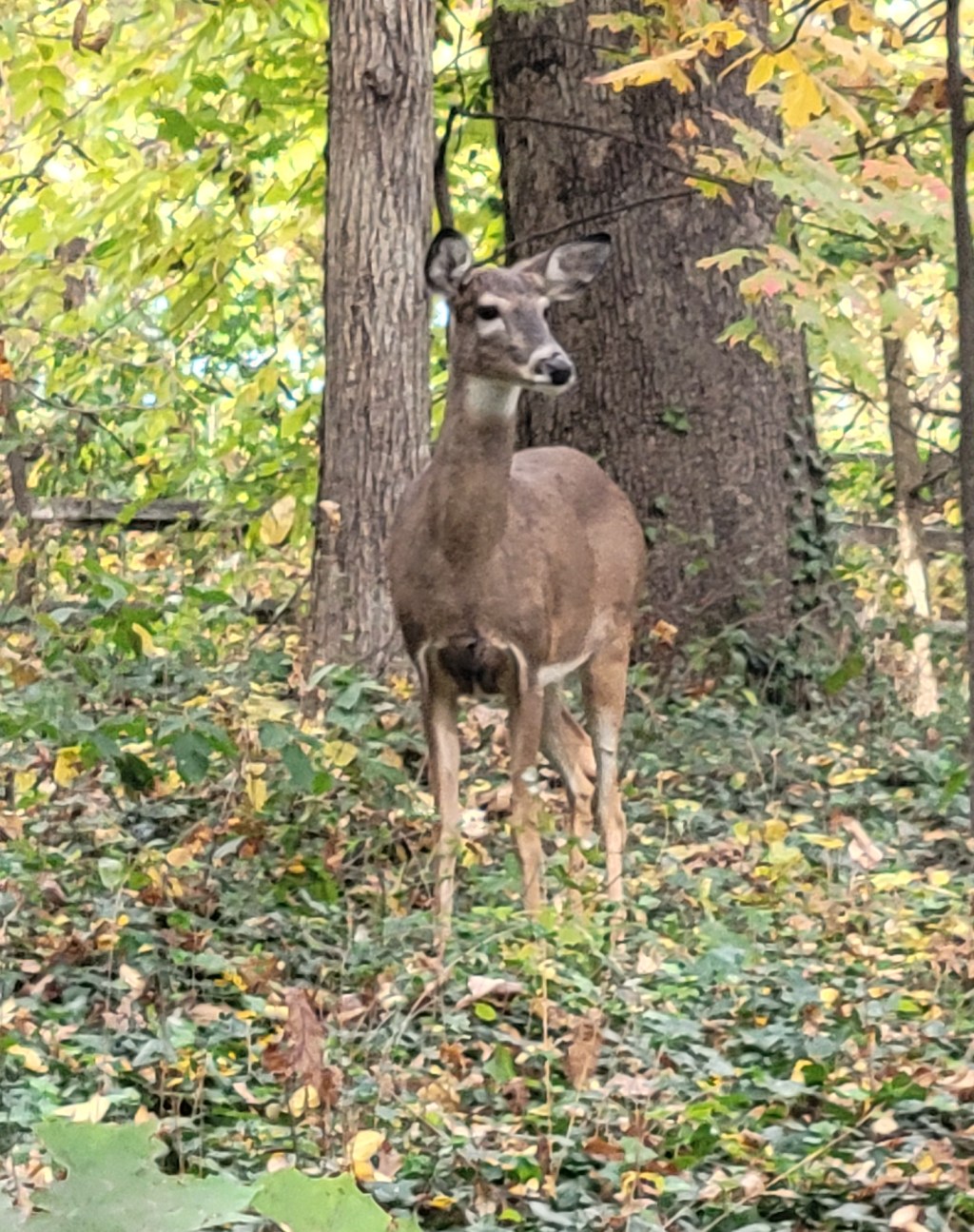
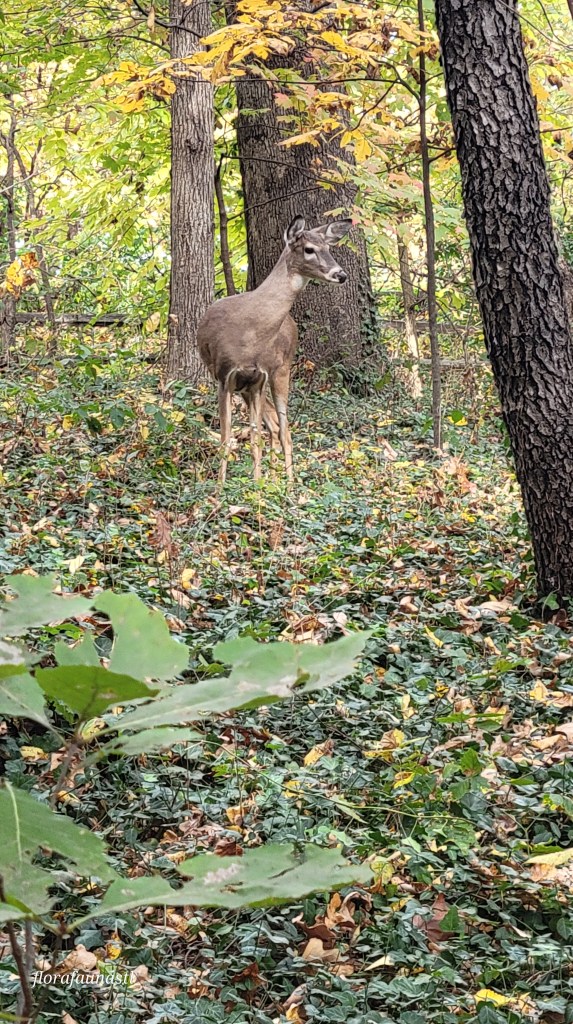
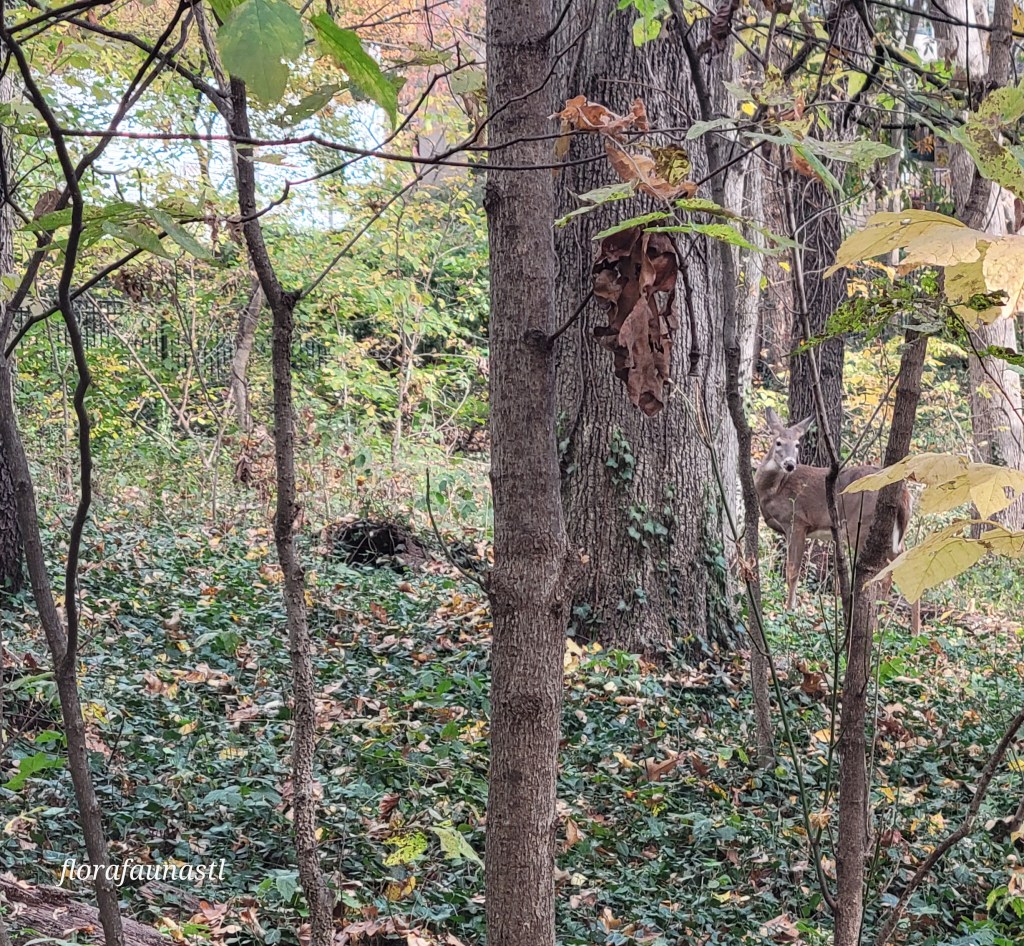
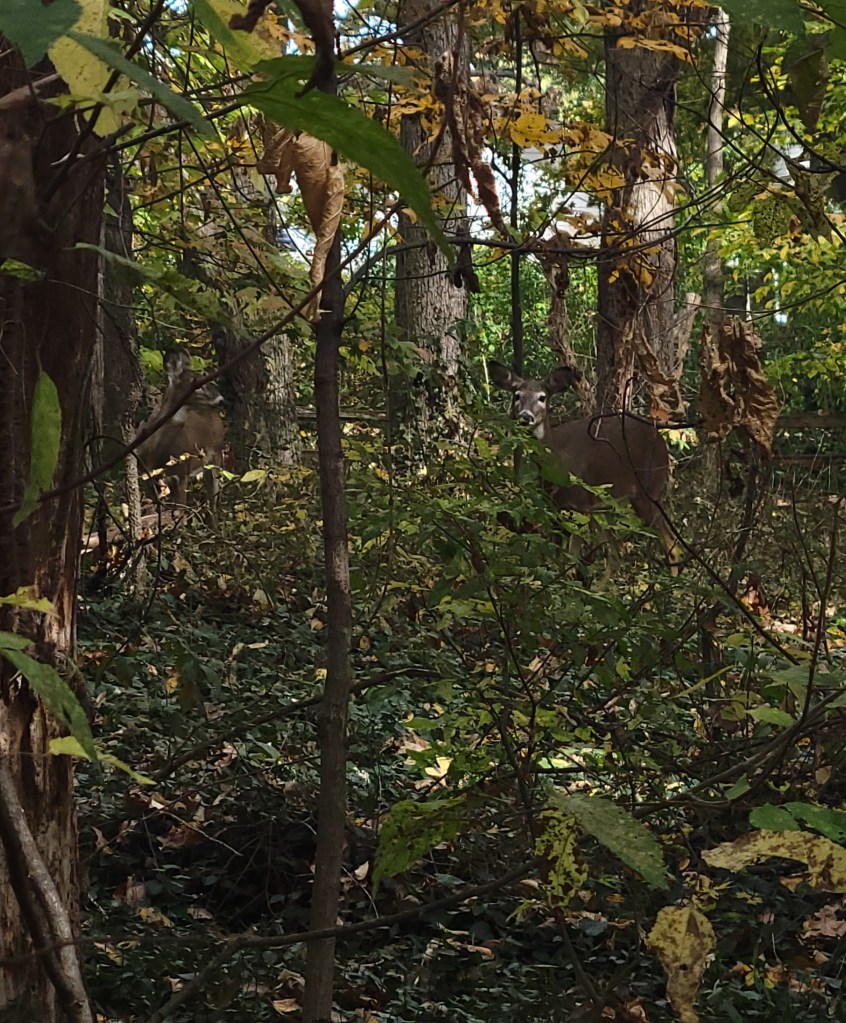
I have seen deer in many places around St. Louis, from nature reserves to city parks, and have never had genuine appreciation for them. My wife has a soft spot for deer, and some of that has started to spread to me. Prior to my wife starting her new career, we took a day off together to bond. We grabbed coffee and went for a walk at Blackburn Park and encountered a pair of deer, which was the inspiration for this post. It was a moment that became magical through her love and appreciation for these animals that I, and so many of us, take for granted. I never knew how close we were to the white-tailed deer joining the ranks of the dodo. Their abundance is a testament to the fact that repopulation efforts can be effective and can allow for animals on the brink of extinction to thrive once more.
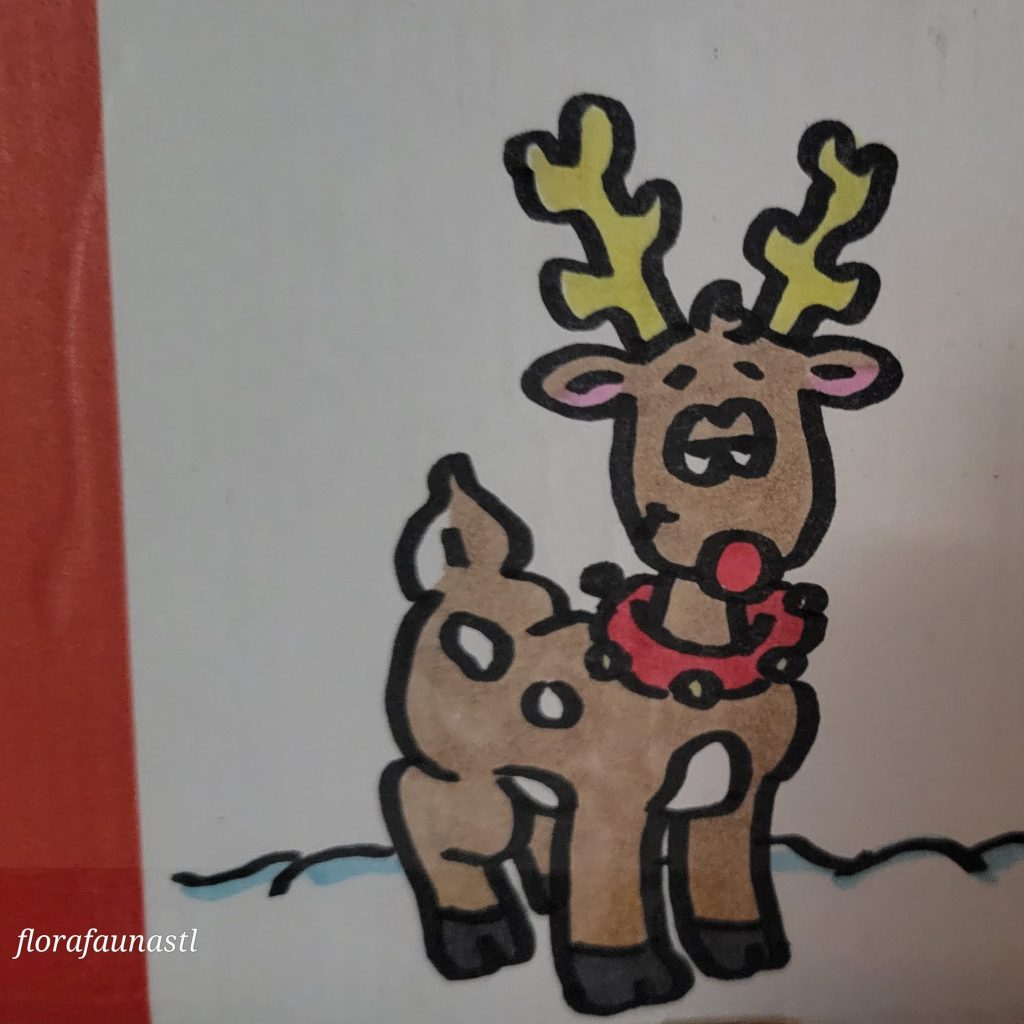
Drawing done by my dad.
References:
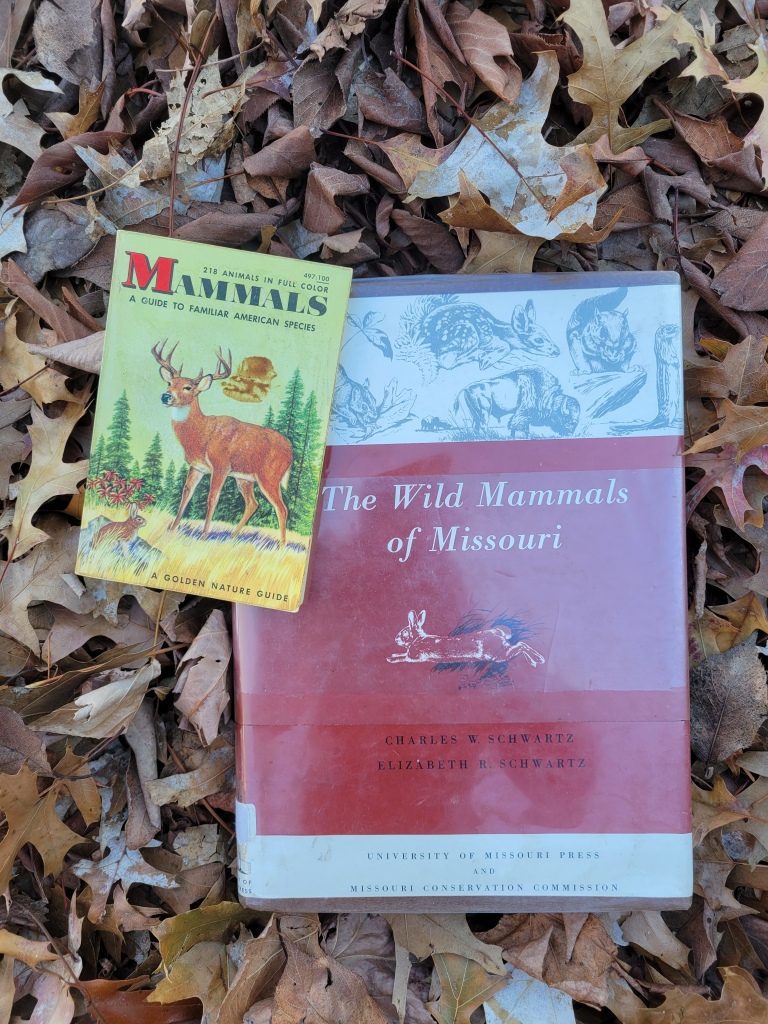
Shwartz, C. W. and Schwartz, E. R., THE Wild Mammals of Missouri, (1956), Smith-Grieves Co., Kansas City, Missouri
Zim, H. and Hoffmeister, D., Mammals A Guide To Familiar American Species, (1955), Simon and Schuster., New York, New York
https://mdc.mo.gov/discover-nature/field-guide/white-tailed-deer
https://extension.missouri.edu/publications/g9488
https://deerassociation.com/meet-the-7-glands-of-the-whitetail-and-a-bonus-organ/
https://en.m.wikipedia.org/wiki/Chronic_wasting_disease
https://en.m.wikipedia.org/wiki/Prion
Missouri Monarch: The World Record Non-Typical Whitetail Buck


 Flora Fauna STL
Leave a reply to denisedharlingue Cancel reply