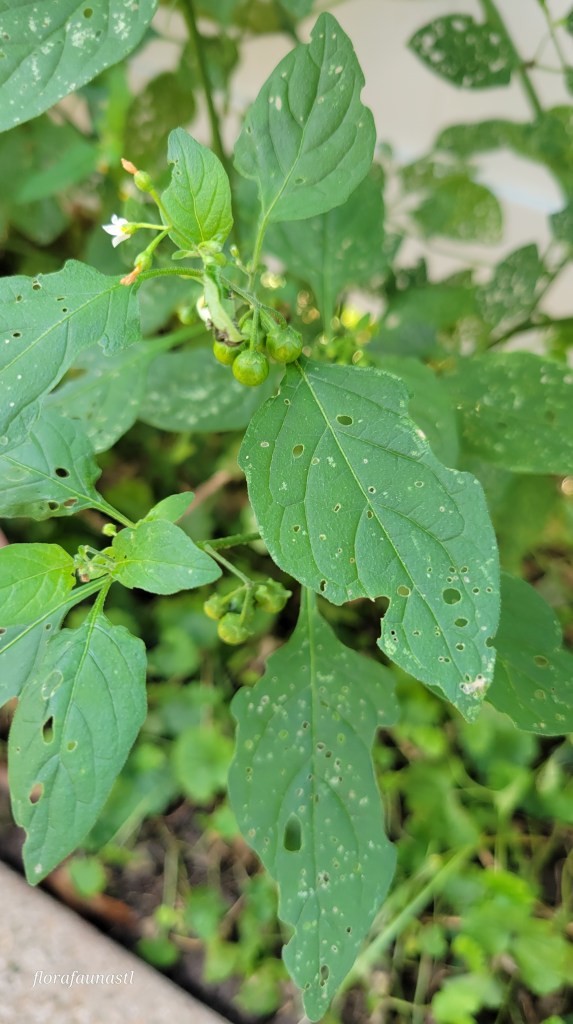
This summer I decided to let some areas of my yard grow wild in order to see what plants might appear in the absence of mowing. There has been a good variety of flora that has taken advantage of my decision, but none so abundant as Solanum ptycanthum, more commonly called Eastern Black Nightshade. Like many of you, I have encountered this “weed” before and have promptly removed it from my yard. I was aware that this plant is toxic and have always eradicated it before it reaches maturity. With kids and a dog, all of which will seemingly eat anything they shouldn’t… I figure, why risk anyone eating something toxic?

My understanding of this plant has shifted after some research, though, and I now know that this plant is indeed mostly toxic; however, its berries can be eaten when ripe. It is apparently a fairly common berry for the foraging types, and some even make jams from the fruit. I have not myself been bold enough to harvest and consume any from my yard, but from what I have read, the fruit tastes like a very, very sweet tomato. For those of you who are avid gardeners, this palate profile may not come as a shock to you because tomatoes are actually a member of the Nightshade family, Solenaceae, along with eggplants, potatoes, peppers, tobacco, and of course the infamous Belladonna or deadly nightshade.
Members of the nightshade family possess varying amounts of a bitter-tasting alkaloid known as Solanine, which acts as a natural insect repellent. The toxins, however, tend to be concentrated within the leaves and stems of the plant. The fruit loses a lot of these toxins as it ages; green tomatoes, as an example, have more solanine than red tomatoes do. Potatoes can have such high levels of solanine that they can actually cause severe illness and even death if people eat the green parts of the plant. The stems, leaves, green tubers, eyes, and even the tomato-like fruits that potatoes sprout can be deadly if consumed. (Fun fact about potatoes; if you grow them from planting the tubers, they will genetically be clones of the mother plant. The only way to get non-cloned potato plants is by planting the seeds from their tomato-like fruits.) There are even some reports of people dying from the solanine fumes that rotten potatoes emit. Clearly, you would need a lot of rotting potatoes for the solanine fumes to become noxious and deadly, but this gives you an idea of how potent solanine alkaloids can be. Over time, humans have learned that we can eat only specific parts of these plants at specific times in the plants life in order to avoid sickness and potentially an early demise. I’ve always wondered how those conversations and interactions went, especially with mushrooms, but nonetheless, someone ultimately died or at the very least got sick in order for us to know what we can and can’t eat. Mull on that next time you have a mushroom pizza or mashed potatoes.
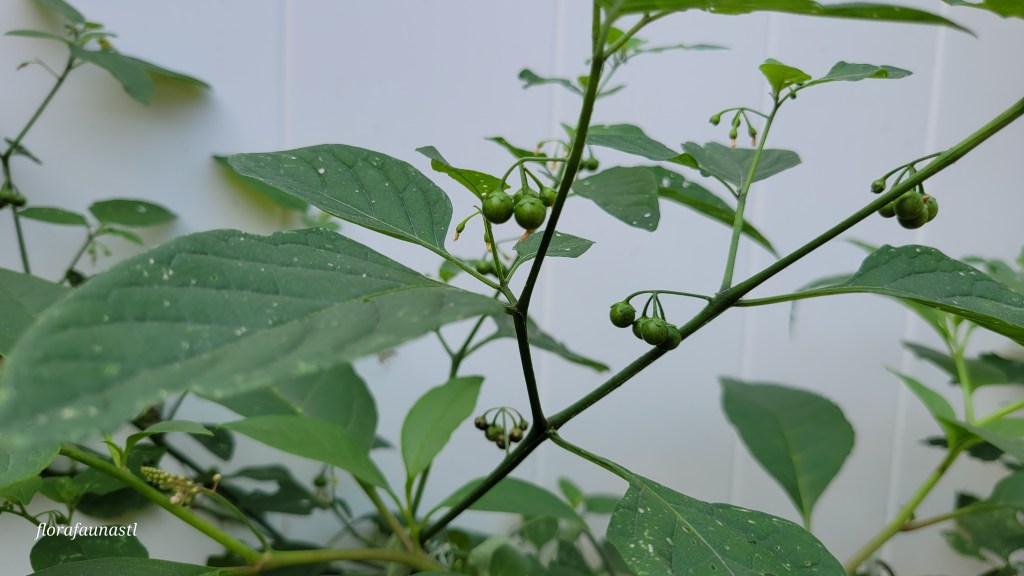
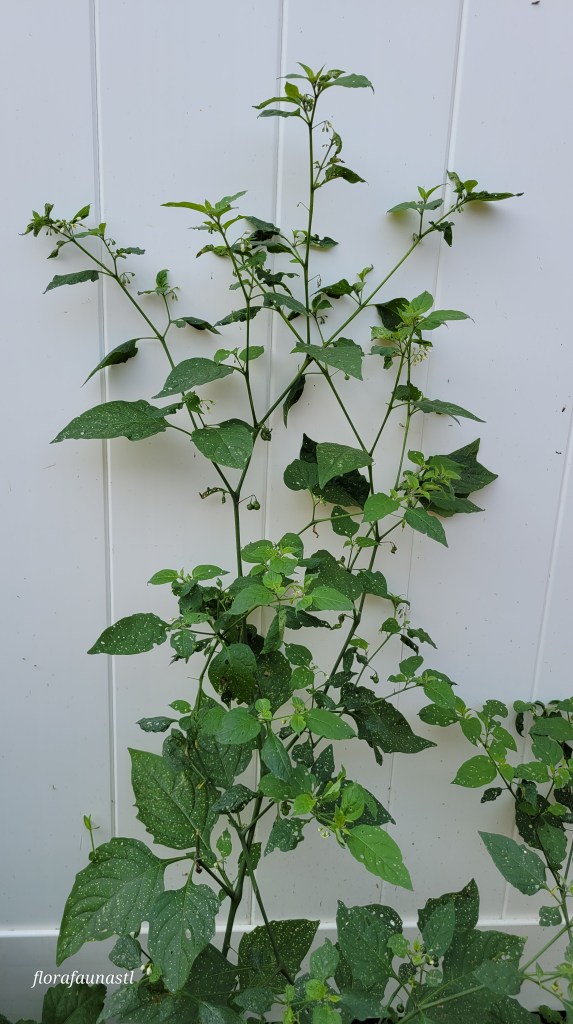
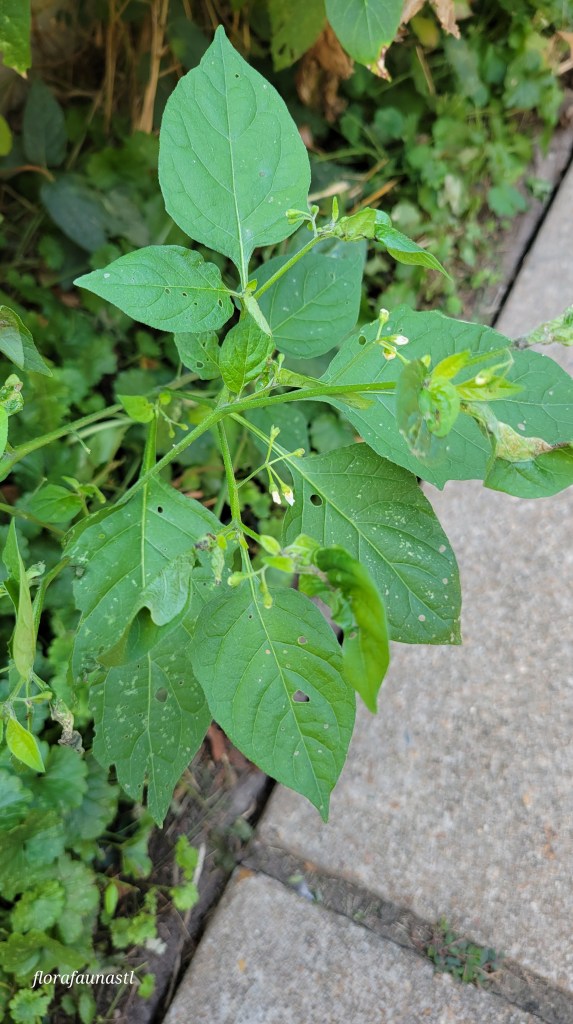
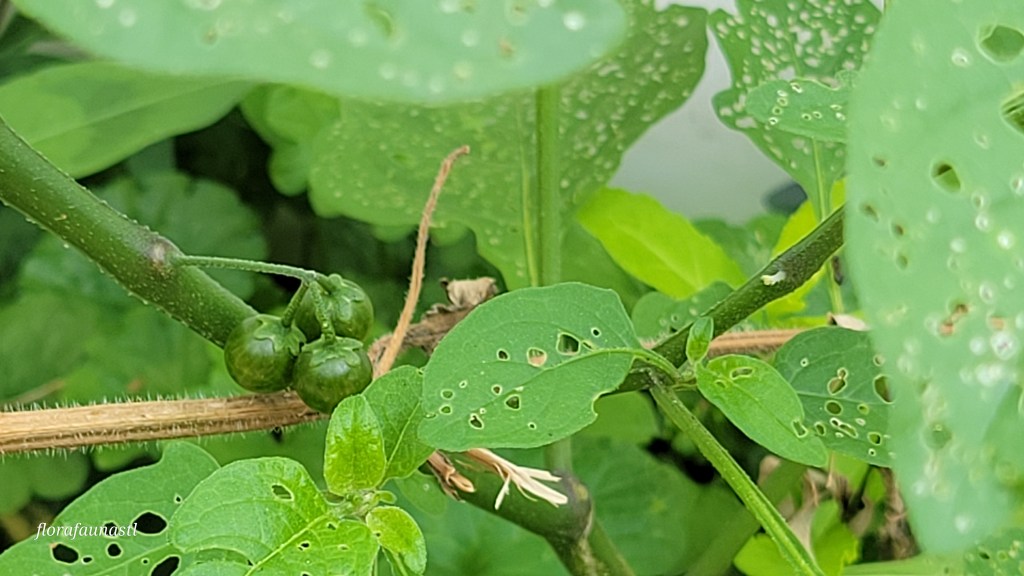
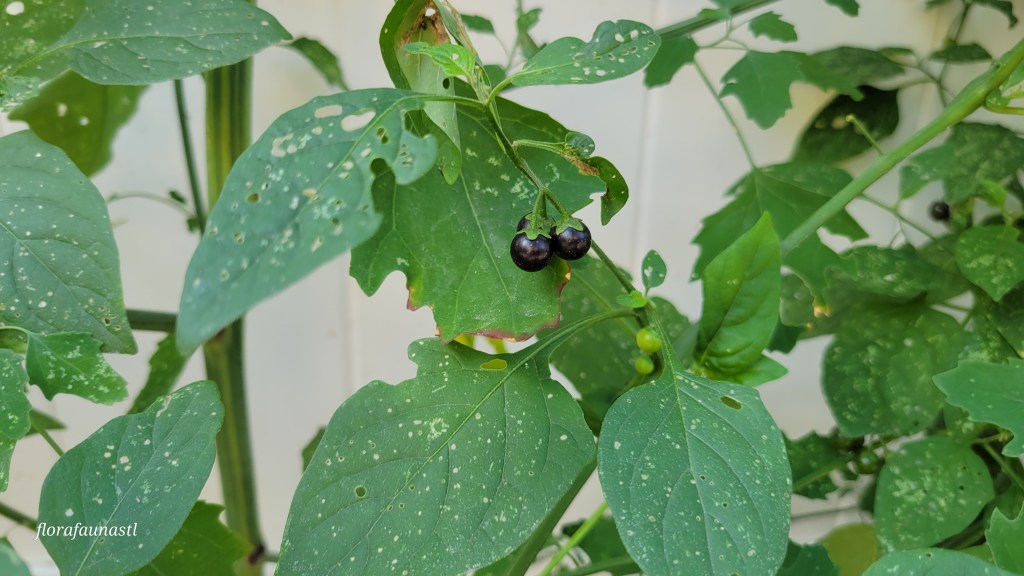
Despite the alkaloids, some insects are not affected by the toxins and can desecrate members of the nightshade family. As you can see in these pictures, the leaves are riddled with holes. The most likely culprit for the holes is the Flea Beetle, which is actually a pretty solid way to help identify this particular type of nightshade plant, as they favor its taste. Humans, on the other hand, apparently didn’t like the taste of eastern black nightshade berries well enough to harvest it and incorporate its fruits into the menagerie of tamed produce at the local grocery store. But the majority doesn’t include everyone, and as stated earlier, many people do harvest and eat the fruit of Eastern Nightshade.
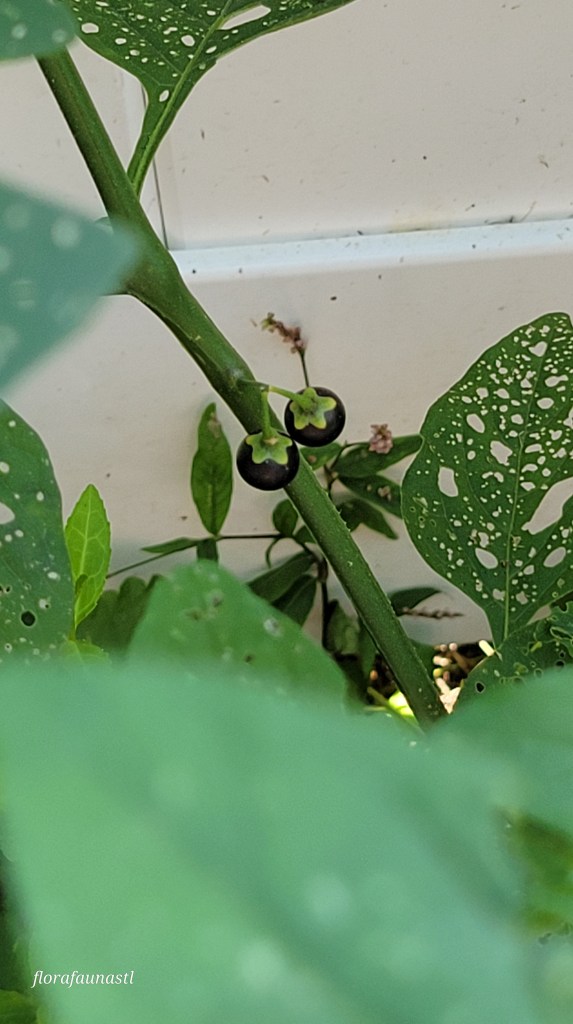
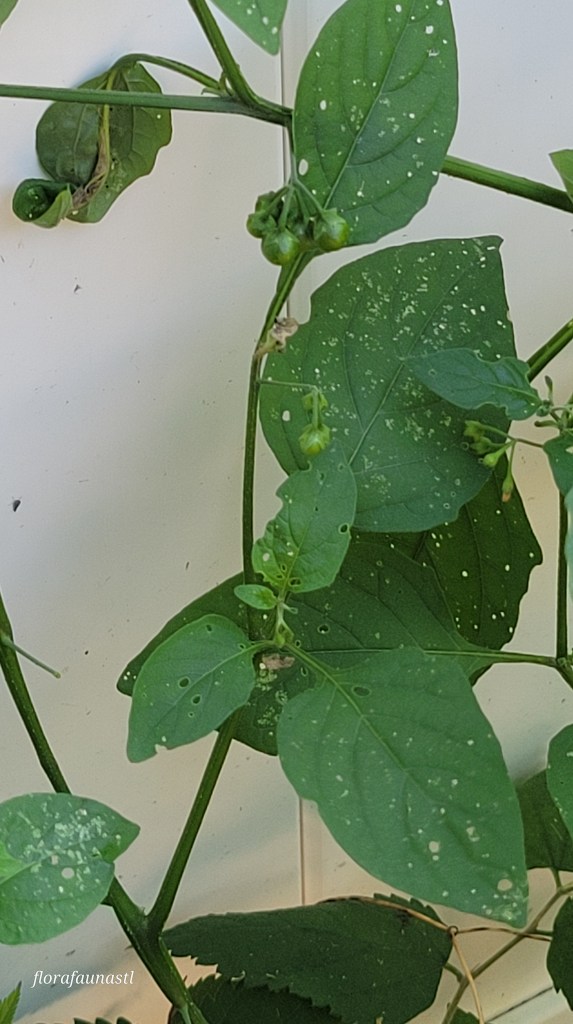
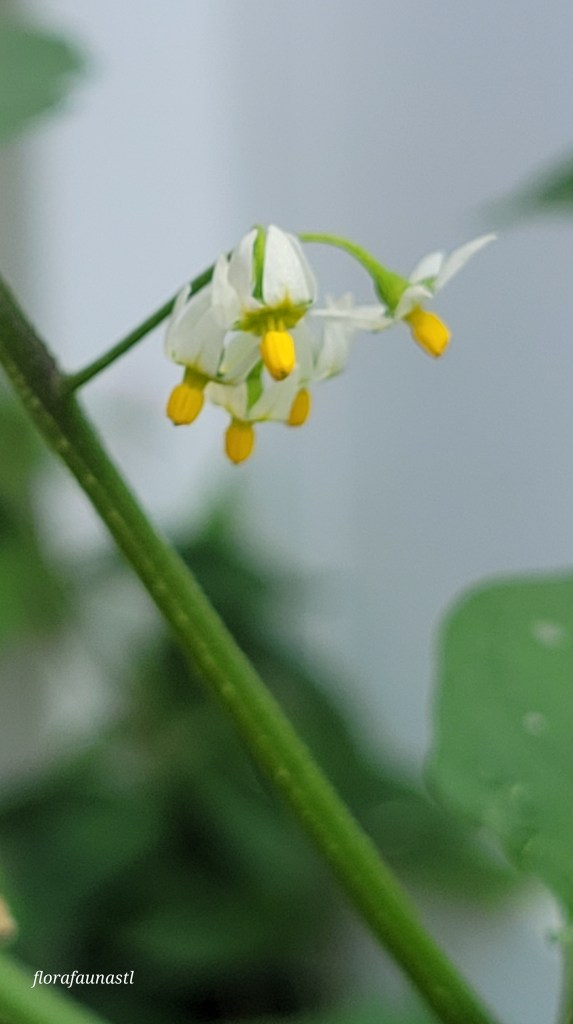
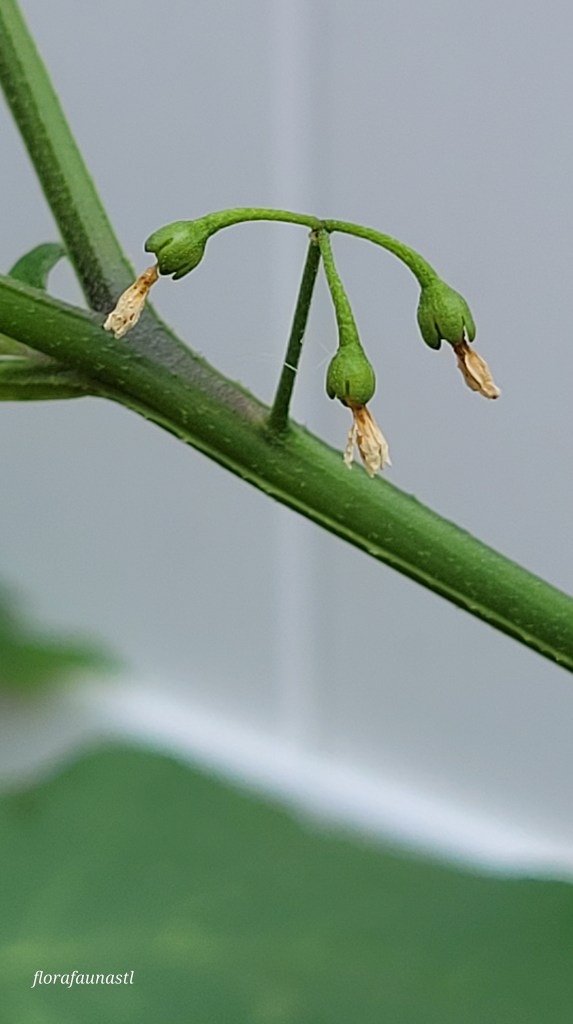
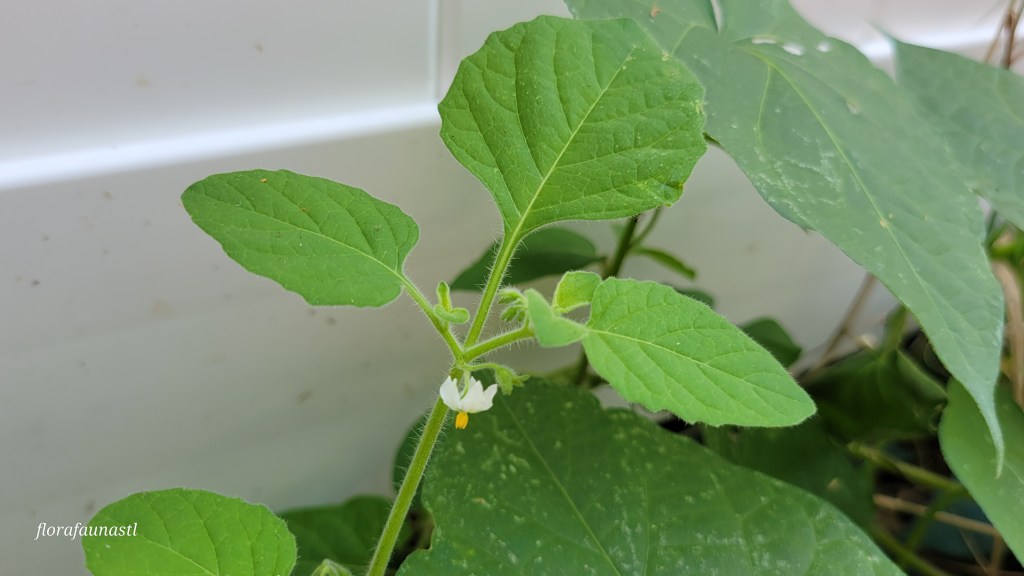
Eastern Nightshade is an annual that is native to North America, ranging from the east to the west coast, and can be found just about anywhere. I have seen it near creeks, in the middle of fields, in forested areas, and along my fence line. Birds love the berries and play a huge role in the dispersion of the plant via the seeds they pass in their droppings. Eastern Nightshade can grow to be about 1 to 2 feet in height, sporting green leaves with hues of purple on the underside. The leaves are ovate and may or may not be toothed; that is to say, may or may not have saw-like edges. The flowers of Eastern Nightshade are typically white but can sometimes be a light blue to purple color and are star-shaped with yellow pollen. The berries are small fleshy fruits that can contain hundreds of seeds per berry. There are not large clusters of fruit; typically, 2 to 5 fruits are the most that you will see per stem. There are several look-alikes that can be found in North America, including American Nightshade, Hairy Nightshade, Bittersweet Nightshade, and the non-native but now naturalized Deadly Nightshade. All of which have varying degrees of toxicity and some have toxic fruits. Although I am confident in the identification of this particular plant (I did phone a botanist friend on this one to double-check…thanks, James!), I am not willing to risk a tummy ache on this one. Quantity can play a huge role in these things; small amounts may make you sick, large amounts may kill you, especially if you misidentified the plant. This one is edible, although I would advise STRONGLY against eating anything you are not overly confident about identifying. There is an old saying: “Everything is edible…at least once.”
References:
https://weedid.missouri.edu/weedinfo.cfm?weed_id=270
https://ipm.missouri.edu/cropPest/2011/6/weed-of-the-month-eastern-black-nightshade/
https://crops.extension.iastate.edu/encyclopedia/eastern-black-nightshade


 Flora Fauna STL
Leave a reply to Sharon Linde Cancel reply