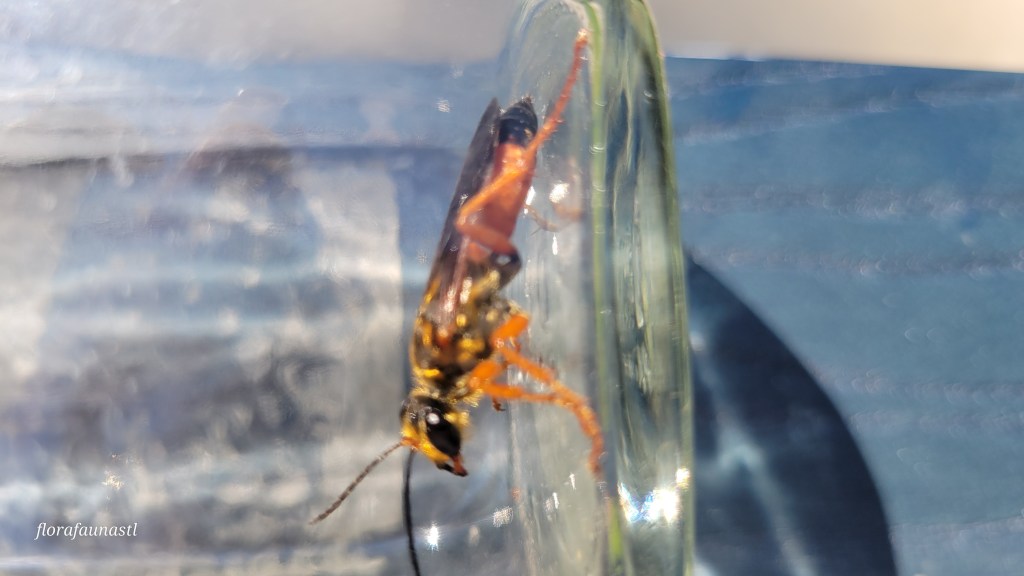
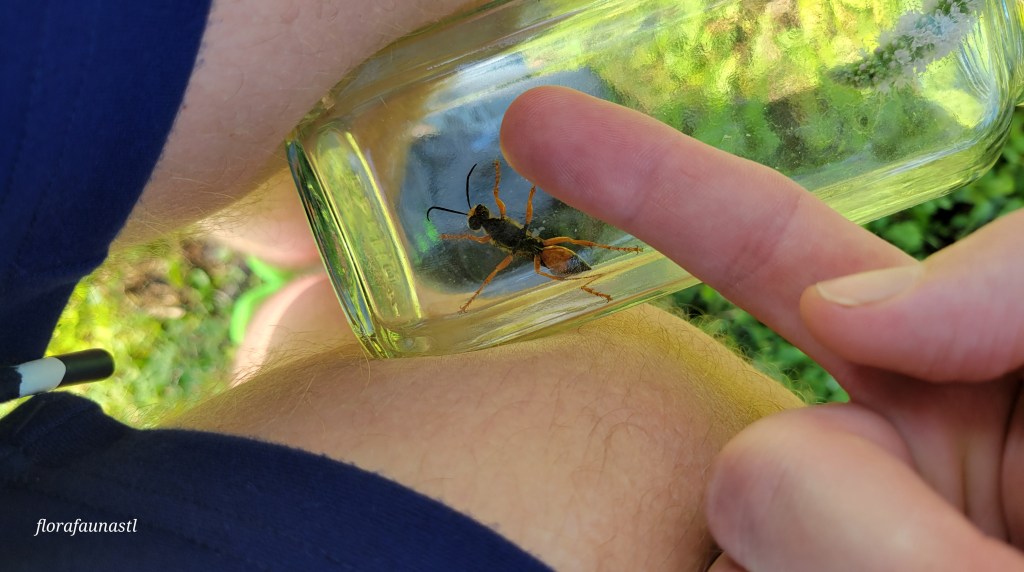
I was doing yard work a couple of days after the 4th of July when I noticed a large wasp hovering from flower to flower in my patch of mint. The mint flowers have always attracted an array of visitors, but I hadn’t seen this one before. I stopped what I was doing and ran to the garage to gather my net and a jar. Thankfully, the abundance of sweet nectar kept this wasp distracted long enough that I was able to catch it with ease. As I sat near the mint patch examining the specimen, I noticed there were two others of this species hovering around as well. My wife, who was also outside gathering pears, asked what I had caught. I told her it is a wasp of some kind, probably a solitary wasp, and perhaps a parasitoid wasp, but I am not sure what kind of wasp it is. I took the jar inside and thumbed through my Hymenoptera book to do some research and identification.
For those not in the know, Hymenoptera is a huge order of insects which includes ants, wasps, bees, and sawflies. Hymenoptera appear in the fossil record as far back as the Triassic, and the social side of this order (those living in colonies) first appears during the Cretaceous period. Hymenoptera usually have two sets of wings, with the hind wings being hooked onto the forewings via hamuli, which are tiny hooked bristles. They also have well-developed mandibles which are ectognathous in nature, meaning the mouth parts are external from the head capsule. Many in this order have also developed specialized “tongues” or mouthparts that extend out to help with drinking nectar. Insects are known for having many eyes; in the case of hymenoptera, they typically sport two compound eyes and three dorsal ocelli, which are called “simple eyes”; these are in between the two compound eyes and are light-sensitive organs. Hymenoptera are hands down my favorite insect order. Even as a kid I would often catch wasps in my grandmother’s empty 2-litre soda bottles destined for recycling. If there is only one order of insects you decide to dive into, I would vote Hymenoptera as the order offers social colonies or hives to lone parasitoid wasps to learn about. This particular species falls into the latter category, my armchair (I’m being humble) educated guess was in fact accurate. This wasp is, in fact, a solitary and parasitoid wasp.
The scientific name is Sphex ichneumoneus, more commonly referred to as the Great Golden Digger Wasp. This species can be found throughout the Americas and is often found in open fields and prefers areas with sandy loose soil. During the summer, the adults can be seen buzzing around flowers feeding on nectar, and, if you are lucky enough, carrying away grasshoppers, katydids, or other members of the Orthoptera order. Why would they be flying around with grasshoppers, you ask? Great question! The answer is altogether fascinating and rather grim, but they are sort of like real-life xenomorphs from the classic Sci-fi film Alien. Mother Great Golden Digger Wasps (which are larger than males) will actively hunt down their prey and sting them with a neurotoxin that paralyzes the victim, but keeps it alive. It will then fly its paralyzed victim to a tunnel which it has dug into the ground. These tunnels usually have a few different chambers that will be the final resting place for the prey, but the start of a new generation of wasps. The female wasp will position the prey in a very specific spot outside the tunnel, then head into the chamber to make sure everything is perfect. She will reemerge head-first, grab the prey by the antennae, and back it into the tunnel. The wasps prefer the prey to be in a very specific spot near the tunnel entrance; the orientation of the prey’s head needs to be perfect. So much so that scientists have discovered if the prey is moved while the wasp is making its final touches in the tunnel, it will emerge, reposition the prey, then reexamine the tunnels all over again; a perfect example of a fixed action pattern at work.
Once the paralyzed victim is brought into the chamber, an egg is laid, and the chamber is sealed off. Let’s just take a moment to recognize that right now, somewhere out in your neighborhood, there is a bug, paralyzed and buried alive, screaming in silence. But it is about to get much worse. These wasps have yet to figure out how to build and maintain their own refrigerators, and what mother doesn’t want their young to have fresh food? Yeah, that’s right, this is all about fresh food for the baby. In a few days, that egg hatches and the larvae will eat the paralyzed host alive. Once the horror is over and the larvae are full, they form a cocoon and overwinter while going through metamorphosis. They will emerge in late spring and early summer, digging their way to the surface, where they will live for only 1-2 months as adults.
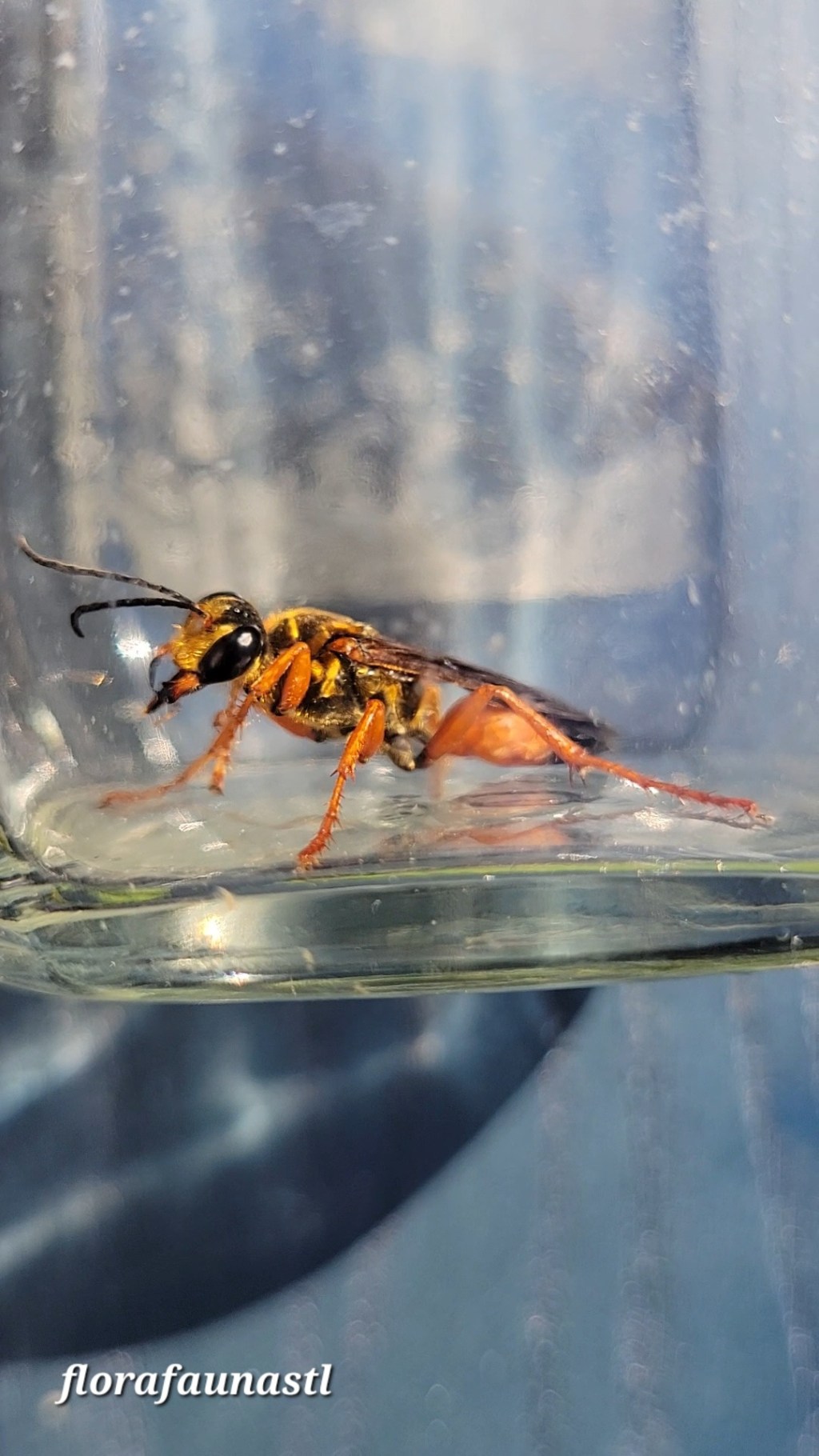
I will admit, their choice of child rearing can be a bit extreme, but these wasps are great to have around, at least for humans and plants. The females only have a limited supply of venom, and reserve that for the capturing of prey, unless you really provoke them. The males don’t even possess stingers and therefore are completely harmless. They not only help to pollinate plants, but their digging helps with irrigation, which allows for rich soil. And since members of the Orthoptera order are known to destroy our crops, these Great Golden Digger Wasps offer free pest service to us!!! If you happen to catch a glimpse of these beautiful orange, yellow, and black wasps, admire its beauty and size (1.5 inches!) and be happy that you were not born a grasshopper. This fascinating wasp is a great reminder that no matter how beautiful nature can be, there is always a dark side, just below the surface.
References:
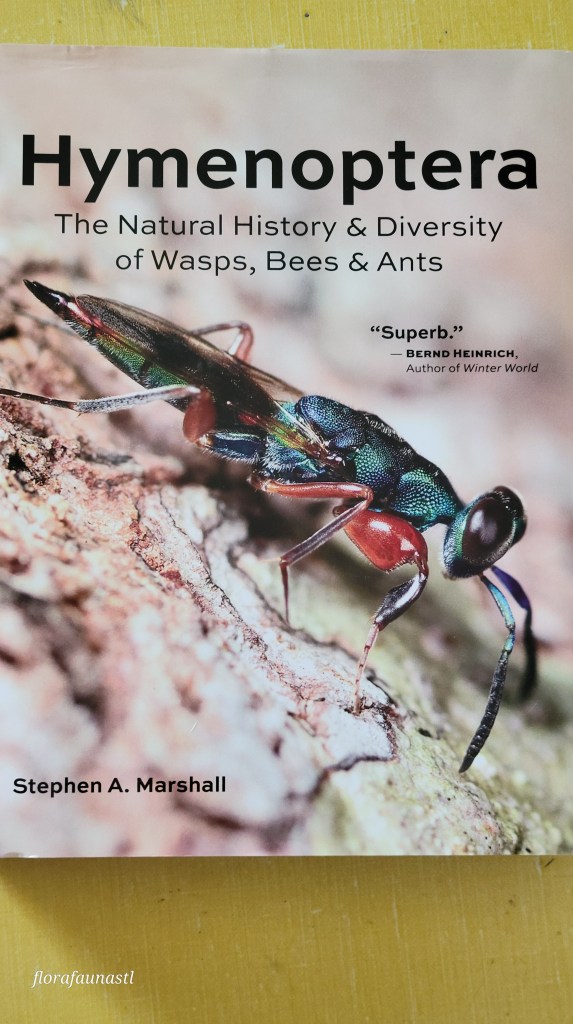
Marshall, A., Stephenson, (2023), Hymenoptera The Natural History & Diversity of Wasps, Bees & Ants, Firefly Books, Buffalo, NY.
https://mdc.mo.gov/discover-nature/field-guide/great-golden-digger-wasp


 Flora Fauna STL
Leave a comment