
Each year we plant the essential vegetable in the garden; cherry tomatoes, squash, zucchini, peppers, sweet potatoes, and carrots. The harvest of all is usually abundant and we have been lucky to have little to no mammal nor insect interference with the garden crops. That said last season our carrots never came through for us. They sprouted their foliage as normal, but that was about it. I had assumed it was just luck of the draw, or maybe we got too hot over the summer and the carrots fried before they had a chance. Theses assumptions changed about a week ago, when I finally took on the daunting task of trying to identify a Weevil that I had found on my shirt last September. Why daunting you ask? Well, there are 2,500 species of Weevil in North America alone, and some of them have such minute differences that is is almost impossible to really tell them apart. I scoured the internet after finding no matches in my books and even that took days of research. I was finally able to find a match however, and this specimen was a Listronotus oregonensis, more commonly known as a carrot weevil. Bugguide.net has been a life saver for the identification of not only this little guy/girl but for several of my finds, and is a great resource for any other insect enthusiasts out there.
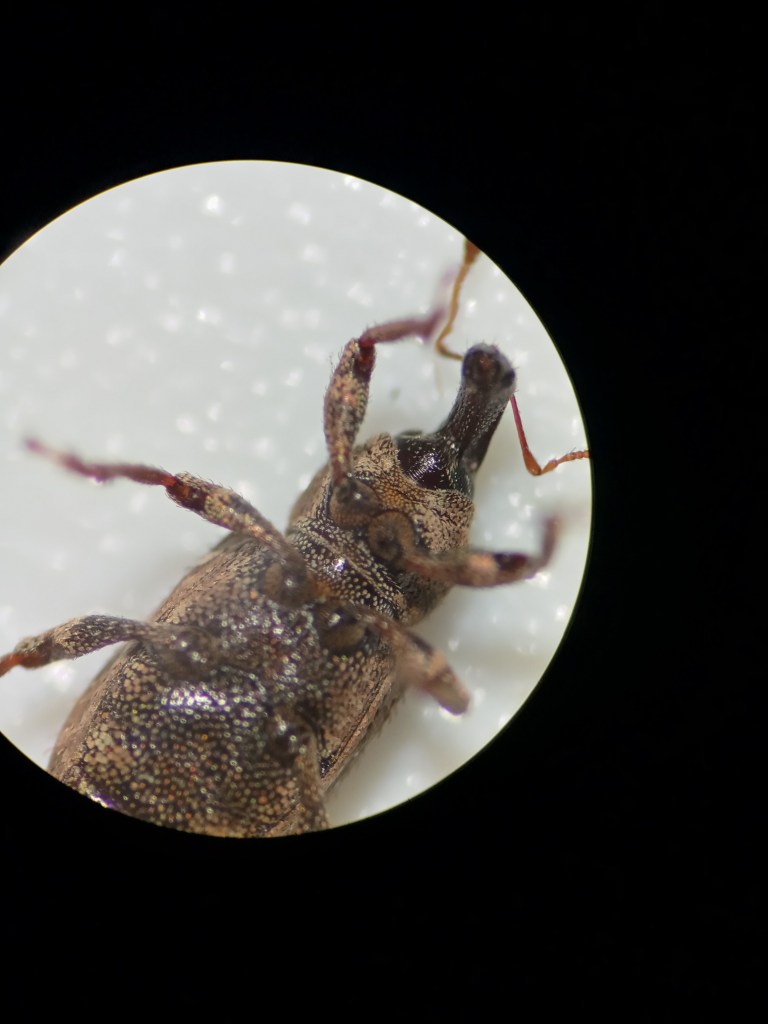
I discovered the hitchhiking weevil after bringing in a few vegetables from the garden, which in hindsight should have raised my suspicion. The irony here is that he was under the spotlight (literally) so I could have questioned him as to his intentions in my garden. But judging by the long face, he may have already been having a hard time. Dad jokes aside, I don’t have much of a personal story for this rustic brown 1/6th of an inch long weevil outside of what I learned from researching this species. As the name implies, this particular weevil is most fond of carrots but also enjoys chowing down on all members of the Apiaceae species; parsley, celery, dill, and parsnip, etc.

The adults live most of their lives near the ground and will overwinter in the top layer of soil under leaf litter and debris. Although they have wings, they rarely fly and prefer to walk. What a waste of wings, although this may be for the best. Just by walking around, an infestation of these weevils can take out as much as 50% of a farmer’s carrot crop in a year. Imagine how much more damaging they would be if they did fly! They can live anywhere from 1-2 years, which shocked me, to be honest. I haven’t exactly gotten a full grasp on the lifespans of all life, insects in particular. With mammals, the basic rule of thumb is the larger the species, the longer it lives, although this is not always the case as little brown bats can live 25+ years. But forget mammals, right now we are talking beetles! When spring rolls around and the temperatures rise, the adult weevils begin looking for a mate. They can be found meeting up over fresh foliage, whispering a few sweet nothings to each other from their elongated mouths, and getting lost in each other’s compound eyes.

They will produce two generations per year, unless the weather is not fitting, in which case they may skip mating until the next spring. The connection between insect behavior/mating and weather is also much more intertwined than I realized before starting this website. (For another example of weather and insect behavior, check out the Differential grasshopper.) The female will lay 2-4 eggs on the petioles (the part of the plant where the leaves attach to the stalk) by chewing a hole into the plant. She will then patch the hole with a secretion which is dark brown in color. These eggs will mature in 1-2 weeks, and the 2-millimeter-long white-bodied and amber-headed larvae will tunnel down into the root of the plant. Here they will go through four instars (intervals between molts) eating in zigzag patterns through the roots and going from one root to the next. Once they have fattened up, the larvae will exit the root, form a pupa in the soil, and emerge as adults in a few days’ time.
They will often destroy whatever root (my carrots!) they tunnel into and, even if there is any root left, who really wants to salvage that?! The infestations of crops can be controlled much easier than other insect infestations due to their love of hiking, and simple crop rotation is usually enough. They do have a few natural enemies, the main culprits being parasitic wasps and ground beetles. I find the weevil to be an admirable insect and respect how something so small can still have such an impact on us as humans, and most of us don’t even know a thing about them, let alone that they even exist. They are completely harmless, rather cute for a beetle, and pretty shy, often playing dead when startled. To be fair, I would faint too if some giant primate put me under a bright light and photographed me for some website I can’t even read.
References:
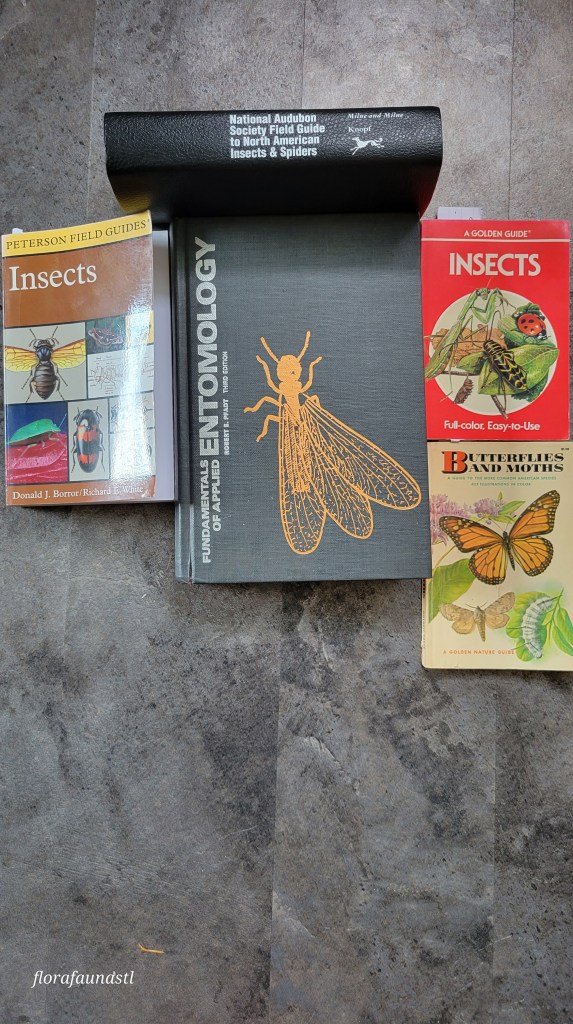
Mitchell, R.T. and Zim, H. S., (1964), Butterflies and Moths A Guide To The More Common American Species, Golden Press, New York.
Pfadt, R. E., ( 1978), Fundamentals of Applied Entomology (3rd edition), Macmillan Publishing Co., INC., New York
Borror, D. J. and White, R. E., (1970), Peterson Field Guides: Insects, Houghton Mifflin Company, Boston, New York
Milne, Lorus and Margery. (1980), The Audubon Society Field Guide to North American Insects and Spiders. Alfred A. Knopf, Inc., New YorkZim, H.S. and Cottam, C. (2001), Insects, St. Martin’s Press, New York
Carrot Weevils
http://www.organicgardeninfo.com/carrot-weevil.html
https://en.m.wikipedia.org/wiki/Listronotus_oregonensis
New Guide Offers Latest in Carrot Weevil Management




Leave a Reply