As a kid, I lived in a two-family flat in Dog Town, a stone’s throw from Turtle Park. My grandparents lived in the unit downstairs, and I spent many summer days with them. Between errands, the news, and the daily trip to Garavelli’s Cafeteria for lunch, I explored the neighborhood and quenched my thirst for adventure. The whole block was either two or four-family units with parking garages in the back. In between the garages and fences that backed up to each other was a type of “no man’s land” filled with overgrown plants. In those tight, uncharted grassy and rarely mowed spaces, I let my imagination prosper and my inquisitive nature develop.
There were insects galore, packs of stray cats that were so numerous my Grandpa Jack set about capturing them and taking them to the Humane Society, bats that hung from the gutters, and birds that roosted on the overgrown foliage. It was here that I first discovered Pokeweed. The four to ten feet tall plants sported grape-like berries that were frequently being plucked from the vine by Cardinals and other songbirds. The branches and clusters of berries from the pokeweed that bravely made their way through the fence fell victim to my lightsaber (a broken broomstick I cherished), and their green foliage and dark purple berries littered the yard.
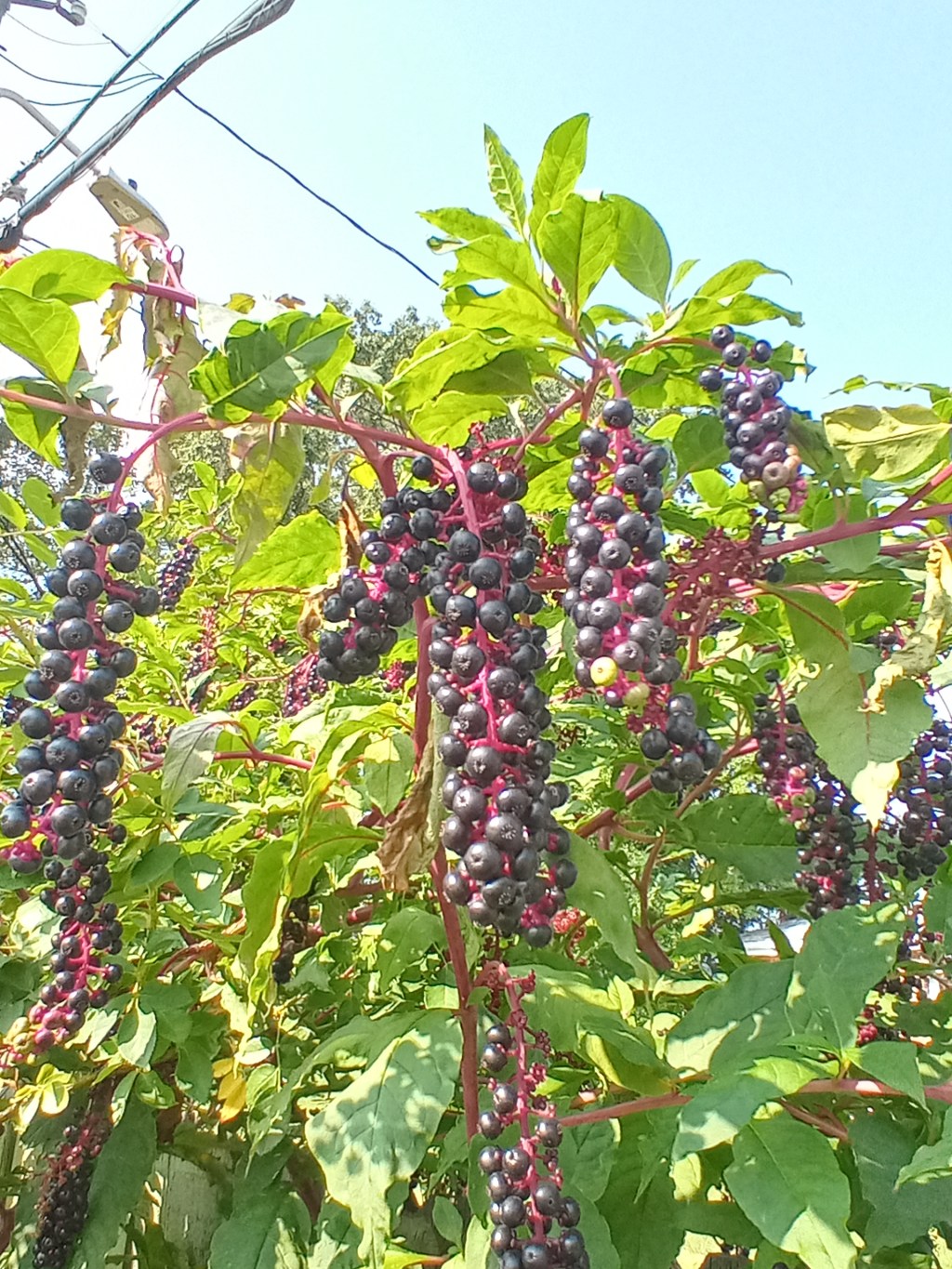
The milkweed pods were my personal favorite as the seeds would float in the wind with the blow from my weapon, but the pokeweed was a close second. Not only were they easy targets swaying in the wind, but the vibrant juice of the berries was smeared on the patio furniture and sidewalk in a primitive cave art type of way. I was not the first to discover the use of the berries for their color; they were once used for producing dye by early European settlers, which is why it is sometimes referred to as an “Ink Berry”.
At the time, I had no idea that my summertime foe was much more dangerous than I realized. You could say I underestimated the power of the dark side, and thankfully, I never found that out the hard way. Pokeweed (Phytolacca americana) is a highly toxic plant; the leaves and berries can kill if eaten. It would be a rather uncomfortable way to go. The toxins take a few hours to cause symptoms, which include burning sensations in the mouth, vomiting, convulsions, diarrhea, rapid heartbeat, and in the event of death, eventual respiratory failure. Some people can become symptomatic simply from touching the plant, as its toxins are potent enough to cause a blistering rash. And if touched with open wounds, the toxin can infiltrate the bloodstream and cause the same issues listed above.
Word to the wise: wear gloves when removing, and avoid having this plant around children or dogs as it is lethal to most mammals. All of that being said, here is the real kicker… up until the late 1990s, the plant was sold in cans for consumption. You heard that correctly! Despite the dangers of this plant, its toxicity levels when young are consolidated to the roots, and as the plant ages, the leaves become more toxic, while the berries are toxic at all phases in their development.
When the plant is young, the leaves can be harvested and prepared to make “poke salad,” which has cultural significance in southern dining. In order to eat the plant, though, the leaves must be boiled in a pot of water for about ten minutes. The water is then drained, and the leaves are strained. A new pot with fresh water is used to repeat the process. This is to be done three times to remove the toxins from the plant, making it safe for consumption. As one can imagine, death from eating this plant was fairly common in antiquity.
Although the plant is not lethal to birds, as I observed as a child, the majority of mammals are affected by it. Occasionally, raccoons and a handful of other species will eat this native plant in small quantities and manage just fine. Some sources state that birds who consume the berries may become intoxicated. At the time of writing, there are no breathalyzers to determine which birds are flying intoxicated.
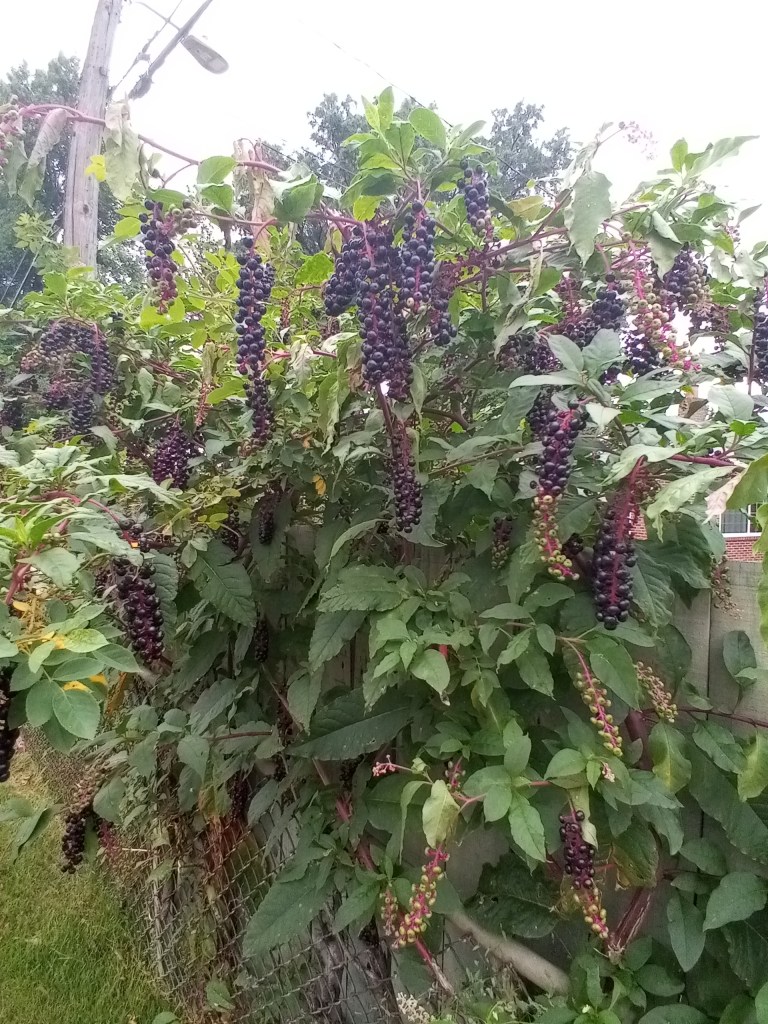
Historically, the plant was used by Native Americans for medicinal purposes, mainly for rheumatism, which European settlers adopted as well. The plant can be found flourishing in empty fields, along road sides, backyards, and wastelands. It is spread mainly by birds through their passing of the seeds, which, thanks to their hard shells, can survive about forty years before sprouting. Although most people (including me) view the plant as a pest, others plant it for its ornate berries and to attract birds to their yards. The plant is very attractive and colorful, with dark purple berries developing from clusters of self-fertilizing white flowers branching off an elegant purplish-pink stalk.
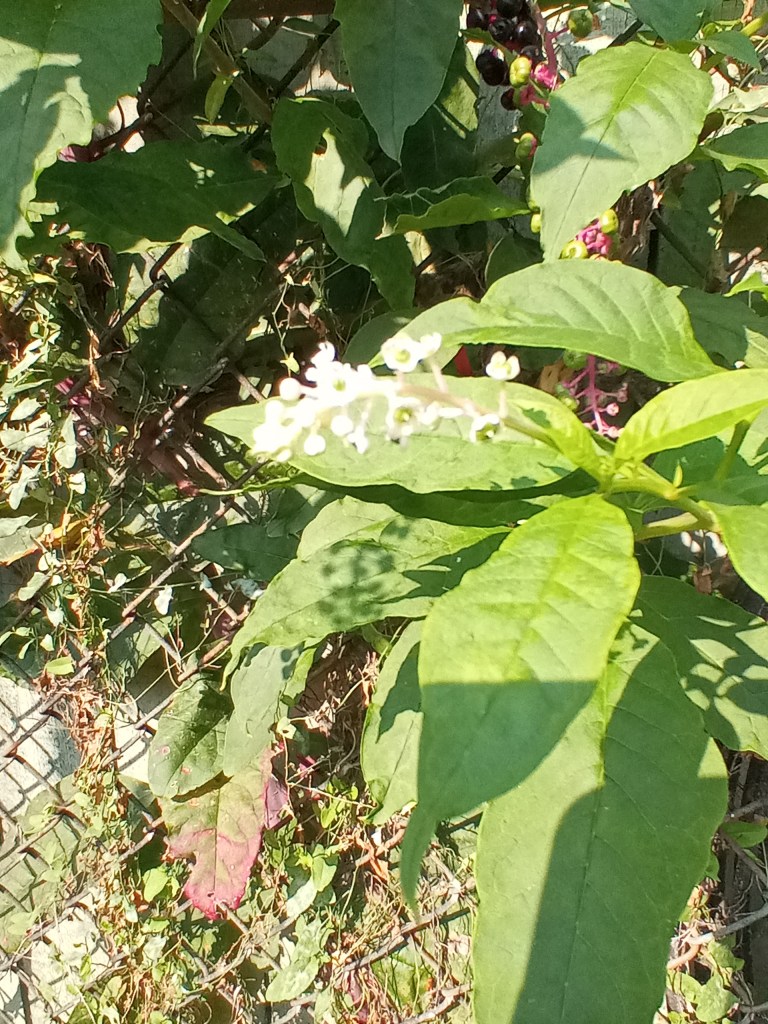
Despite its beauty, I have decided to rid the species from my yard and have been engaged in battle with the young of the plant every summer for the last few years. As you can see in the photos, there are a few mature and well-developed pokeweed plants not far from my house. These days, I use a shovel and gloves to disperse of my foe; my days of being a Jedi have long since passed. I am not sure how I managed to make it unscathed as a child slashing berries from branches on hot summer days, but I do know my own Jedi in training will have to stick with battling milkweeds. Besides the explosion of airborne seeds is much more cinematic anyway.
References:
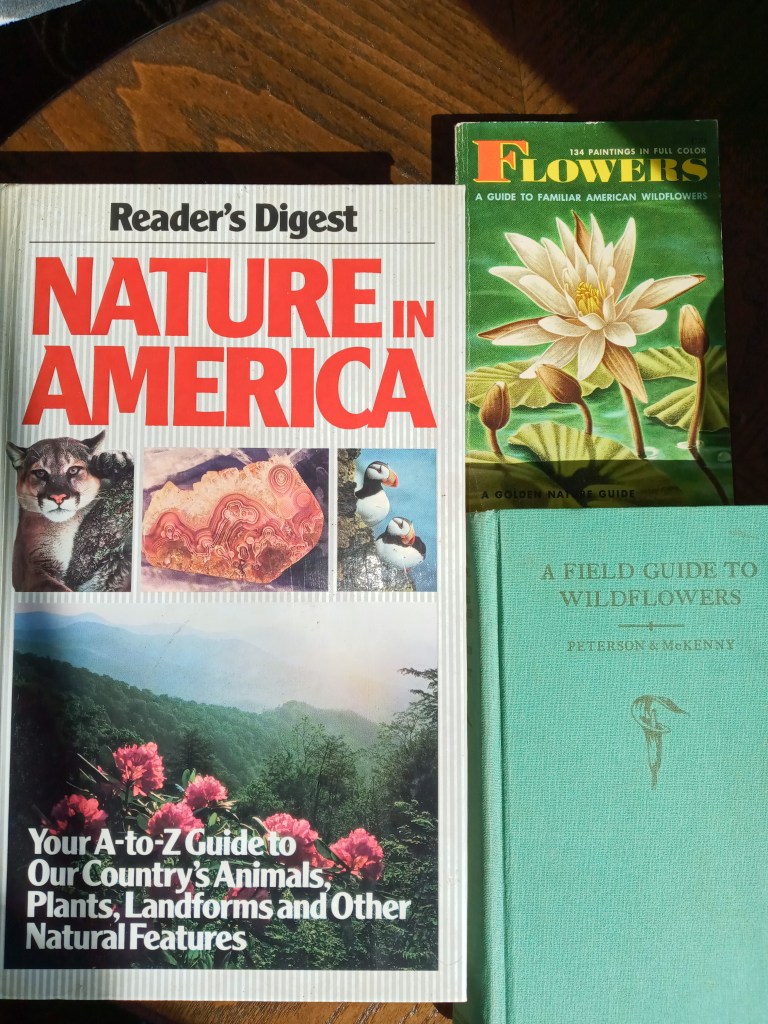
Peterson, R. T. and McKenny, M., (1968), A Field Guide to Wildflowers of Northeastern and North-central North America, Houghton Model in Company, Boston
Zim, H. S. and Martin, A. C., (1950), Flowers A Guide to Familiar American Wildflowers, Golden Press, New York
Readers Digest, (1991), Nature In America: Your. WaS Guide to Our Country’s Animals, Plants, Landforms and Other Natural Features, The Readers Digeat Association, Inc., New York.


Leave a Reply