
It was sometime in May of 2023 when I first saw the streamlined and aerodynamic profile of this bird of prey. I was out for my mid-morning jog and there were two decent-sized birds circling overhead. I was far enough away at first, so I figured they were juvenile Red-tailed Hawks. Another block down, and I was underneath them; they were just low enough for me to make out that they were definitely not hawks. A neighbor of mine was outside, half washing his car, half watching the birds circle around. He is an unpaid coach for me; most times when he sees me running by, he yells out, “Faster! Is that all you got!” or something along those lines. But not today. Instead, he said, “Hey, what are those!?” We both stood there gazing up at these slick soaring birds. By now, one had drifted away, and the one that we could still see had a head that was a lighter color than the rest of its body. We will sometimes get eagles due to our proximity to River Des Père. With that in mind, I replied, “It has a white head. Maybe it is a juvenile eagle?” to which my neighbor replied, “Yeah… maybe… You will never win the races at this pace!” I took off running again as I did actually have a work meeting I needed to get to. I did not realize the impact that bird would have on me, my family, and my neighbors… or the poor hawk that used to be king of the block.
Fast forward a few weeks, and I had completely forgotten about the strange birds and was busy raising my young and getting the yard ready for summer. That is when I heard them. Now, I spend a lot of time outside, and I had never heard this kind of bird call before. At first, I thought my neighbor Mike bought a new “World’s Loudest Squeak Toy” for the dogs, and we were going to have a bone to pick. But when I peeked over the fence, Barkley and Cooper weren’t outside playing. Then I realized the sound was coming from above. I looked up and saw the two birds again! I dropped the shovel and dashed inside to grab my binoculars. Now, my son, he is in the game of knowing Dad is onto something, and he ran out after me like I owed him an explanation for running in the house.
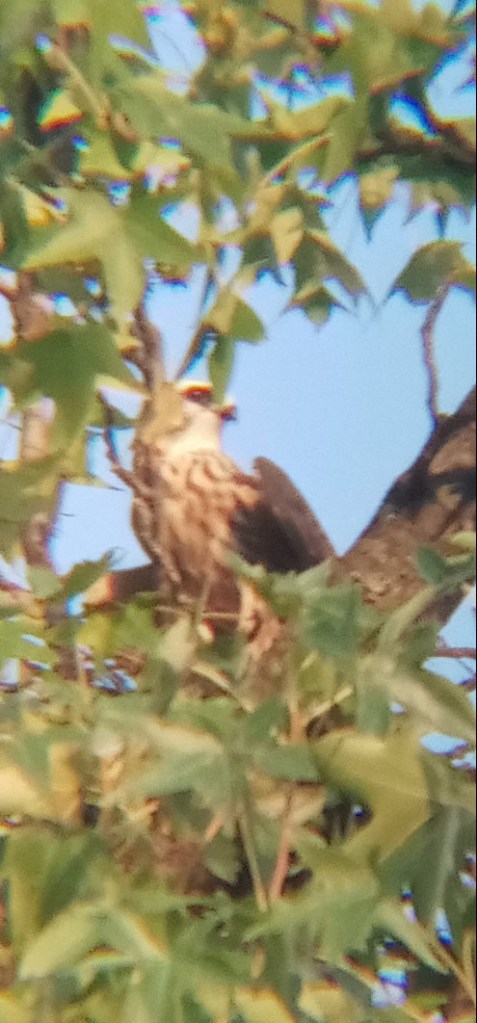
As I gazed up with my binoculars, he kept asking, “Hey, Dad, what are those?” getting louder each time. Eventually, I told him with both excitement and disappointment, “I don’t know.” I handed him the binoculars, but by now, the birds were soaring higher and higher. And then, they started to barrel roll, tuck their wings back, and descend like a fighter pilot in the midst of battle. It was amazing. I had never seen these birds, let alone birds that move through the air with such graceful acrobatics. I had to know what they were, but before I could get a better look, they had drifted off.
A few days later, I heard the call again while I was mowing the yard, and I looked up to see them. This was my first close (if we consider twenty feet close) experience with this bird. One was sitting in the tree next to my house. I grabbed the binoculars, and this time, not only did the boy follow, but my daughter did as well. Once the binoculars were focused, I fell in love. Here was a bird a little larger than a foot tall with grey feathers that had the faintest dash of a blue hue to them. Their wingspan is roughly three feet, give or take. Bright orangish-yellow talons, black beak and a very distinctive red outline around the eyes. The head feathers were slightly lighter than the rest of the body, which I would eventually find out means this was a male, as they tend to have a slightly lighter head than the females.
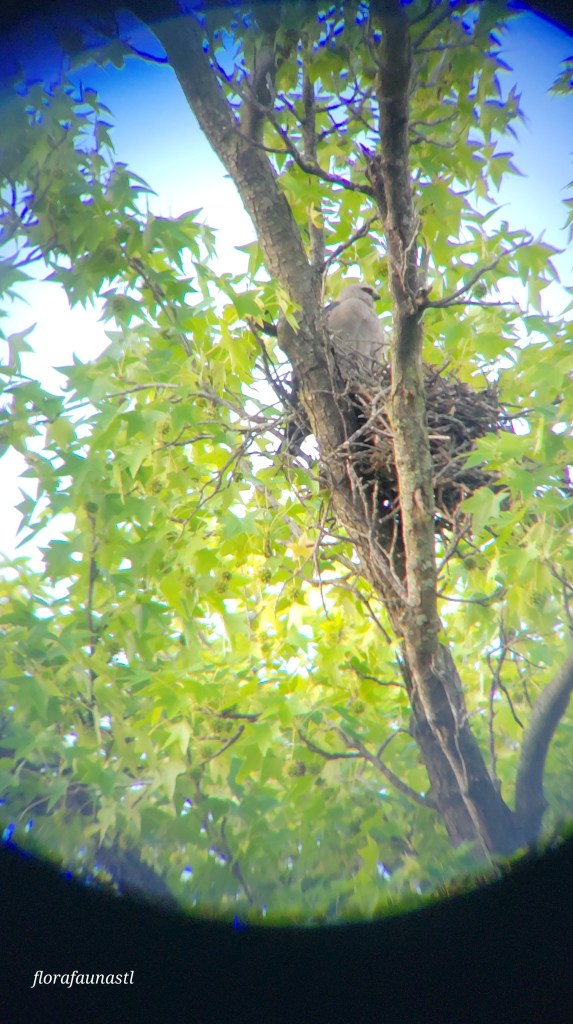
My neighbor Steve was outside working on his tractor (yes, I said that right, and yes, we live in the city), he is not only able to fix anything but he is also an outdoors kind of guy. So, I handed the binoculars off to the kids and asked Steve to come see this bird and tell me if he knew what it was. By this point in time, this poor bird had two children, three grown men (another neighbor joined), and one confused wife, all staring at it. None of us had ever seen this bird before, let alone heard calls like this.
That night, I scoured the internet searching for “grey falcon/squeaky falcon/falcons of Missouri/predatory bird red eye”. I do not remember exactly what search words were entered, but at about 11 pm, I found out that this was an Ictinia Mississippiensis, more commonly called the Mississippi Kite. The next day, I went through all my bird books and did some research. And it was at that moment that this became my favorite bird. I am fascinated by everything about this bird. I have lived in this region my whole life and have never seen, heard, or heard of this majestic creature. Well, lucky me, the tree next door is where they decided to build their nest. To be blunt, it is a rather shabby-looking nest, just large sticks in what looks to be a drunken version of a Lincoln Logs bowl. But hey, if it gets the job done, who cares? From late spring through all of summer, I observed these birds diving through the air, catching and eating insects while in flight. They glide and ascend higher than most and will soar for long lengths of time. There was a Red-Tailed Hawk who used to hang out in this area. One afternoon, I went out for a cigar and saw this hawk falling down in the pecking order. There were three Mississippi Kites mobbing (dive-bombing) this hawk off into the distance. I have only seen that hawk one other time, and he was being roughed up by four Mississippi Kites. This brings me to our first fun fact about these guys: they are one of the few species of predatory birds that move in loose colonies. So it is not uncommon to see groups of them migrating. Like anything in life, once you see something, your eye is trained to see it everywhere. My family recognizes the call and the profile of these guys, and I have to say, this year, they are all around the neighborhood. We have seen them in Willmore Park, Francis Park, even around Forest Park, and every time my son screams, “Look, a Mississippi Kite!” as loud as he can. During my research of these birds, I discovered that they have been pushing the envelope on their northern territory in the past few decades and have even been spotted in the northeastern United States. A bird book that I have from 1966 shows this for their range within North America.
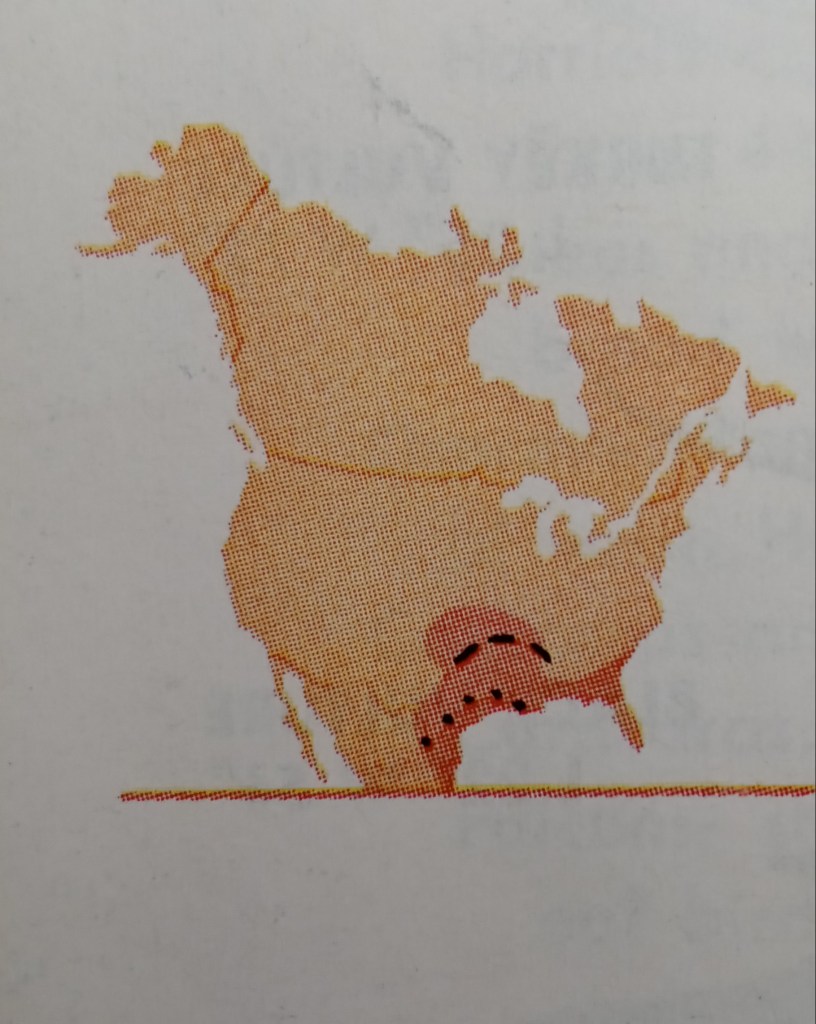
So they have definitely been enjoying the warmer temperatures and pushing their boundaries accordingly. They migrate to North American during the summer months and they raise their young here. They then return to central South America for the winter. They are monogamous and usually lay two to three blueish- white eggs and the young hatch roughly 30 days after the eggs are laid. The young are speckled like a hawk but have the distinctive red circle around their eyes.
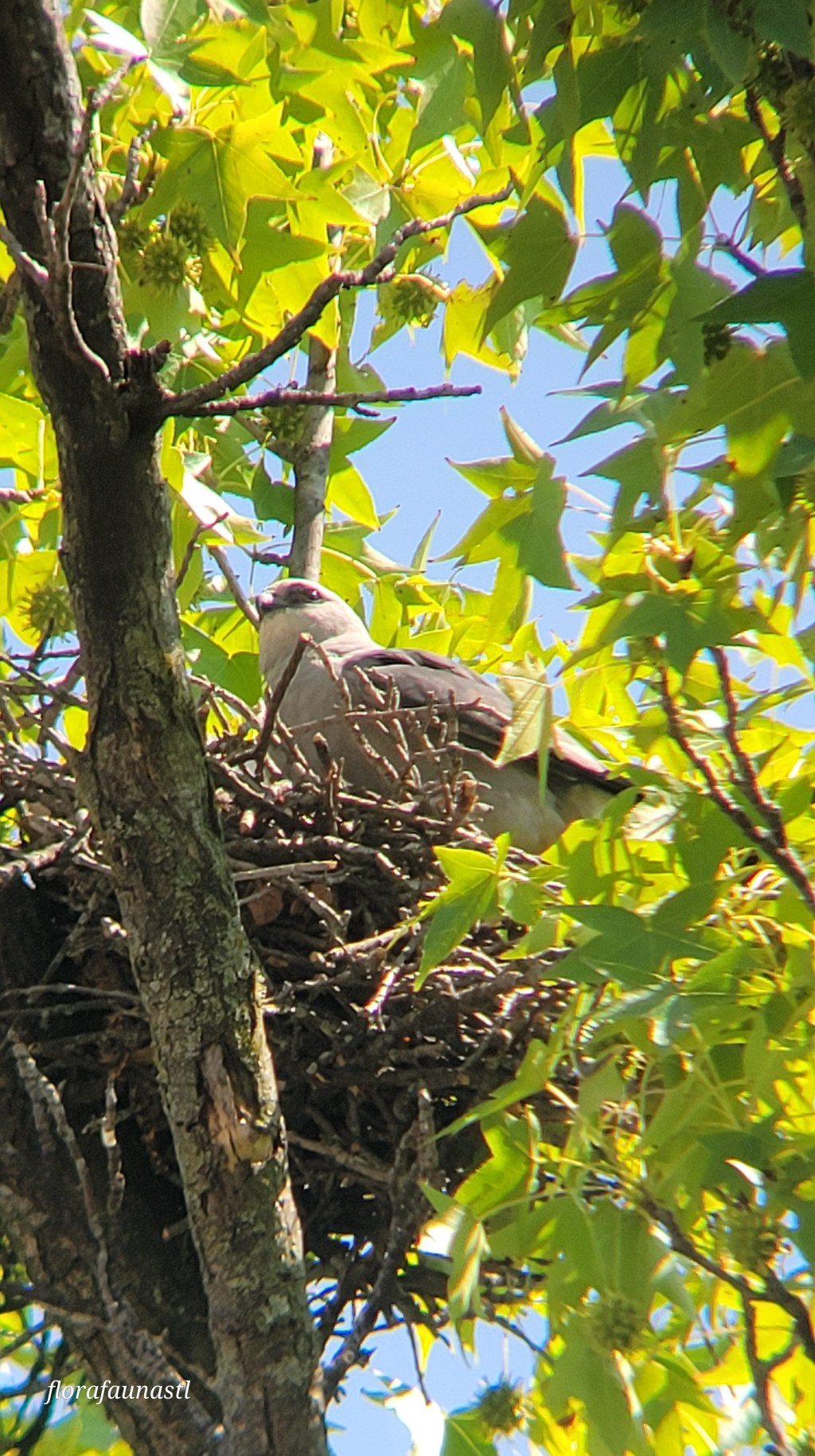
As well the siblings get along and there is no pushing each other out of the nest. About 35 days after hatching the young will explore other trees close to the nest. However from my observation they do mot venture far from the nest at all even after this 35 day period. They form fairly close kinships and the young will often still travel with the parents for up to a year. Sometimes even starting their families close to their parenta new nest in the following years. Now I am not sure if the Kites that moved in next door are just the kind of family that yells but those babies start squeaking from the second the sun comes up and will stop when the sun goes down. I am bringing attention to this because several of the books state the young are hardly heard, but I think what they meant was the parents become hard of hearing.
The parents are constantly out and about, catching insects, plucking them right out of the air. Those dive bombs and barrel rolls are actually them honing in on and catching bugs mid-air. I’ve witnessed a few occasions when Cicadas made the mistake of thinking the coast was clear. The Kite would swoop down and snatch them out of the air, all the while the Cicada is chorusing for dear life, only to be silenced by (and silence briefly) the ever-hungry chicks. They will sometimes eat small rodents and reptiles if they become available. So far, all I have witnessed firsthand is the Cicada population being kept at bay. Autumn is quickly approaching, and that means that my new favorite bird will be departing for South America soon. I will miss seeing them next door, but I am so grateful they came as they helped to influence this website and brought so much wonder not only to my family but also to families in the neighborhood as well. I have been out and about and heard some folks asking people around them, “What are those birds?” Sometimes I fill them in, other times I let them ponder. There is something so powerful and moving about a little bird flying between continents and performing death-defying stunts right above our busy city, that so few people even notice. Most of us are just busy going about our daily lives… and so are the Mississippi Kites.
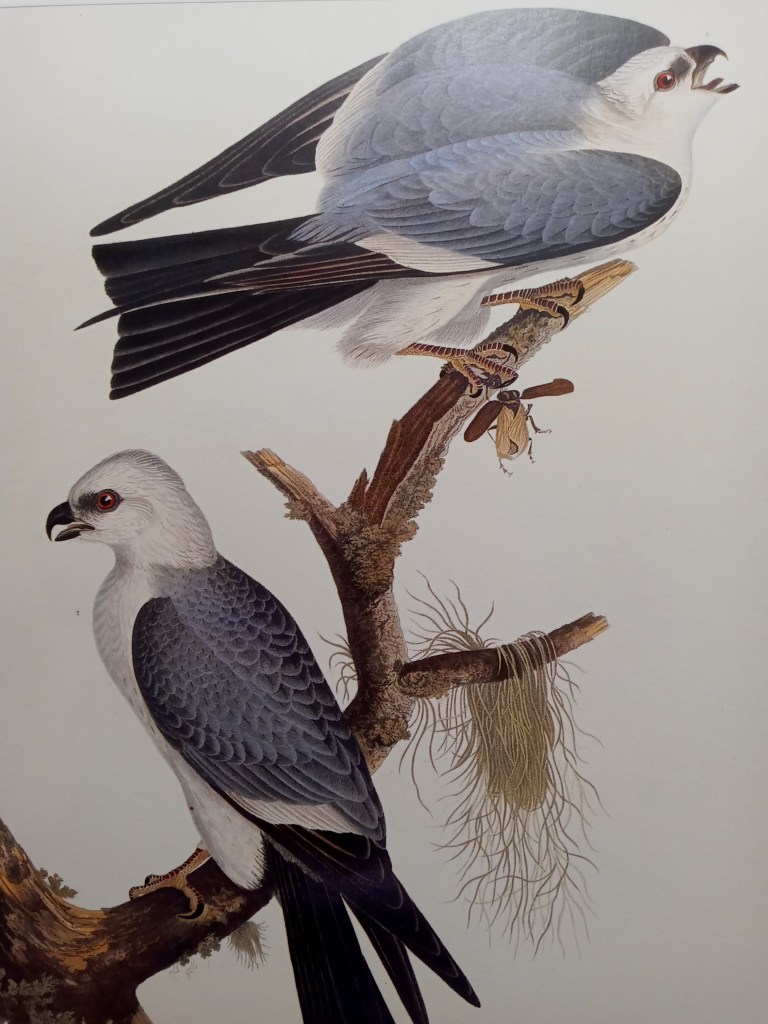
An illustration of the Mississippi Kites observed by John James Audubon.
Reference:
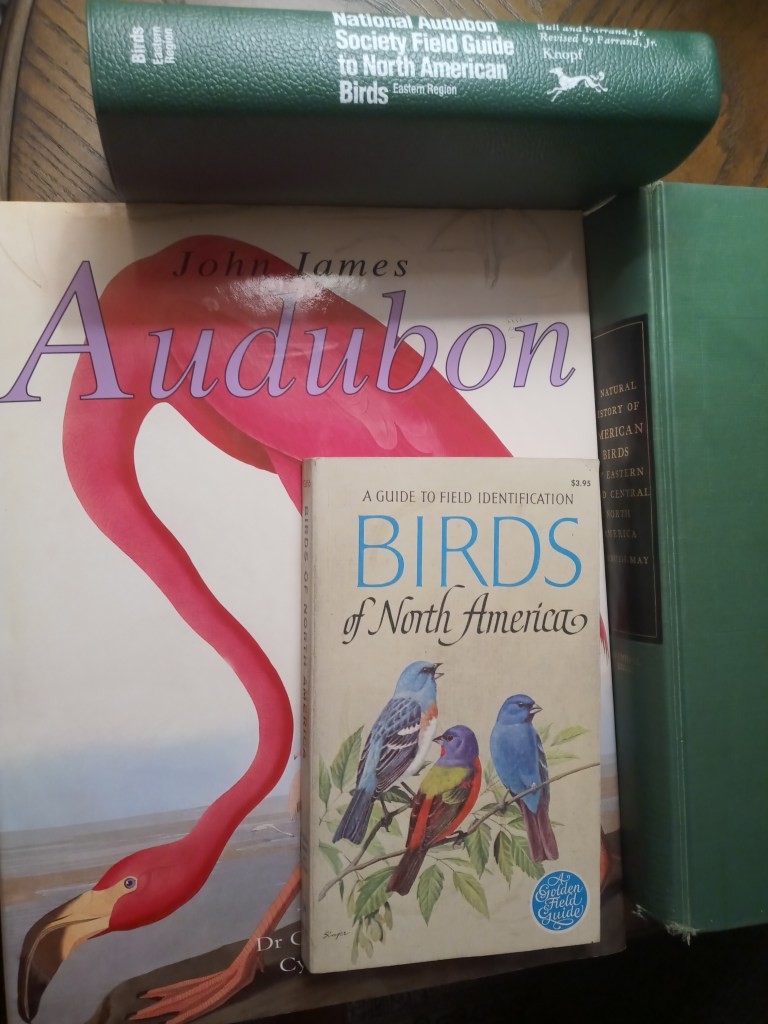
Robbins, C.S., Bruun, B. and Singer, A. (1966), A Guide To Field Identification Birds of North America, Golden Press, New York
Brown, C., Walker, C., (1999), John James Audubon American Birds, Grange Books
Bull, J., Farrand, J. Jr, (1996), National Audubon Society Field Guide to North American Birds, Alfread A. Knopf, Inc., New York
Forbush,E. H., May, J., B., (1955) , A Natural History of American Birds of Eastern and Central North America, Bramhall House, New York


 Flora Fauna STL
Leave a reply to Martin Cancel reply