
When life gives you lemons, you make lemonade. Similarly, when life gives you a snowstorm, you go sledding….unless your sledding hill is occupied by Giant Canada Geese, in which case…go find another hill. This newly penned ancient proverb has served to keep many children safe from goose attacks and helped them keep their sleds, boots, and gloves free of goose poo. Anyone who has spent time near the stomping grounds of geese can attest to the staggering amount of waste they leave behind, which is due to their extremely efficient digestive system. On average, a goose will leave droppings up to 28 times a day, sometimes as much as 2 pounds of waste! So you can only imagine how much waste a gaggle (group of geese) will leave behind. This is due to geese being voracious eaters, consuming upwards of 4 pounds of vegetation a day, with an occasional crustacean here and there.

The Canada Goose (Branta canadensis) has several subspecies, which often overlap in territory and can be distinguished by color patterns, size, and calls. All Canada geese, regardless of subspecies, are easily identified by the distinctive black neck and white chin strap patterns. The Canada goose is native to North America and can be found throughout Canada and the United States, with southern portions of the United States being home for migratory geese in the winter. As a rule of thumb, the subspecies living in northern regions are smaller than their southern cousins and those subspecies that are further west are darker in color. Missouri has resident Giant Canada Geese (Branta canadensis maxima) which can be found here year-round; additionally, we have Canada Geese that migrate here in the winter from Canada.
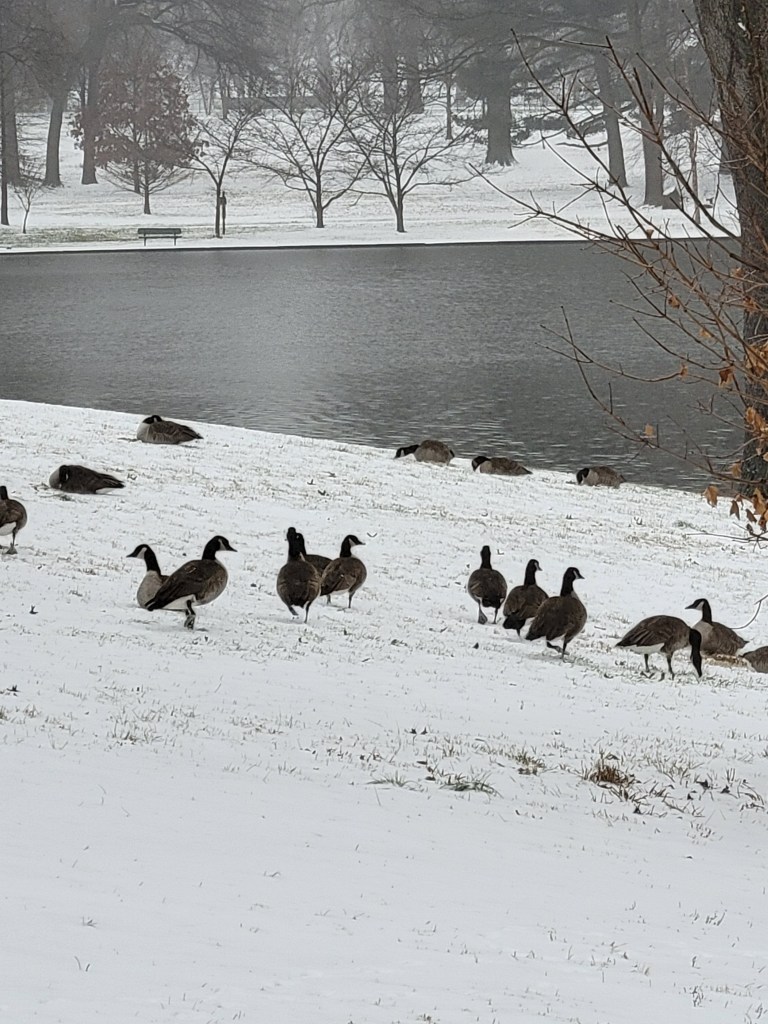
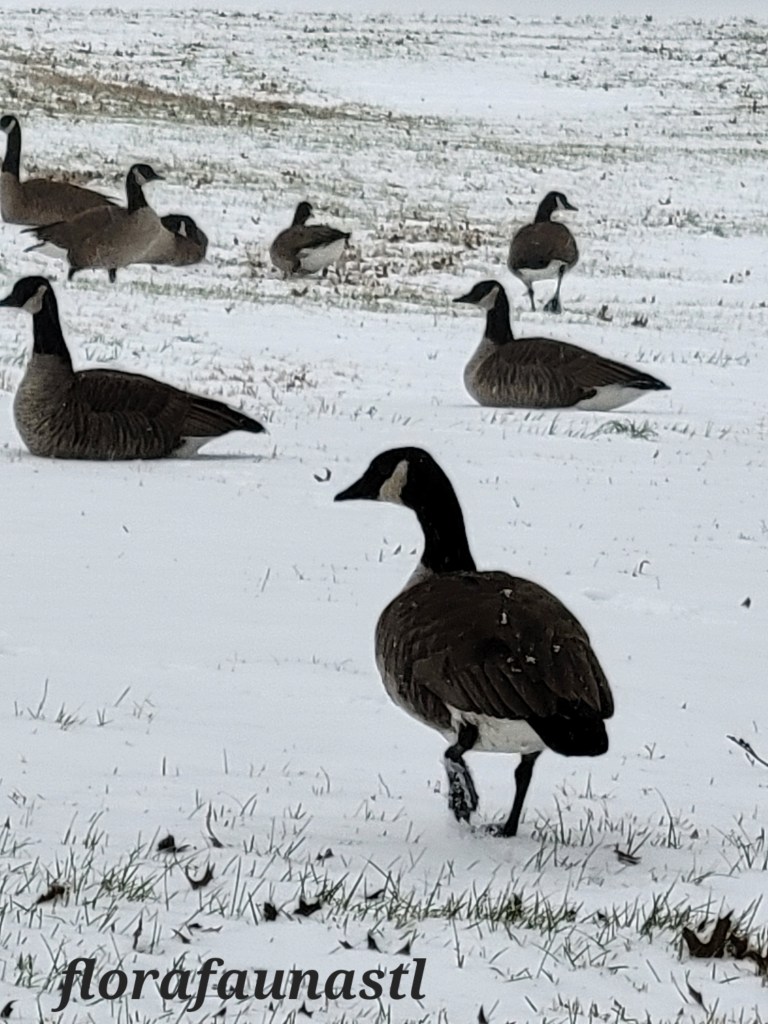
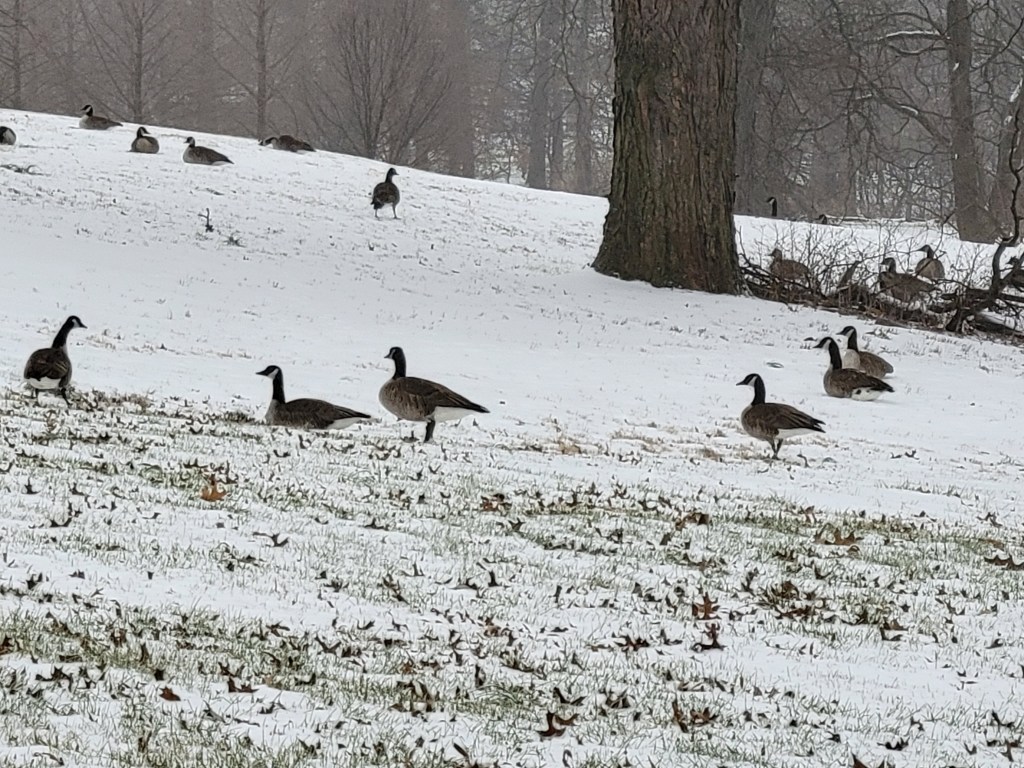
The Giant Canada Goose is the largest of all goose species, weighing up to 20 lbs and reaching wingspans of slightly over 6 ft in length. Giant Canada Geese are native to the Missouri River Valley but were severely impacted by hunting, egg cultivation, and habitat destruction in the early 1900s. By the time the roaring 20s rolled around, these geese were a rarity, and by the 1950s, the subspecies was declared extinct. Fortunately, in the 1920s, a flock of Giant Canada Geese was purchased by North Dakota resident Dr. Mayo for his property. This flock grew quietly in North Dakota, taking advantage of a newly formed warm lake thanks to the damming of the Zumbro River for the construction of a new power plant. Other Canada Geese picked up on these warm waters as well, and the geese became non-migratory. In the 1960s, the Giant Canada Goose population that had been living a solitary life in North Dakota was rediscovered by biologist Dr. Harold Hanson. Thus began the start of what is now touted as one of the most successful conservation accomplishments of the 20th century: the reintroduction of the Giant Canada Goose to its native range.
The efforts of conservationists were so successful that now the Giant Canada Goose population is somewhat of a nuisance. They are so adept at living in urban environments that they will often explode in population and contaminate water and sidewalks with their waste. Geese can spread diseases like giardia, E. Coli, Salmonella, Listeria, toxoplasmosis, as well as being natural reservoirs of the H5N1 virus, more commonly known as bird flu. In addition to the unsightliness and health hazards all that goose poop causes, there is also the fact that geese are pretty intimidating. Any time geese feel threatened, they will give warnings by hissing, spreading their wings, and making snake-like motions with their long necks. If the warning signs are not enough to ward off potential predators (foxes, coyotes, bobcats, birds of prey, etc.) or perceived threats (park patrons), then an attack typically ensues.
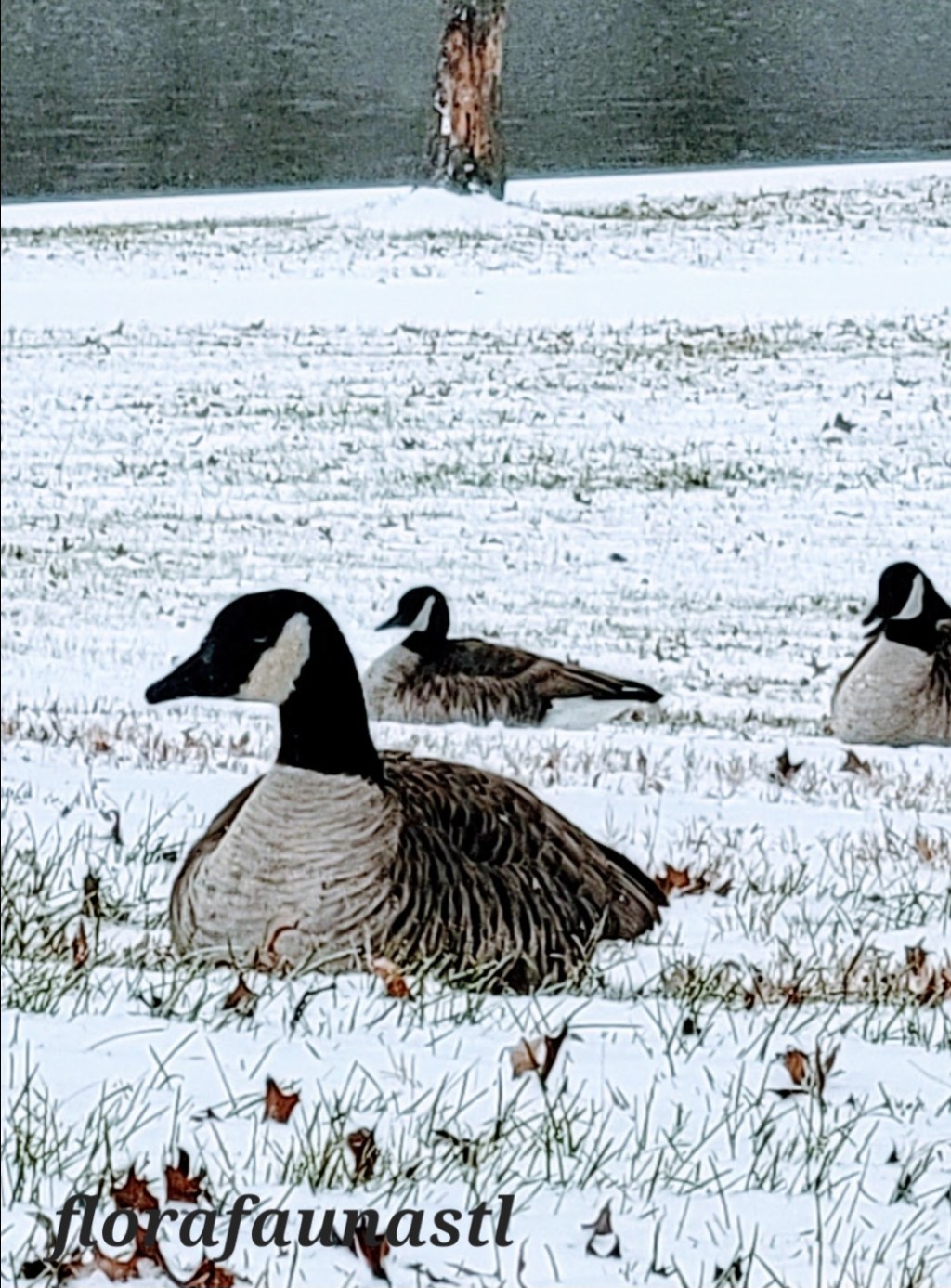
When I was in college, there was a pair of Canada Geese that decided to build their nest between the parking lot and the front door of our dorms, and they would often chase, nip, and fly into fellow students just trying to get to and from their dorm. I had always done my best to avoid them, but one night I was caught off guard. A friend and I were coming back from a party on a particularly stormy night. We knew the geese were around, so we tried to balance caution with our eagerness to avoid getting soaked by the rain. Let’s paint the scene; it was around midnight, very heavy rain with lightning and thunder, inhibitions were, let’s say, slightly impaired, and we had a good 200 ft of grass between our car and the warmth of the dorms. Aware of the geese, we counted to 3, jumped out of the car, and began making a dash for the dorm. My friend, who is on the bigger side, was a tad slower than I, and at that point it was every man for himself. As I was jogging and avoiding puddles the best I could, I heard my buddy yell, “Oh snap, the goose bro!!!” I turned around thinking it had taken him down, but instead what I saw was a goose gliding eye level towards me with its mouth open. I turned and ran but heard the goose honk getting closer and finally decided to just slide in the mud. The goose landed on top of me; I pushed it to the side in what became a ground scuffle and my friend ran past. I gathered my bearings and got back to my feet and booked it for the light of the dorm’s front door. The goose chased me the full way to the door. My buddy was holding the door open and yelling for me to hurry. Needless to say, I survived the event, albeit more muddy than I had intended, and my tennis shoes were ruined. I felt like Professor Grant when the T. REX escapes in the first Jurassic Park, rain and all. As silly as the whole story sounds, I am lucky that it didn’t get too serious.
Goose wings are strong enough to cause some pretty nasty bruises and can even break bones, as well, their bites are pretty intense, from what I have been told. Although these attacks may seem extreme to us, the geese are simply trying to ensure that they and their young are safe. Canada Geese will mate for life and typically find a mate in their second year of life. In the event one of the geese dies, the other may choose a different mate; however, they have been observed to remain alone for the remainder of their lives. The pair will produce 1 brood per year, with up to 8 eggs being laid per year. Eggs are incubated by both parents for around 25 days. During the incubation phase, the adults will molt, meaning they shed their old feathers for new feathers. This means that the adults are also unable to fly during the time the eggs are laid and for a few weeks after the eggs hatch, as molting usually takes about 6 weeks. The adults during this time will be more aggressive and will utilize water to avoid land predators if their aggression does not deter threats.
The goslings (baby geese) will not be able to fly for about 10 weeks after hatching and can swim safely in about 2 weeks once their feathers are developed. Goslings will stay with their parents until the following spring migration when they return to their birthplace if they belong to a subspecies that migrates. For the Giant Canada Goose, the goslings leave their parents’ company after about 1 year, although some will stay with their family groups until reaching sexual maturity at 2 years old. Canada Geese can live for up to 33 years, which is much older than I would have initially guessed.

Geese are famous for their flying V formation, which all children of the 90s know thanks to the Mighty Ducks. The V formation allows for less wind resistance and is more energy-efficient for the flock. Geese will take turns in the rotation of the V-shaped formation and are in constant communication during their flight. They can travel up to 40 mph and have been reported as high as roughly 30,000 feet in the air, although during migration they tend to fly at about 3,000 ft in the air. Because of the large size of Canada Geese and their habit of flying together, they cause extensive damage to aircraft and have even been responsible for a few plane crashes. Collisions between birds and aircraft are known as “Bird-Strikes,” which makes it sound like an intentional attack by the birds, something akin to a Farside comic.
Canada Geese are, admittedly, an animal that has always just kind of been there. I see and hear them flying, see them at local parks, in the backdrop of artwork, and have never thought to myself really anything about these animals. It is no fault of the geese that I took them for granted; they have just always been there. But now that I know their history, I am finding myself with conflicting emotions about my own species. I am horrifically numb to the idea that the Giant Canada Goose subspecies was almost completely wiped out and would have had nothing more than a whisper in biology and history books about their ever having existed. At the same time, I am amazed that the conservation efforts, coupled with the extreme adaptability of the Giant Canada Goose, worked so well that this species is now somewhat of a nuisance. It is a sad reflection of myself and all of us to not really appreciate what we have. To no deeply understand the efforts and the sacrifices made by others to ensure that a species survives. The White-tailed Deer, the Wild Turkey, and now the Canadian Goose…are all species that were almost gone. Let that really sink in. The next time you see geese in a flying V formation, remember that at one point, in the not-so-distant past, people saw that V formation flying overhead and were unaware it was almost the last time anyone saw that particular species.

References:
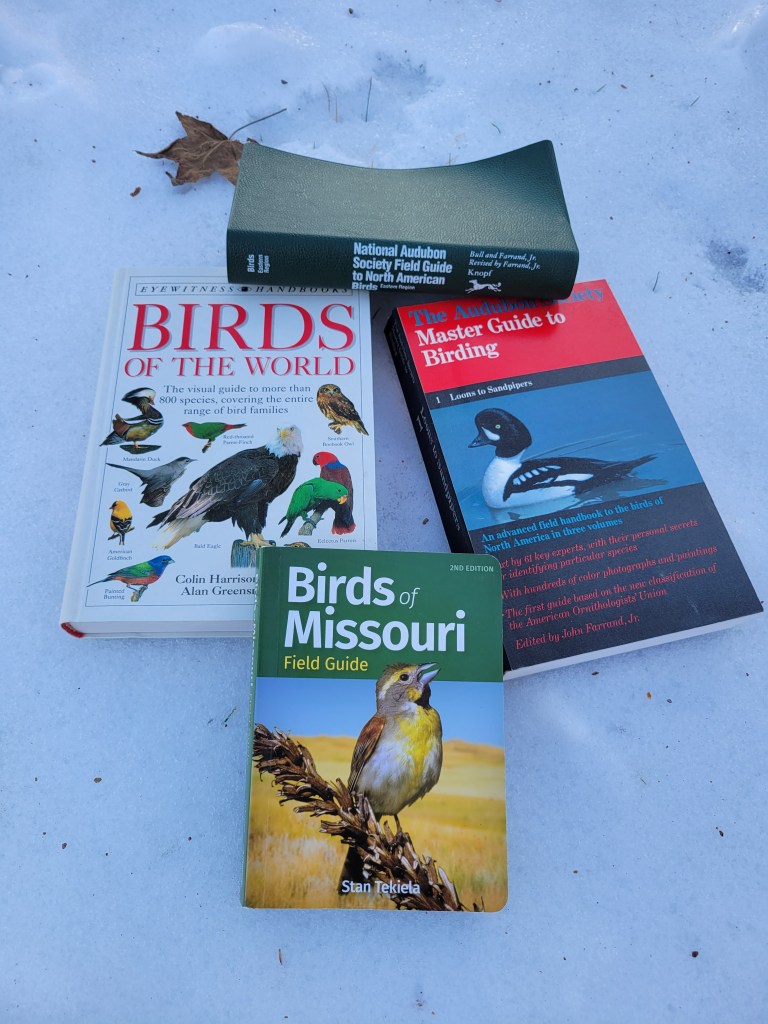
Harrison, C., Greensmith, A., (1993), Birds of the World, Dowling Kindersley, Inc., 95 Madison Avenue, New York, New York
Tekiela, S., (2021), Birds of Missouri Field Guide, Adventure Publications, Cambridge, Minnesota
Forbush,E. H., May, J., B., (1955) , A Natural History of American Birds of Eastern and Central North America, Bramhall House, New York
Bull, J., Farrand, J. Jr, (1996), National Audubon Society Field Guide to North American Birds, Alfread A. Knopf, Inc., New York
Robbins, C.S., Bruun, B. and Singer, A. (1966), A Guide To Field Identification Birds of North America, Golden Press, New York
The History of the Giant Canada Goose
https://en.m.wikipedia.org/wiki/Canada_goose
 Flora Fauna STL
Leave a comment