‘Tis the holiday season, the presents are wrapped, the Christmas tree is decorated, and the fire in the fireplace seems to dance to the Christmas music which has played non-stop since the day after Thanksgiving. One song in particular, “The Christmas Song,” is a favorite for my children this year. I am sure the discovery of a chestnut tree in our neighborhood sparked their excitement as they now have a mental image of what Nat King Cole is referring to with the line “chestnuts roasting on an open fire.”
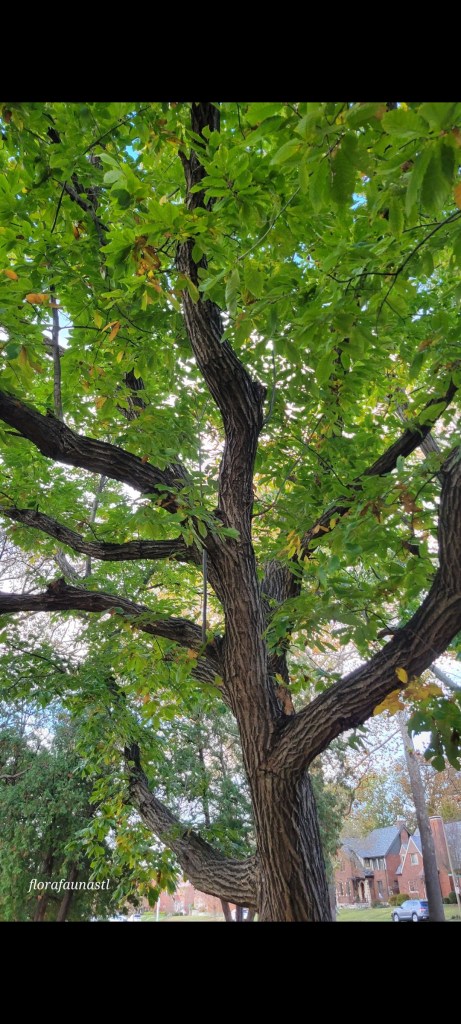
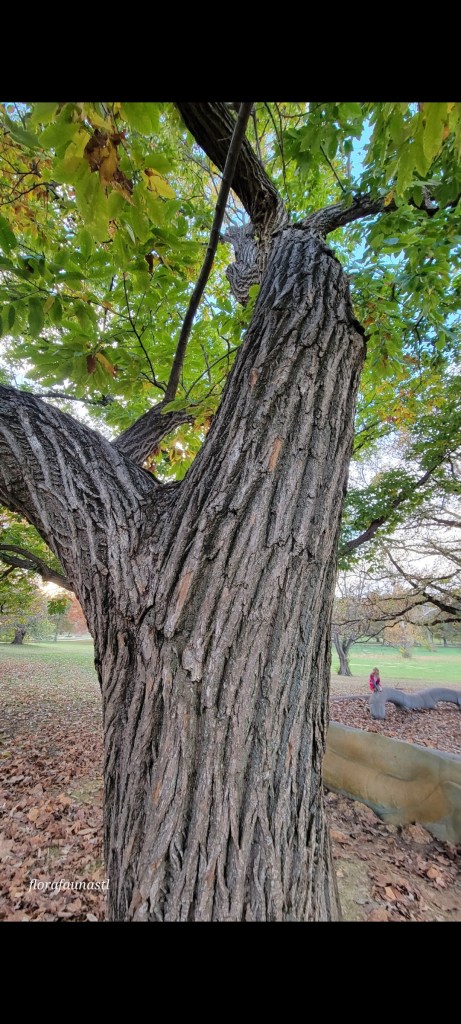
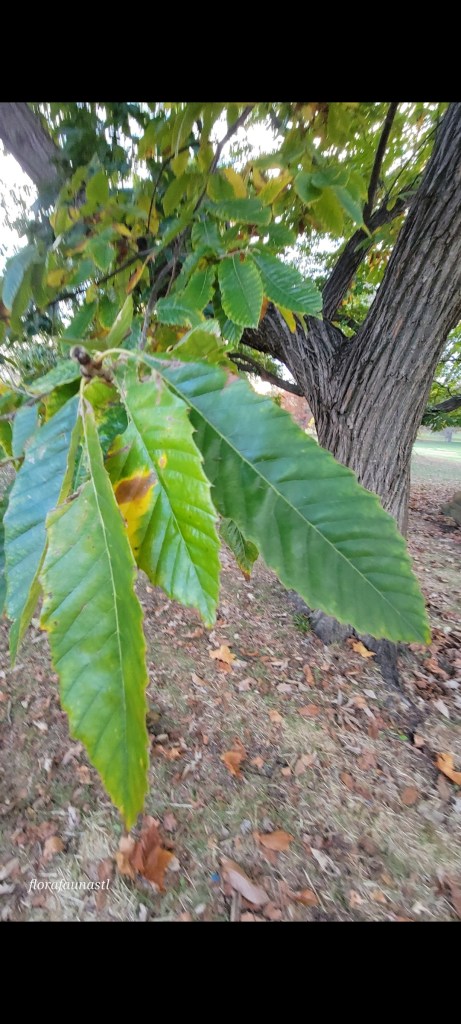
Despite Nat King Cole serenading us with one of the most beloved Christmas songs of all time, he didn’t actually write the song. It was originally written by Mel Tormé and Robert Wells in July of 1945 on a particularly hot day in an attempt to stay cool by thinking about winter and cold weather. The reference to chestnuts roasting on an open fire was an ode to their childhood and the common practice of, well, roasting chestnuts on an open fire. I can’t say for sure if the writers knew it at the time or not, but the chestnuts they were writing about would be functionally extinct a mere five years after the song was written.
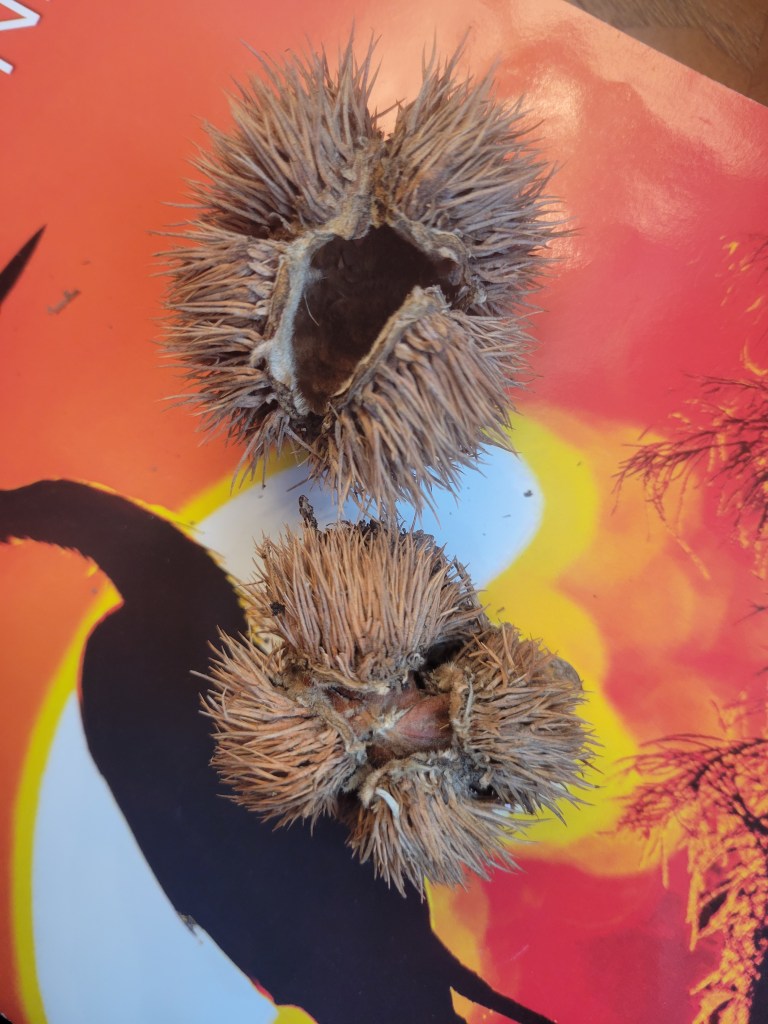
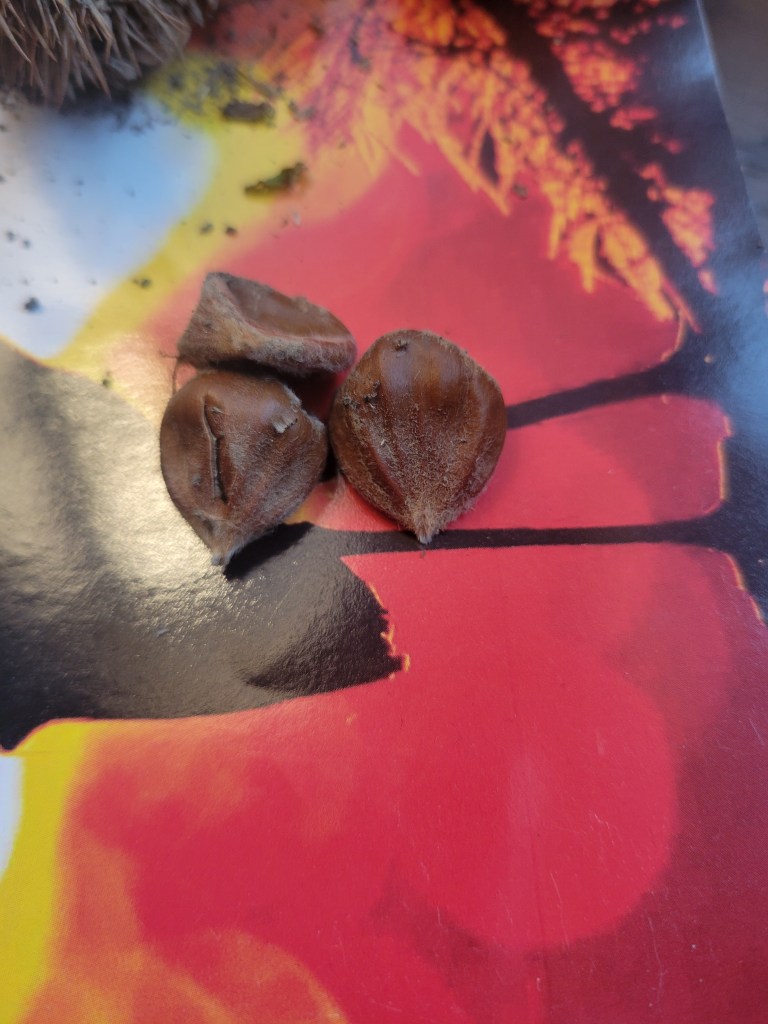
The American Chestnut (Castanea dentata) was once a major player in forests ranging from Mississippi up to Maine and was a keystone species, meaning it helped to define an entire ecosystem. You know those old pictures of the giant redwood trees from the West Coast? Well, the American Chestnut trees were lovingly called the “Sequoia of the East”, and for good reason. They shot high up into the sky, reaching heights of 100 ft to 125 ft, with trunk diameters reaching up to 16 ft. They could also live for at least 250 years and were hardy survivors. These trees were massive, and they were a great source of wealth for many people and animals. In some regions of their natural range, they made up between 25-50% of the canopy, and it was theorized that a squirrel could travel from New York to Georgia solely by way of American Chestnut branches. Clearly, with this large of a population, the trees produced huge amounts of chestnuts for all to eat. People, bears, squirrels, hogs, deer, and many other species looked forward to the annual production of the delicious nuts. In addition to that, the wood is naturally resistant to rot and provides the ideal material for furniture and housing. You can see historical pictures of the American chestnut here.
They say the bigger you are the harder you fall, and unfortunately for the American Chestnut, this saying rings true. But it was not because of man’s natural ability to dwindle resources down through deforestation and overconsumption. This was actually a genuine, although devastating, accident on man’s part. The Columbian Exchange allowed for many crops and goods to move throughout Europe, Asia, and the Americas; it also allowed for the introduction of invasive species, one of which was a fungus that the American Chestnut had no resilience to. The Japanese Chestnut (Castanea crenata) grows quickly, produces those delicious nuts, and only grows up to 50 ft tall. This was introduced to the Americas for commercial production of chestnuts as well as providing people the chance to have a chestnut tree in their yards. Unfortunately, these trees harbored an unknown (to the Americas) killer fungus: Chestnut Blight (Cryphonectria parasitica).
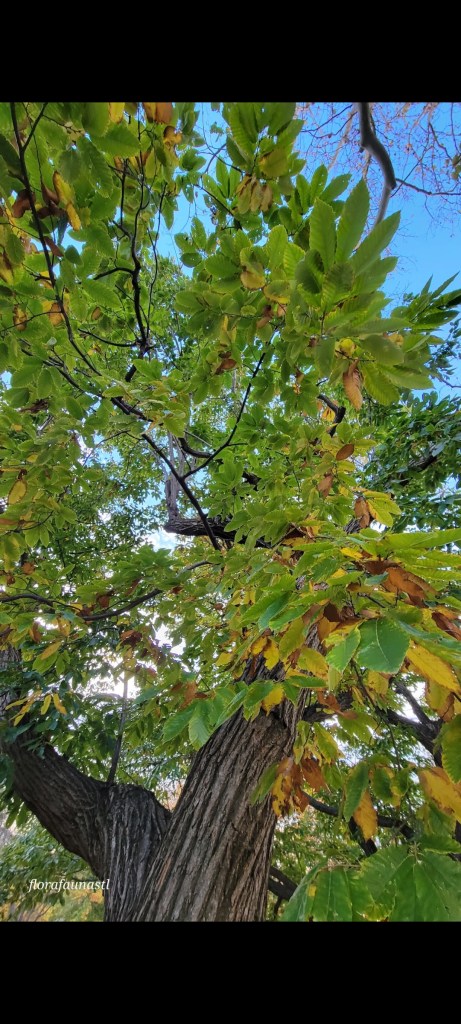
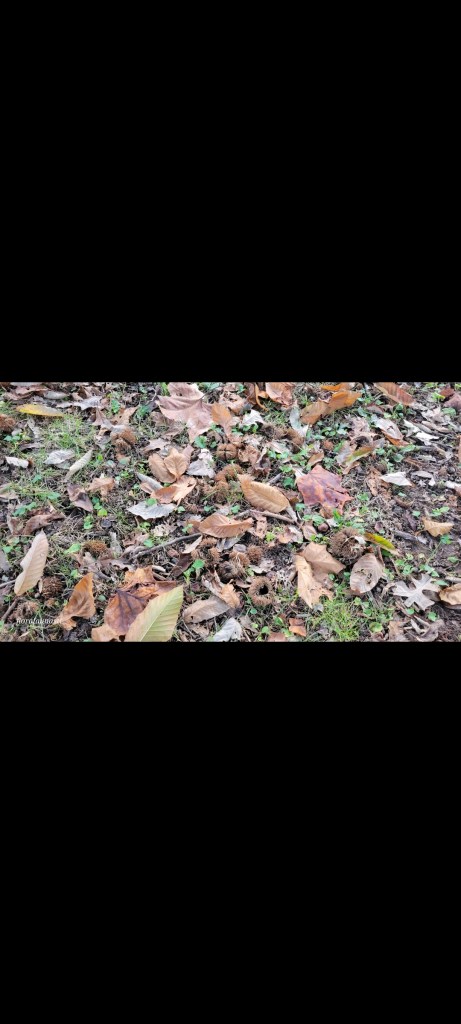
Chestnut blight infects the tree by making its home in and under the bark. I am going to oversimplify here, but the fungus produces toxic compounds, and the tree will succumb to the fungus growing under the bark and eventually perish. The fungus spreads in multiple ways: through the air via spores, through water splashing from an infected tree to another tree, and from arboreal animals unknowingly transporting spores from tree to tree. The American people noticed the fungus infecting trees in New York in 1914 and made many efforts to stop the spread, even cutting down infected forests in hopes that the fallen trees wouldn’t spread the fungus. Their efforts were in vain though, and the fungus spread like wildfire, expanding its range by roughly 50 miles per year. By 1950, an estimated 3.5 to 4 billion American Chestnut trees had succumbed to the fungus and have never made a return.
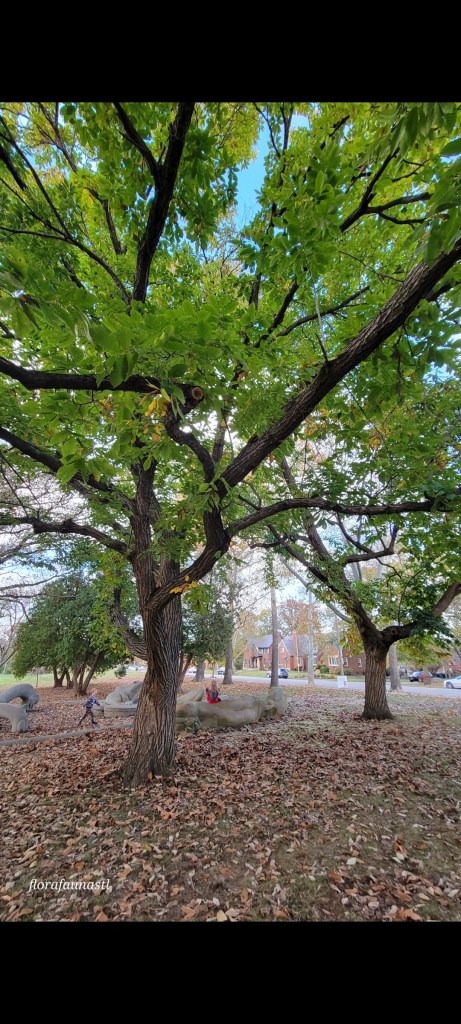
The fungus does not damage the root systems, though, and now young American Chestnut trees can be seen sprouting from the stumps of their former giants. Unfortunately, the fungus infects them before they reach sexual maturity, and thus the American Chestnut is considered to be functionally extinct. There are now efforts in place to restore the trees to their former glory. The Chinese Chestnut (Castanea mollissima), which is what is in our local park, is resistant to chestnut blight, and they have been crossbred with the American Chestnut. The Chinese Chestnut does not grow straight up in the air as the American Chestnut does. They reach max heights around 40ft and also branch out close to the ground.There are also pure American Chestnut trees that have shown some resistance to the blight, but they are still highly susceptible to the fungus and rarely reach the size of their ancestors. I will admit, I knew none of this when I started trying to identify our local chestnut tree. I had no idea that we were missing out on such an amazing and impressive tree. I know that we are at a crossroads in terms of extinction, but something about this one really gets me. The trees were a staple of many Americans, and the efforts for conservation and sadness felt by all as these trees disappeared is truly heartbreaking.
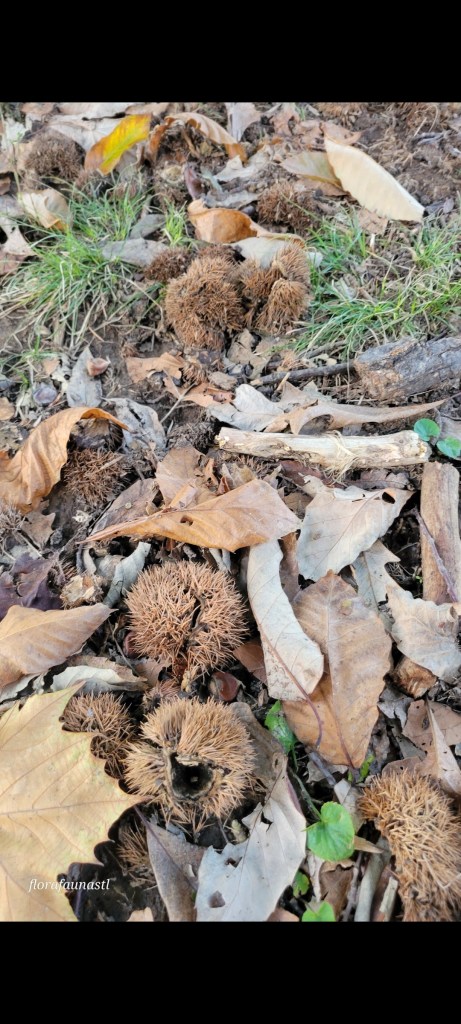
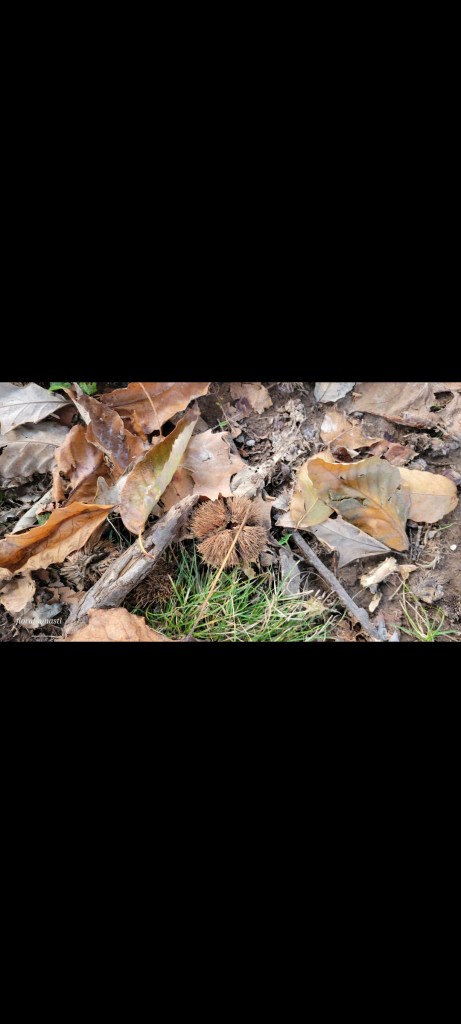
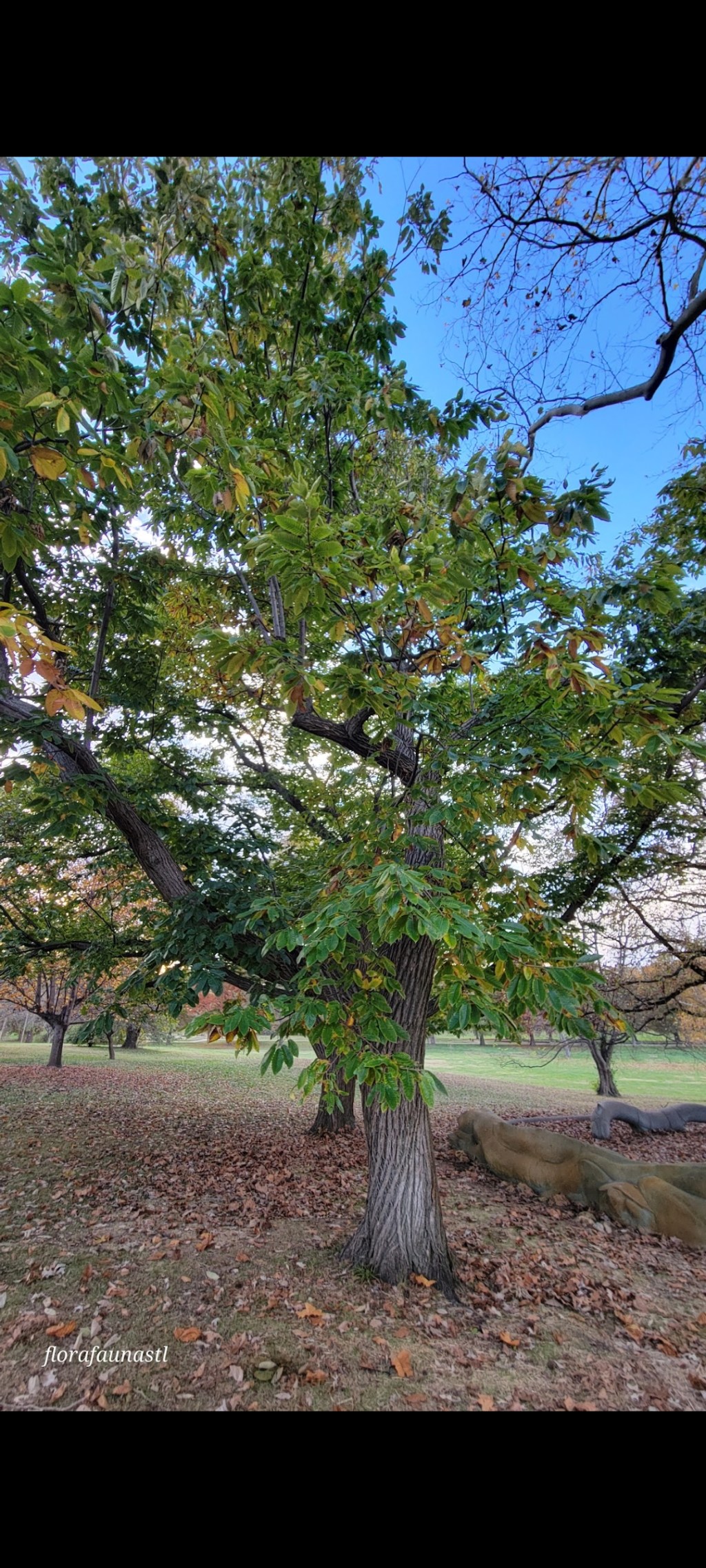
This does not detract, though, from the enjoyment and appreciation I have for the Chinese Chestnut that grows in the local parks around my neck of the woods. The beautiful flowers produced in catkins look like something created with pipe cleaners that I enjoy each June. The spiky cupules (husks) that house the nuts littering the park floor in fall make for a much more intense game of “floor is lava.” People gather around with buckets to harvest the nuts for consumption. The trees provide a lot of good, and I can’t be upset with them here and now. The Chinese Chestnut is the embodiment of Christmas Present, while the American Chestnut is sadly the ghost of Christmas Past. Let the American Chestnut be a reminder to all that sometimes the smallest of things and best of intentions can cause havoc. So please, cherish what you have this holiday season and be thankful for the world around you as it is always changing and we don’t know what tomorrow brings.
References:

Tekiela, S., Trees of Missouri Field Guide, 2nd Edition, (2022), Adventure Publications, Cambridge, Minnesota
https://en.m.wikipedia.org/wiki/Castanea_mollissima
https://www.missouribotanicalgarden.org/PlantFinder/PlantFinderDetails.aspx?kempercode=a855
https://en.m.wikipedia.org/wiki/The_Christmas_Song


 Flora Fauna STL
Leave a comment