When we think of cacti, we often envision a harsh desert environment where tumbleweeds roam and heat can be seen rising from the ground. The arid climate conjured up by the mind’s eye is, in fact, home to many cacti, but not all. With the exception of one species (the Mistletoe Cactus), all cacti are endemic to the Americas and can be found from the southern borders of Canada down to the tip of Patagonia. With such a wide geographical range, it’s obvious that each of the 1,750 known species of cacti have adapted to their respective climate. This ability to adapt to any environment is something that separates the cactus from many other plant species, and the Eastern Prickly Pear, also known as “Devil’s Tongue,” is no exception.
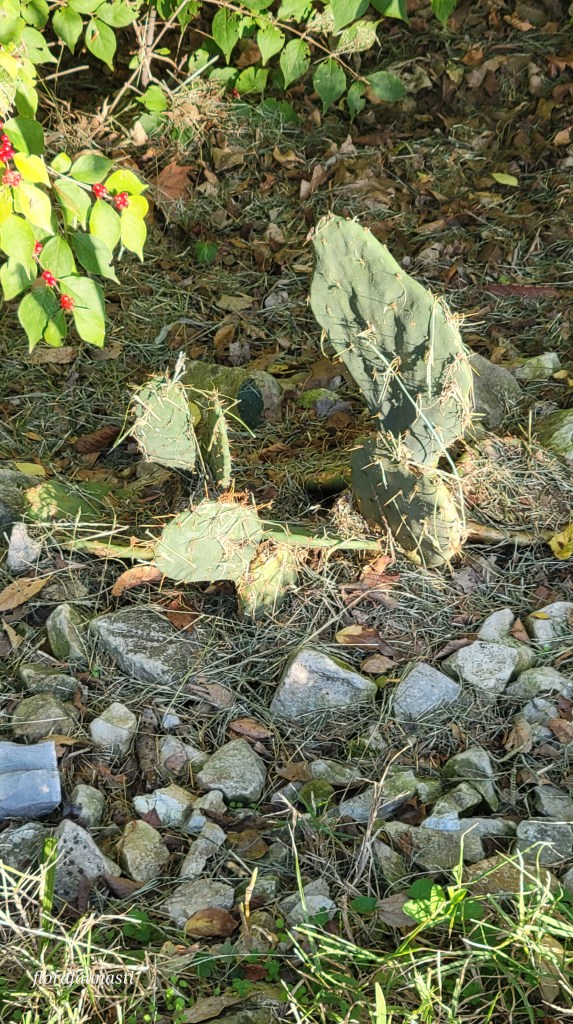
The eastern prickly pear (Opuntia humifusa) stands out from other cacti for a number of reasons. Not only can it survive (and thrive) in the dry deserts of the southwest, but thanks to special antifreeze chemicals in its stems, it can also withstand bone-chilling temperatures as low as -30° Fahrenheit! This means the range for this species is larger than many of its thorny kin. The eastern prickly pear can be found not only here in St. Louis but from the east coast to New Mexico and as far north as Ontario and down south into Mexico. So long as there is abundant sun, they can establish colonies in deserts, rocky cliffs, prairies, mountainsides, roadsides, rocky streams, or your flower garden, which is where my father kept his.
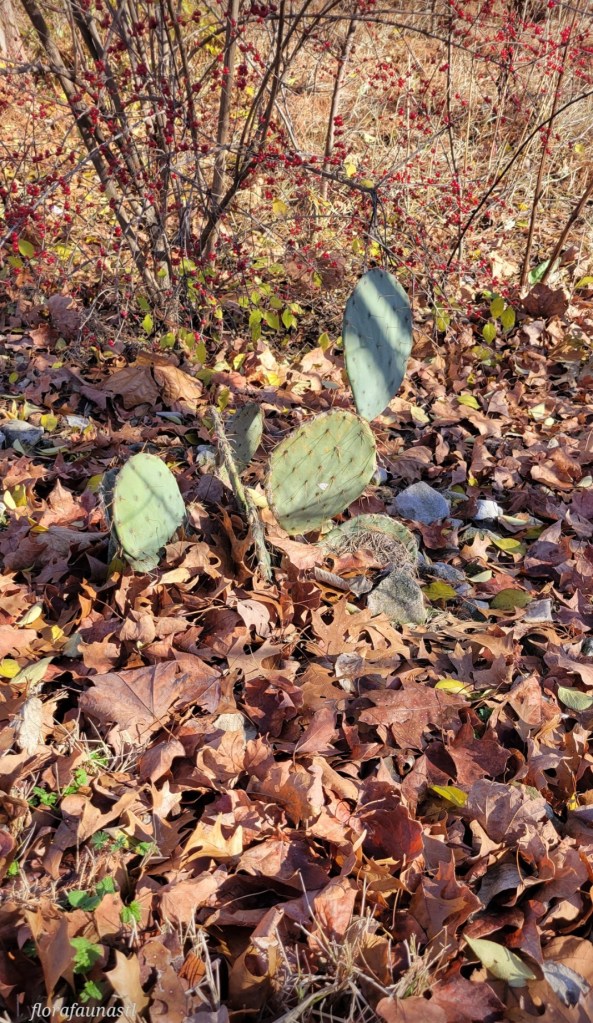
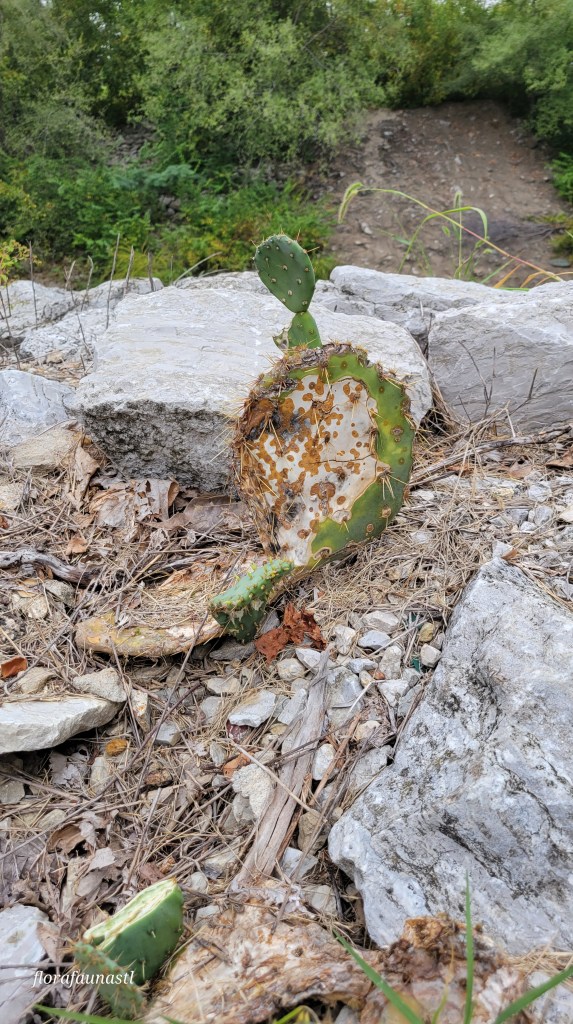
The shallow roots of the prickly pear allow it to absorb water quickly, which is then stored within the stem. The stem or pad is the flat, paddle-shaped green part of the cactus. This technically makes the eastern prickly pear a succulent, as the definition of a succulent is a plant that has fleshy parts that have adapted to store water. Fun fact: almost all cacti are succulents, but not all succulents are cacti. The spines of the eastern prickly pear (and all cacti) are technically highly modified leaves. Because cacti lack true leaves, their stems or pads are where photosynthesis happens. The modified leaves, the spines, serve numerous purposes. For anyone who has ever been pricked by a cactus, you know they offer great protection for the plant. Those sharp spines are the frontline of defense in the prevention of being munched on by herbivores. The spines can also offer some shade to cacti as well as help with water retention. In the case of the eastern prickly pear, these spines also help to spread the plant as the pads easily detach when tugged on. Unfortunately, for hapless animals or hikers who get too close, they may end up carrying off a pad of the eastern prickly pear, which will then establish a new colony, provided it gets dropped in a viable location. Sure, this seems a bit manipulative of the cactus, but it does offer something in return: its delicious purplish-red fruit!
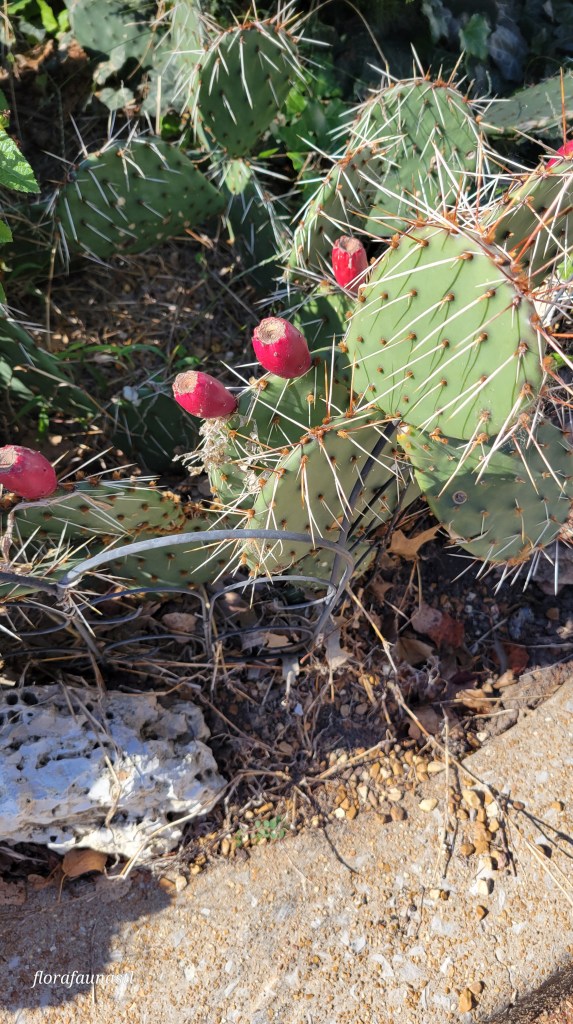
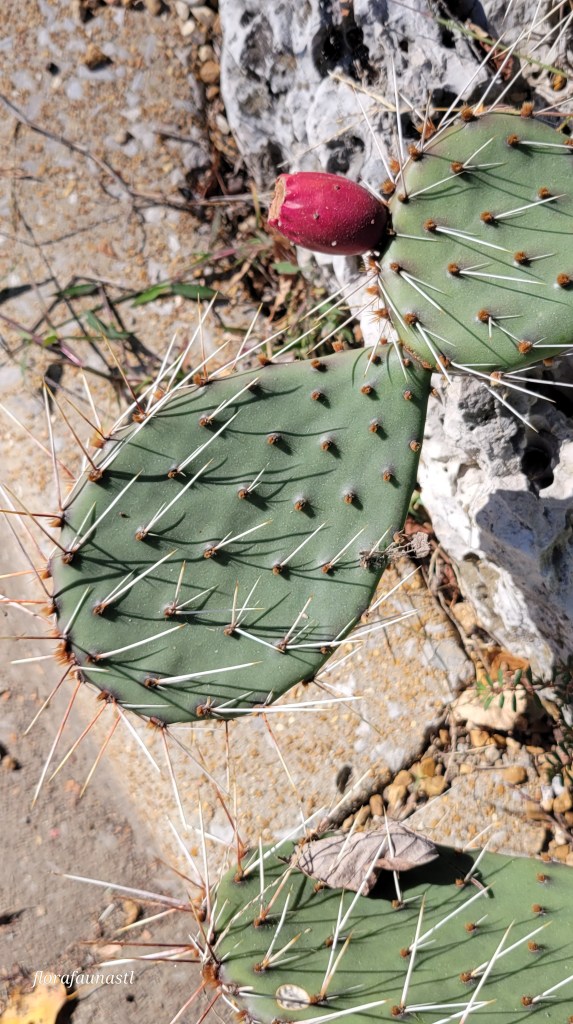
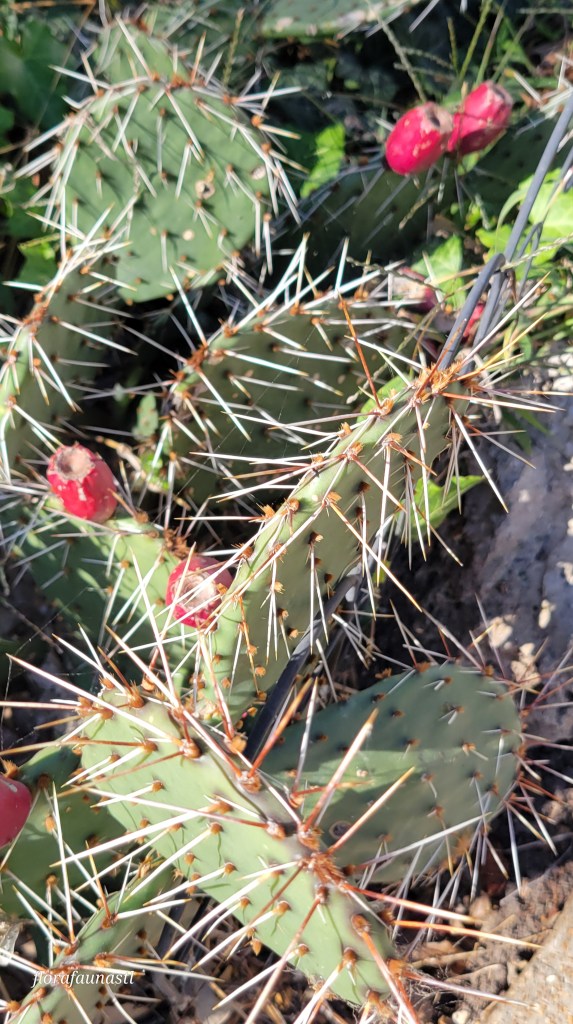
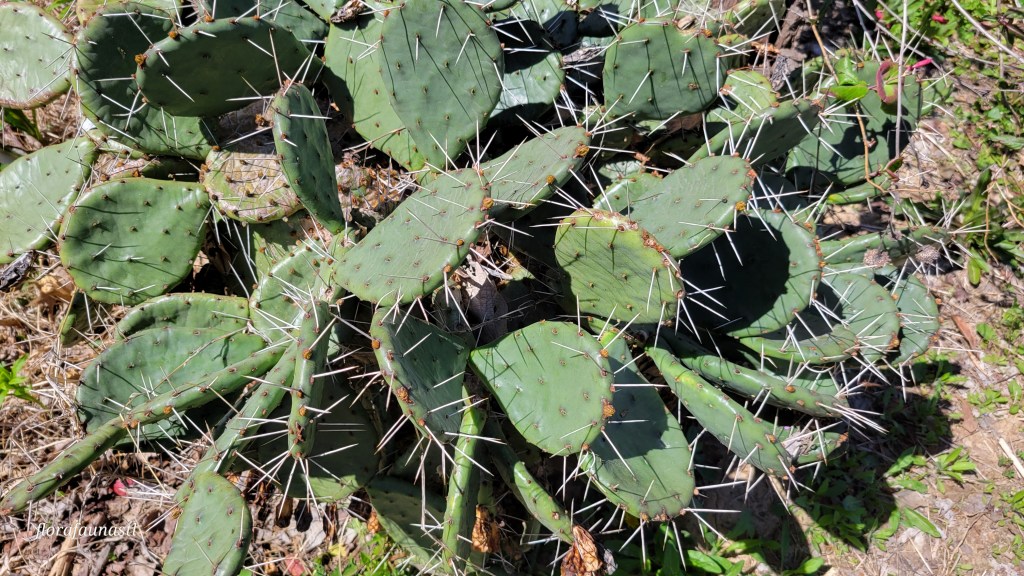
The pear-shaped fruit (which is also called “cactus fig,” “cactus fruit,” and “tuna”) is sweet and used to make jams, drinks, and used in other culinary dishes. The pads are also edible and are often cut open, sliced into thin strips, and fried like green beans. Eating this cactus is not as effortless as it sounds, though. Not only are there spines that need to be removed, but the eastern prickly pear also sports sharp, hair-thin barbed bristles that are very difficult to remove. Having had these bristles stuck in my fingers, I can attest to their annoyance and discomfort. Eastern prickly pear also offers a treat for the eyes and pollinators alike, producing large vibrant yellow flowers with an orange center each spring. I wish I could tell you what these flowers smell like, but putting my face, in particular my eyes, closer and closer to those pointy spines has always been a light deterrent for me. Smell at your own risk with this one, folks! The pictures here are specimens I found in local parks in St. Louis. A few pictures are from our trip to Poplar Bluff, where we went to visit friends and see the eclipse of 2024, and surprisingly, eastern prickly pear. So if you are ever itching for a barefoot walk in the woods, or even some local parks, be cautious of where you step. That said, please go out and explore as there is so much to discover, even in your own backyard!
References:
https://mdc.mo.gov/discover-nature/field-guide/eastern-prickly-pear
https://en.m.wikipedia.org/wiki/Opuntia_humifusa
https://www.fs.usda.gov/wildflowers/plant-of-the-week/opuntia_humifusa.shtml

 Flora Fauna STL
Leave a comment