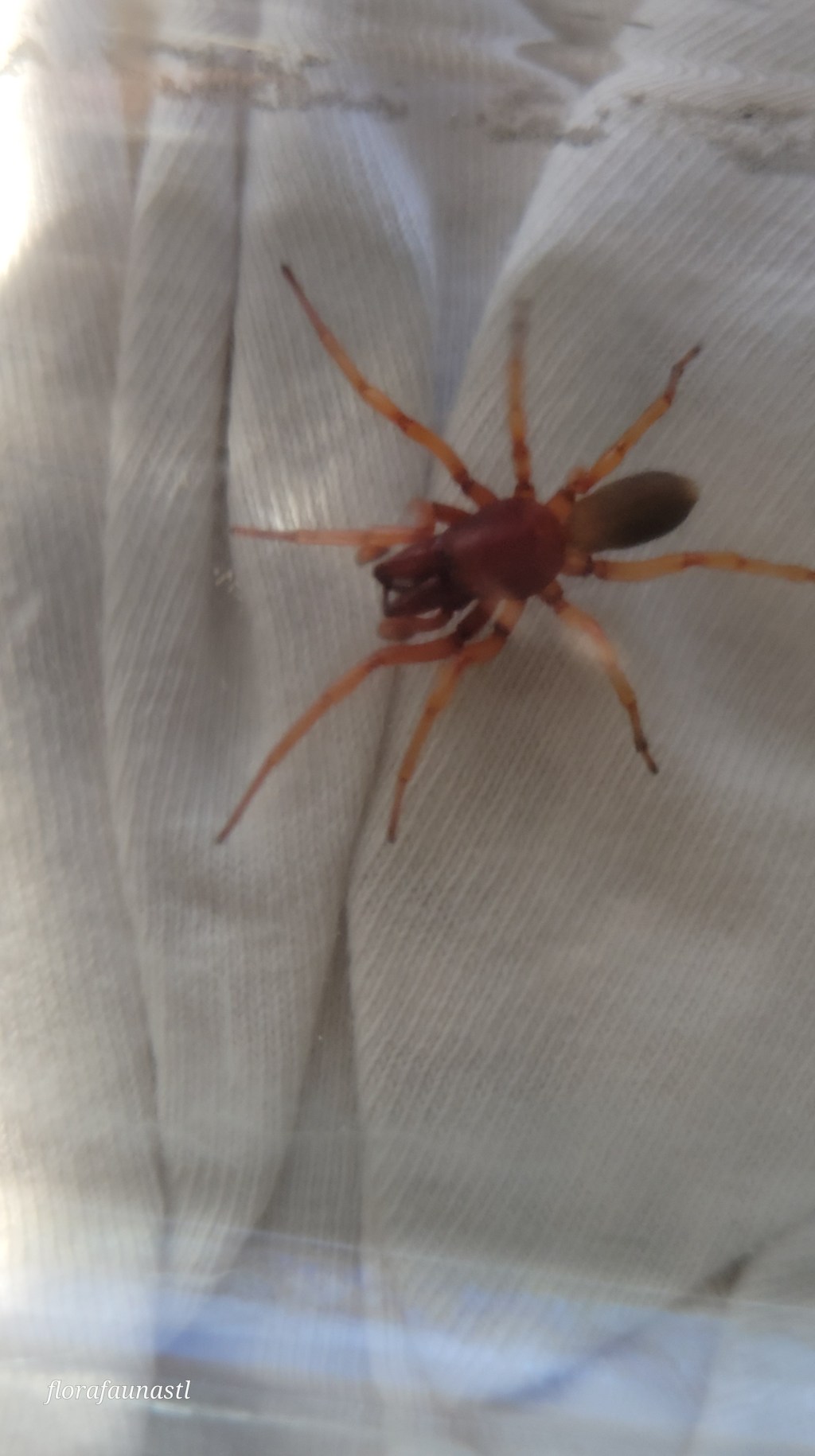
It is official, the wife has boarded the “What is this creature!?” ship! We have embarked on a new chapter in our marriage, one where she is now capturing insects and bringing them to me with an eagerness to learn more about them. Last week she brought up a bright reddish spider from the basement which she found hiding around the laundry basket. One can assume it was judging us for not separating colors while it waited for prey to approach. I was in a work meeting when she handed me the captured spider in a jar, and I knew as soon as I saw the fangs that this was a Woodlouse spider, scientific name Dysdera crocata.
One of my first posts was about the Broad-faced Sac spider and they look very similar but there are some major differences, the first being the massive labidognathous chelicerae. Let me explain what that means so you can avoid having to do extra research. The chelicerae are mouthparts of the subphylum Chelicerata, which spiders belong to. There are three types of chelicerae one of which is known as Jackknife chelicera, which has two different forms. One form opens parallel to the body and is called orthognathous chelicerae, the other form is rotated and opens at right angles to the body (creating more of a pinching motion), this second form is called labidognathous chelicerae and is found in the infraorder Araneomorphae, which woodlouse spiders belong to. Another easy way to tell the two apart is by their eyes. Woodlouse spiders have 6 eyes closely arranged in an “arch” whereas the broad-faced sac spiders have 8 eyes with more of a “smiley face” pattern. After writing that last sentence I realized the bulk of my readers probably won’t be getting close enough to look at the eye patterns of their house and garden guests…but if you do, now you know.
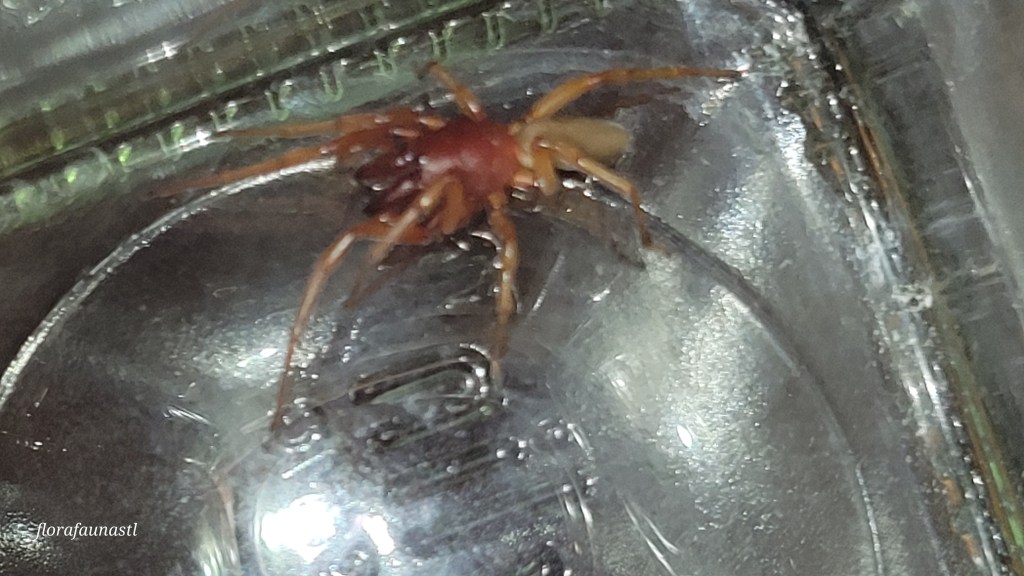
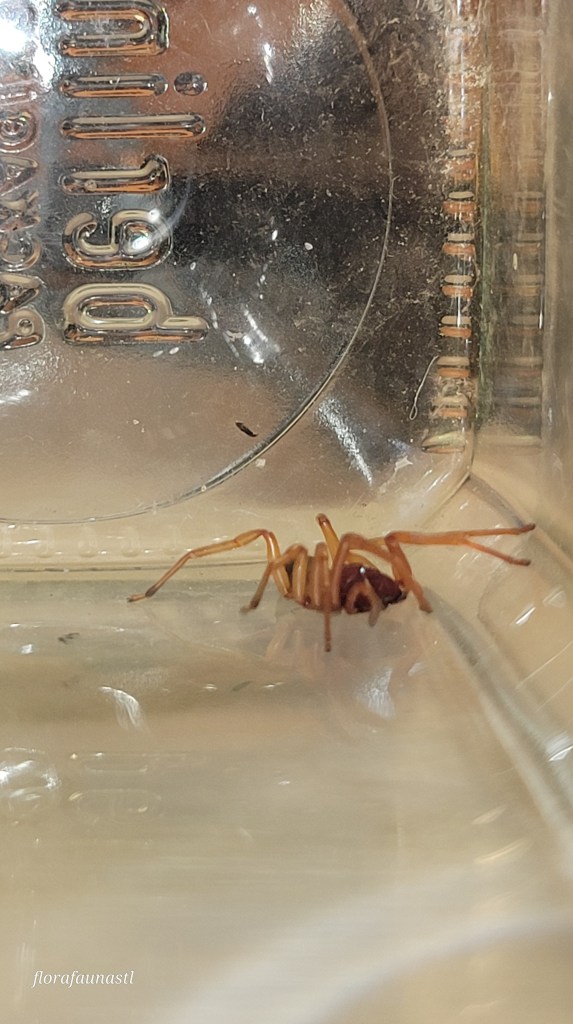

Woodlouse spiders can be found year-round through much of North America, and although they are believed to have originated in the Middle East, they are considered to be native at this point in time. They can often be found taking up residency in basements, attics, under rocks, wood piles, logs, etc. The males are slightly smaller than the females, which top out at a 60th of an inch in length. Both males and females are colored the same sporting a rusty-red cephalothorax and legs while having a shiny grayish-beige abdomen. Woodlouse spiders are nocturnal and are active hunters, only building webs to retreat to after a long day of hunting their favorite prey, which they are named after; the woodlouse. For clarification, woodlice have many aliases, to name a few: roly-poly, pill bug, sow bug, wood pig, and cheesy bobs. I promise you I am not making those names up and I will soon do an article on this abundant land crustacean.


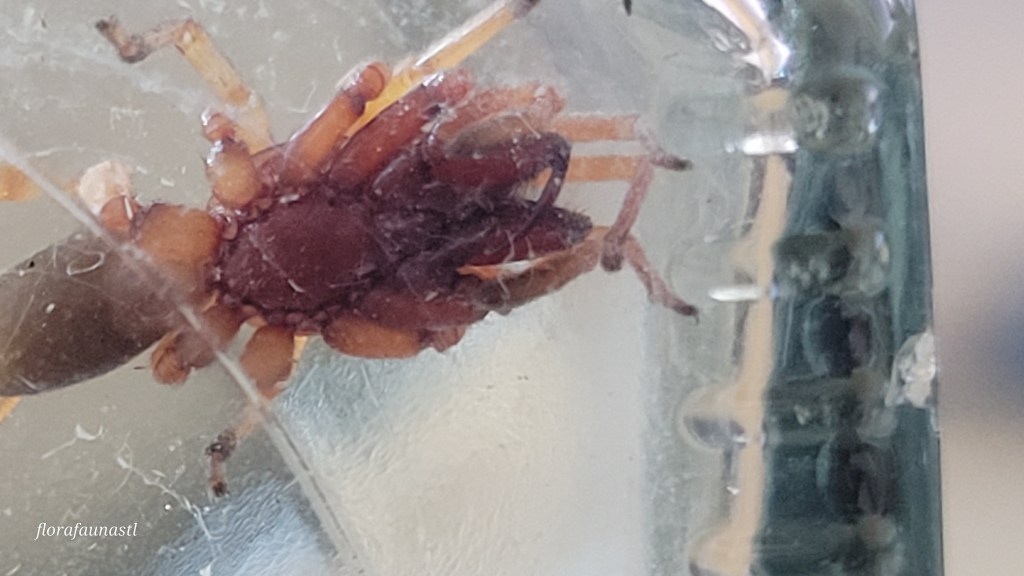
The woodlouse spider sports those excessively large fangs to penetrate the hard shell of the roly-poly, proving again that evolution is a constant arms race. Those fangs will not exclusively be used on roly-poly though, as the woodlouse spider will also eat other ground insects such as crickets if the opportunity arises. They are also very dominant in their territory and have been known to take down other spiders, centipedes, and anything it feels is competition. Mating can be problematic for this species though as their aggressive behavior and large fangs often result in injury to one or both spiders during mating. Females lay their eggs in a silken sac which can contain up to 70 eggs, and they will also watch after the young after they have hatched, guarding them from predators.
Although the woodlouse spider is not known to cause any major damage to humans (unless you have an allergic reaction), they are known to bite people if handled. That said, the woodlouse spider is an awesome specimen to observe. They help control the population of roly-poly and are a highly specialized hunter. After taking my photos and videos of this specimen, the wife and I decided to let this one go in one of the less inhabited parts of our basement. As the woodlouse spider crawled out of the jar and made its way towards the dark corner under the stairs, I could hear the faint screams of the roly-polys.
References:
Bradley, R. A., & Buchanan, S. (2013). Common Spiders of North America (1st ed.). University of California Press.
Levi, Herbert W. and Lorena R. (2002), Spiders and Their Kin, St. Martin’s Press, New York
 Flora Fauna STL
Leave a comment