As our car’s headlights pierced the darkness of the street, we briefly saw a pair of illuminated eyes from the storm drain. They disappeared below street level before we could make out who or what they belonged to. We drove in silence for the remainder of the way home, each street light we passed marking a change of internal contemplative thought as to what we had just witnessed. Was this an alien of some kind and were we closer to being modernized Betty and Barney Hill abductees than we realized? Was the “hit” 1980s film C.H.U.D. more of a forboding documentary than a work of cinematic excellence? Or was something even more sinister going on in the sewers of our quaint river city? There was only one way to find out; I would have to lure the creature that lurks within the sewers out. And what better way to do so than with a slice of medium sharp cheddar.
After tucking the kids in for bed and giving my wife a kiss goodbye, I returned to the storm drain with a slice of cheese and a dash of patience. I approached the area cautiously, parking my car just across the street and waiting to see if there was any sign of the creature. Nothing. I stepped out of the car and broke the cheese into pieces, scattering it around in the street at the mouth of the drain. I got back in my car and waited with the engine off and my camera ready. At around the 20-minute mark, I saw two ears rise from the drain followed by a masked face. It emerged swiftly, grabbed the first slice of cheese, and scurried back to the safety of the drain. Having seen the creature in full, it was clear this was no cannibalistic humanoid underground dweller, nor was it an extraterrestrial plotting global domination from the cozy confines of the ever-moist sewer drain. No, not at all, this was the infamous nocturnal Trash Panda, more commonly known as a raccoon, and scientifically known as Procyon lotor.
The raccoon emerged from the drain three more times to retrieve the pieces of cheese, with a heightened sense of caution each time. This was a fairly normal-sized individual; raccoons will reach lengths of 2 to 3 feet and max out between 15 and 30 pounds. Raccoon males are usually slightly heavier than females, but coloration is the same with both sexes. Their bushy and striped tails are approximately half the length of their head and body. Raccoons also have very human-like front paws and elongated back paws. Their unique paws allow them to easily climb trees and hold their food. They have one of the most easily identifiable tracks, in my opinion.
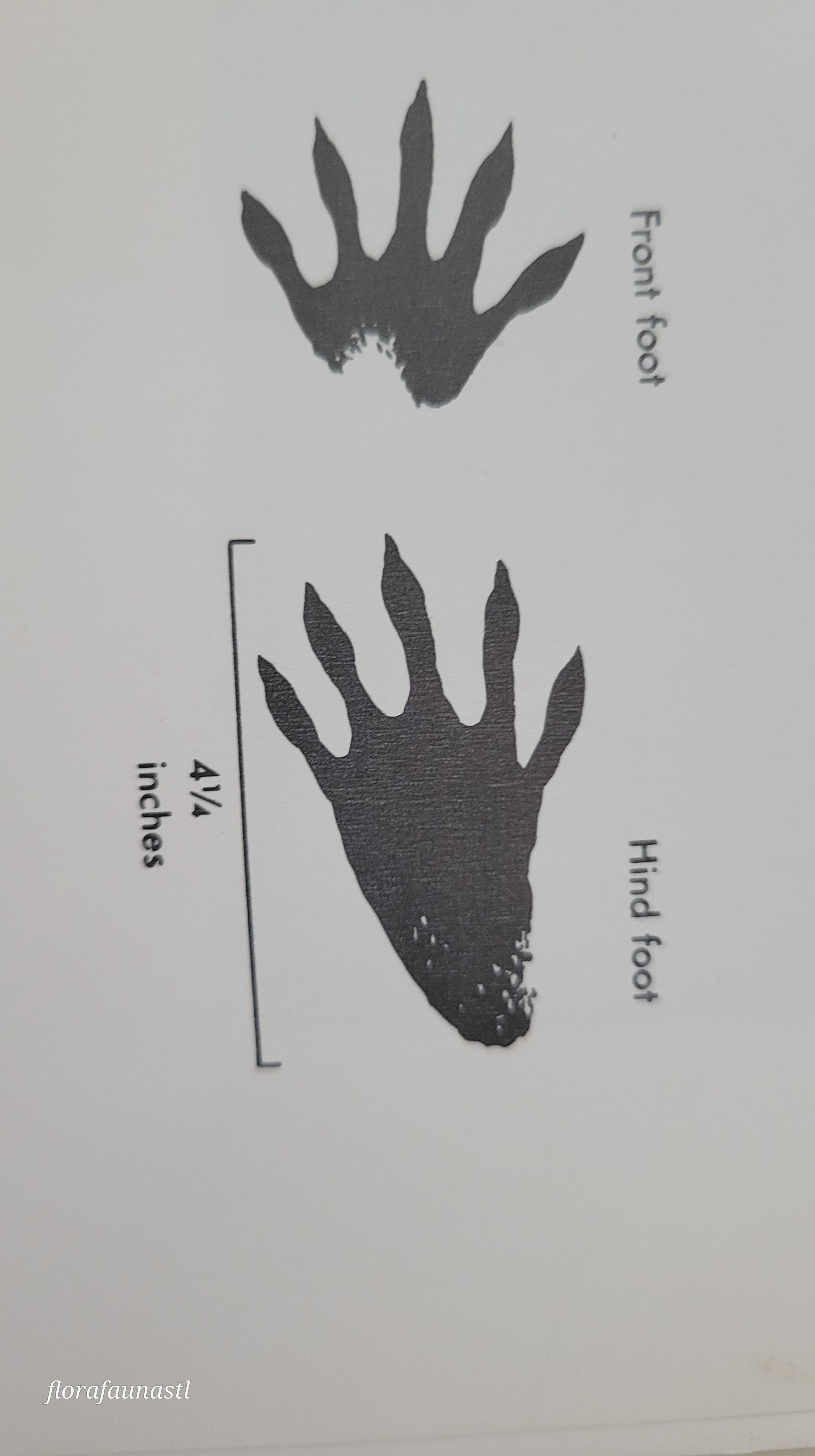
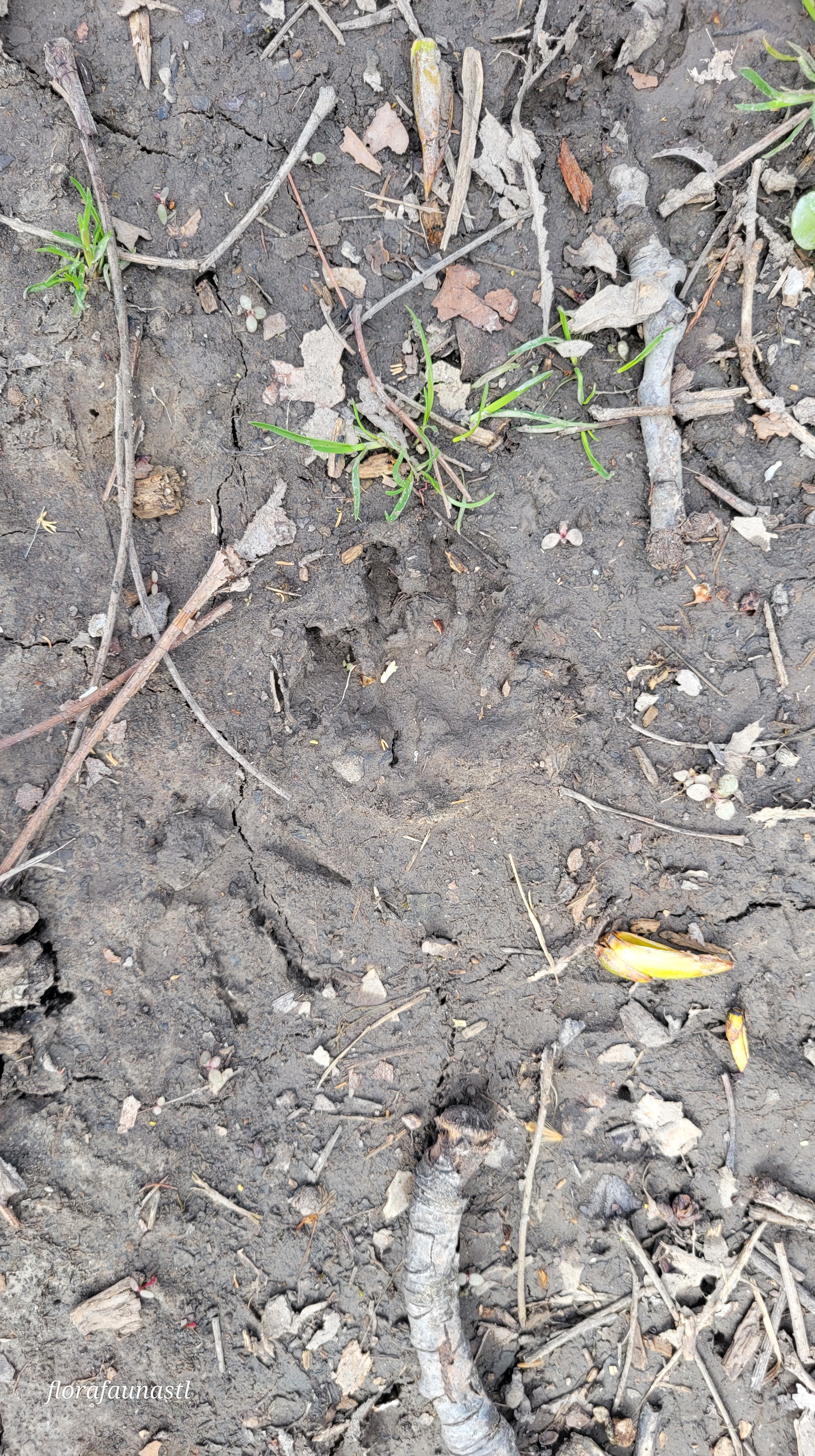
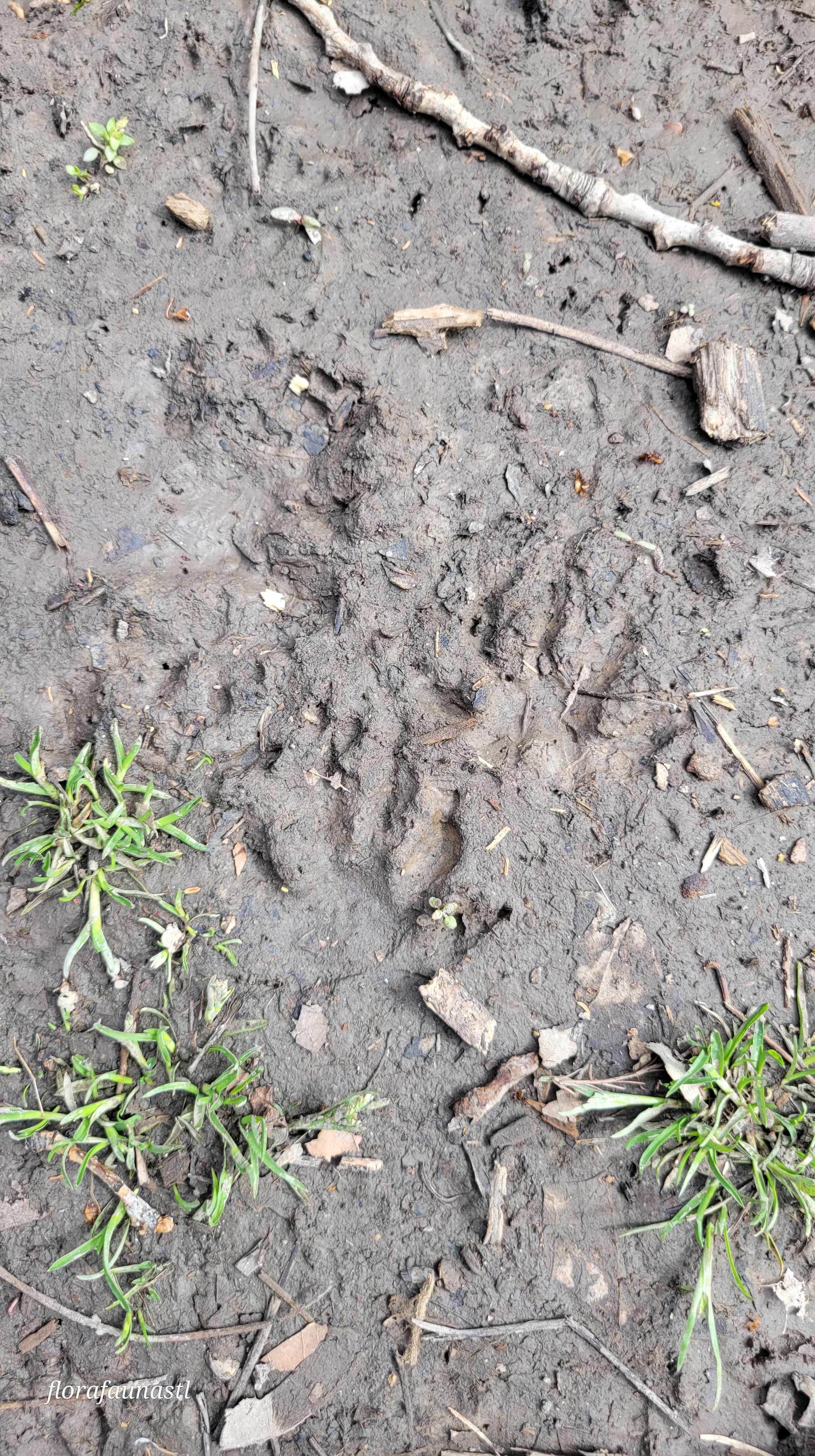
Raccoons are fairly common in North American cinema and folklore, and this makes them animals that lots of people can correctly identify. Those of us who grew up in the 90s remember Meeko from the Disney film Pocahontas, and in more recent times, there is Rocket Racoon from the Guardians of the Galaxy franchise. But even before these films, there was Davy Crokett with his coonskin cap, which sparked a fashion trend in the 1950s. At the peak of this trend, there were thousands of hats being sold daily! Between 1957 and 1958 in Missouri alone there were a little over 112,000 raccoons legally harvested. Thankfully the wild population of raccoons were able to thrive despite being hunted heavily during this decade. Going back even further than the 1950s, raccoons were popular in Native American folklore. One of my favorite tales is that which describes the interaction between the trickster raccoon and the gullible oppossum. The short version is that the oppossum admired the raccoon’s striped tail and desired to have one as well. The raccoon convinced the oppossum to put it’s tail over the fire so it could blacken parts of it’s tail to match the raccoons. Well, this resulted in the oppossum’s tail catching on fire, and is the reason why they have hairless tails today.
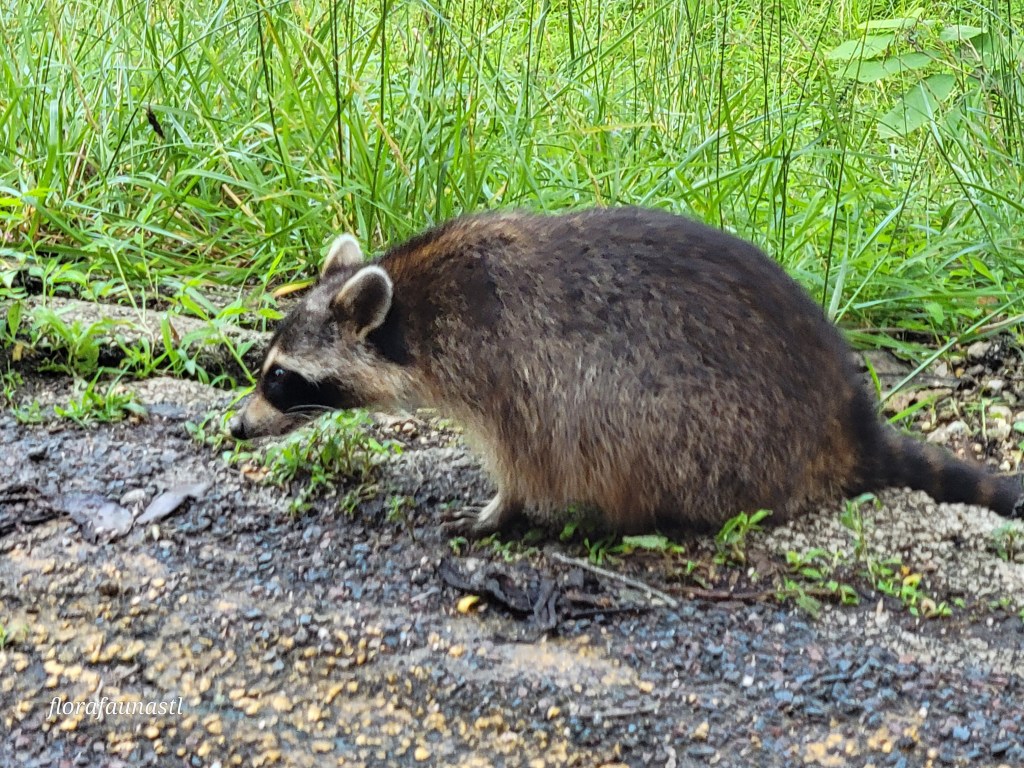
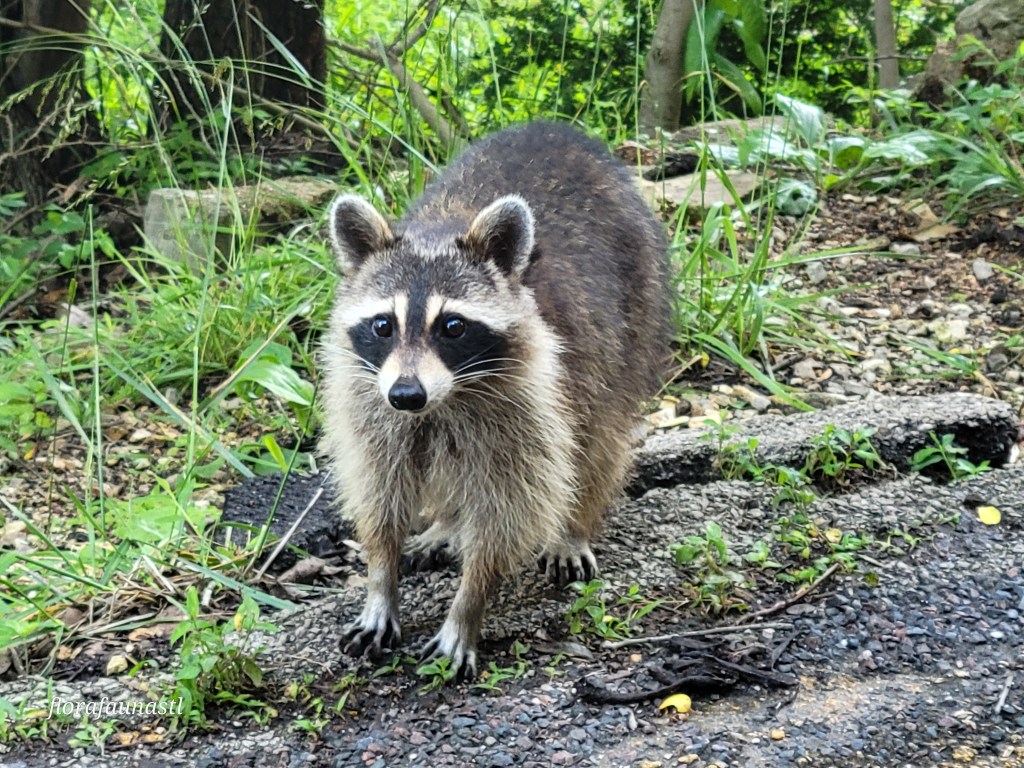
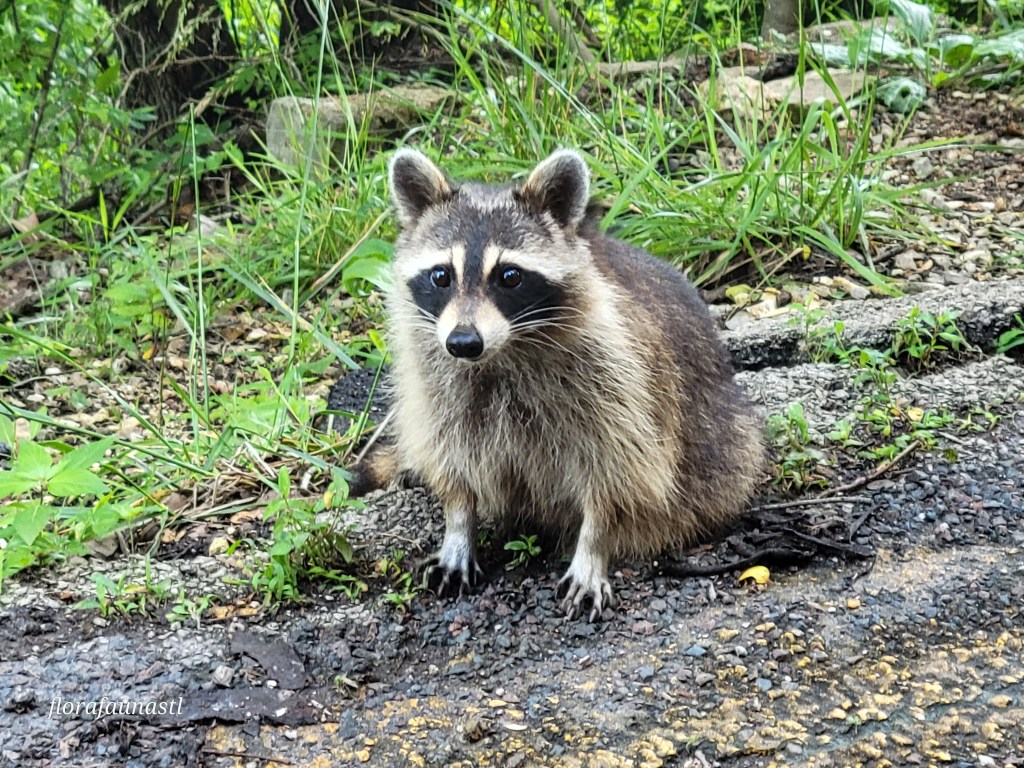
Although the raccoons can sometimes get a bad reputation, they are actually very intelligent and crafty creatures. When being pursued by hunting dogs, they will run through water to try and hide their scent trail to throw the dogs off. They have also been known to lure hunting dogs into deeper waters, only to climb onto the dog in an attempt to drown them. Sounds brutal, but if someone wanted to turn you into a hat, you’d probably do the same. Raccoons are great swimmers, and in their natural environment, they often make their home near waterways in woodland areas. This close relation to the water allows these opportunistic omnivores an even more diverse dinner menu. Included in their natural diet are insects, fish, crawdads, mussels, frogs, fruits, vegetables, mice, squirrels, snakes, bird eggs, birds, and carrion. There is a false belief that they wash their food before eating it. This belief stems from the habit of raccoons putting their food in water if they happen to have water near. However, they are not trying to clean off food as much as they are trying to separate away parts of the food that are inedible, like the shell of a crawdad, for example.
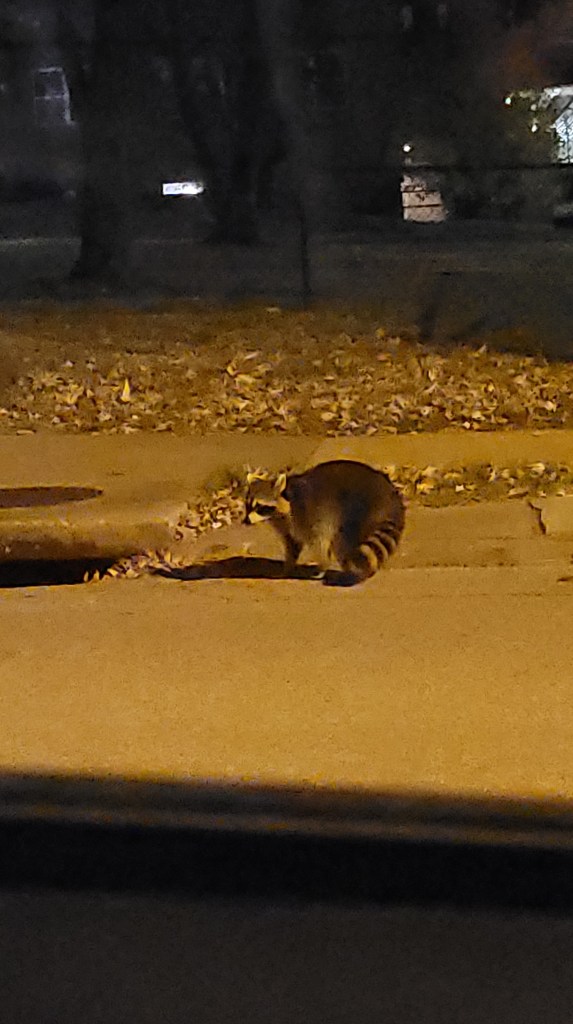
Raccoons are solitary creatures and rarely nest in groups unless there is an overabundance of food. They often make their nests in tree hollows but will also utilize woodchuck dens, squirrel nests (sometimes after eating the young), and caves. Their range is anywhere from 1 to 10 square miles depending upon what food sources are available. Mating occurs around February, and the kits (baby raccoons) are born between April and June. Litter sizes can vary, but typically there are 3-7 kits per litter. Kits are blind at birth and open their eyes at around the 3.5-week mark. The young will start to leave the nest with their mother and learn to hunt and forage at around 7 weeks. They will stay with her until the following spring when she runs them off to make room for her new litter. The male raccoons are not present for childbearing and leave shortly after mating with the female. Raccoons do not hibernate but will fatten up for winter nonetheless. They can be seen in mild winter weather foraging for food but if it is too cold they will remain in their nest, utilizing their fat reserves.
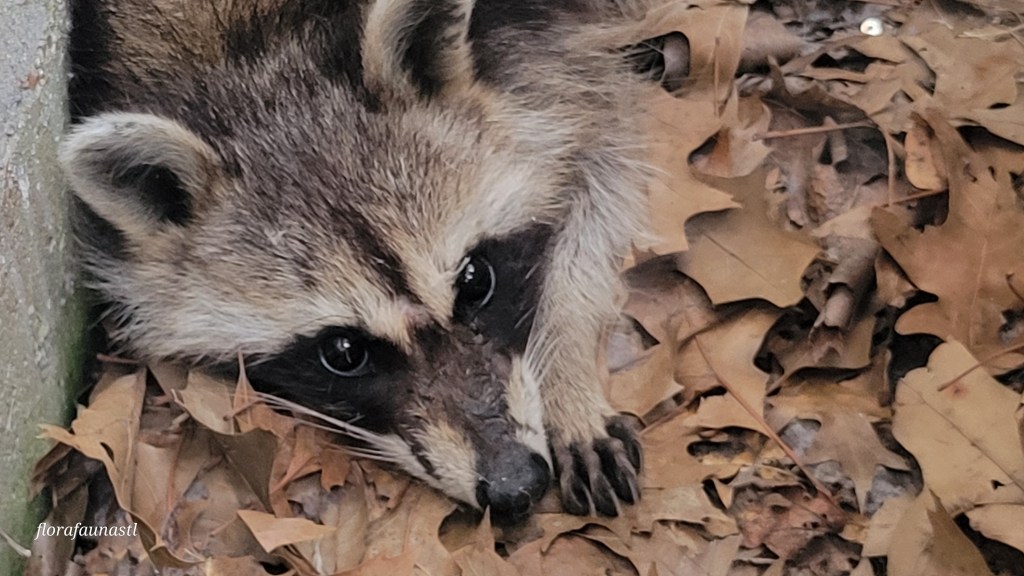
Now let’s talk about their unnatural environment, our neighborhoods. Raccoons are all-around opportunistic creatures, and their diet and housing preferences will vary dramatically when they live among humans. They will eat, well, pretty much anything we eat, junk food included. All of our discarded food is up for grabs, and they will often be seen rummaging through our trash at night. In terms of housing, they will make home under houses, in dog houses, attics, storm drains, and even in chimneys. This seems fine and dandy (for the most part), but close contact with raccoons can be dangerous for a number of reasons. Although raccoons can be ferocious when cornered, they would much rather run than fight; this could potentially expose you to rabies if bitten. But the real issue with their close proximity, unfortunately, is the other zoonotic diseases they are known to carry. Zoonotic diseases are ones that can hop from and to humans from other species of animals. The diseases that raccoons can carry in addition to rabies are; Raccoon Roundworm, Leptospirosis, Giardiasis, Guardians, and Salmonella. Humans can contract through direct or even indirect contact with raccoon’s droppings and urine. In the case of Raccoon Roundworm, the eggs of the parasite are light enough to be inhaled, and this disease in particular can result in irreversible heart, brain, or eye damage and even cause death. Sure, right now you are thinking just avoid the raccoon scat, but that is easier said than done. While some animals mark their territory with urine, raccoons mark their territory with their droppings. So if there is one making itself at home in your vicinity, avoiding contact with waste becomes much more of a challenge.
Before we go grabbing our pitchforks and having a good old-fashioned witch hunt, please know that the chances of capturing these diseases are fairly rare. It is still best to avoid close contact and if bitten, please go to the doctor and get checked for rabies. To cleanse our mental palate, let’s discuss the positive aspects of raccoons and the role they play in the environment. They are great for clearing our roadways and parks of carrion as they can’t pass up a free meal. They are responsible for the spreading of native fruits through their droppings, which helps to keep the forest lush and alive. Raccoons prey upon some of the species we consider to be pests, thus helping to keep those populations at bay. They are also a food source for coyotes, bobcats, cougars, birds of prey, and people. Raccoon meat is a more popular dish in the Southern United States and is often cooked in a stew. Yeah, I know, not for me either.
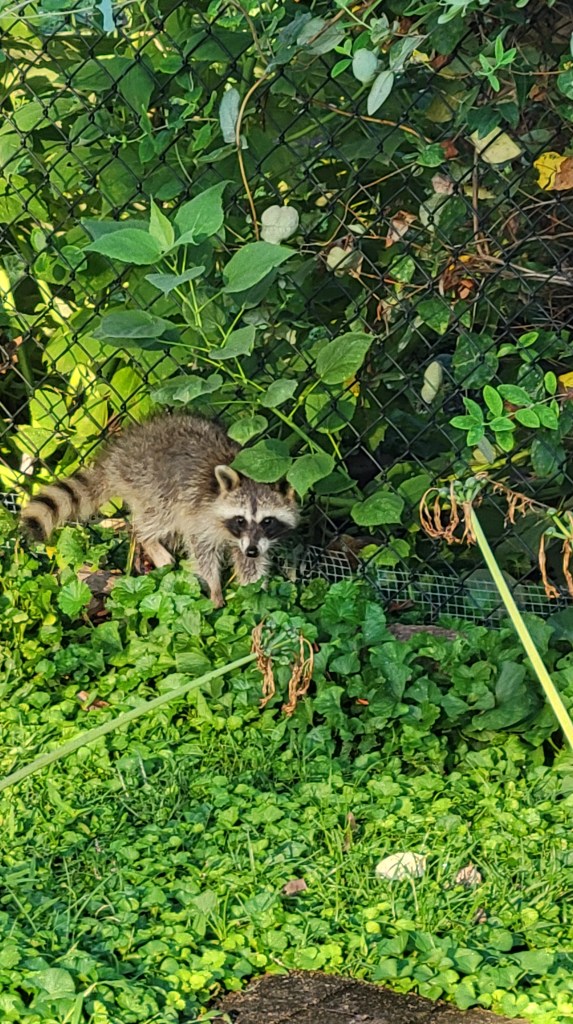
Although raccoons are often seen living around us and have adapted to take advantage of all the free food we provide via waste, it is best that we leave them alone. We have encroached on their native lands, reshaped their natural environment entirely, and yet they have thrived. Few animals have this knack for adaptability, and that kind of grit has to be admired. If you are walking or driving around at night in the city and you happen to see these creatures scurrying for safety, be aware of the fact that WE are the invasive aliens. The raccoons are merely a strong hold of survivors from a world that we have largely erased.

References:
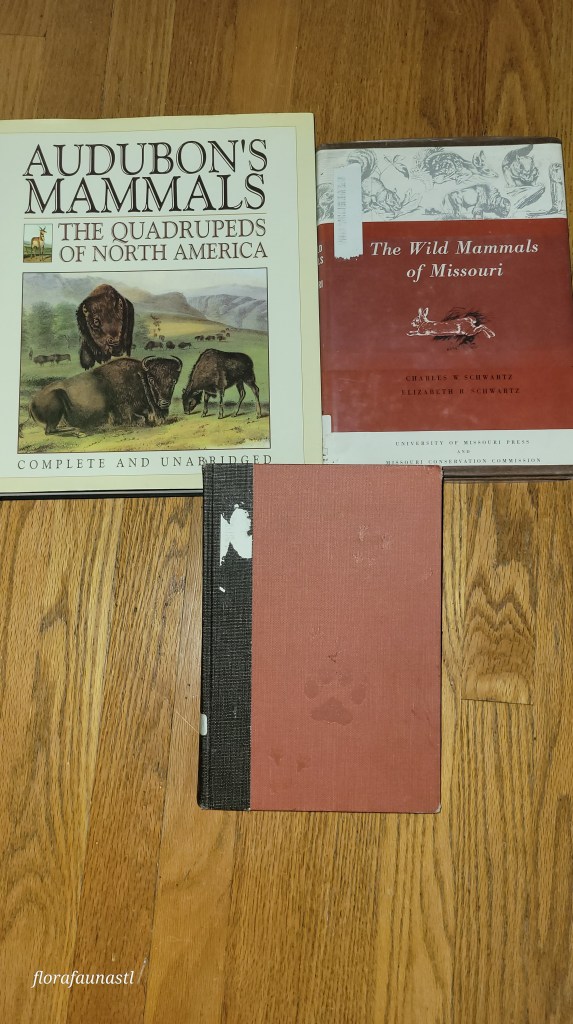
Shwartz, C. W. and Schwartz, E. R., THE Wild Mammals of Missouri, (1956), Smith-Grieves Co., Kansas City, Missouri
National Geographic Society, Wild Animals of North America, (1960), R.R Donnelley and Sons Co., Chicago
 Flora Fauna STL
Leave a comment