They say imitation is the sincerest form of flattery, but in nature, imitation can be the difference between life and death. There are an estimated 2,000 species of ant mimics currently roaming the earth, hiding in plain sight. Mimicry is a paradigm of convergent evolution, with ant mimics found not only in beetles and spiders, but some plants have also evolved coloration patterns to mimic one of nature’s most formidable survivors. Ants can be aggressive prey that most predatory insects would rather avoid; as well, many birds find them rather unpalatable. Beyond that, ants have survived on earth for around 150 million years, so they must be doing something right! A species withstanding the test of time and being so widespread (on all continents except Antarctica) is bound to influence its peers, although some are more akin to a wolf in sheep’s clothing, or in this case a spider in an ant’s exoskeleton. For you see, there are a few different types of ant mimicry, and we will take a look at two species that mimic them for very different reasons.
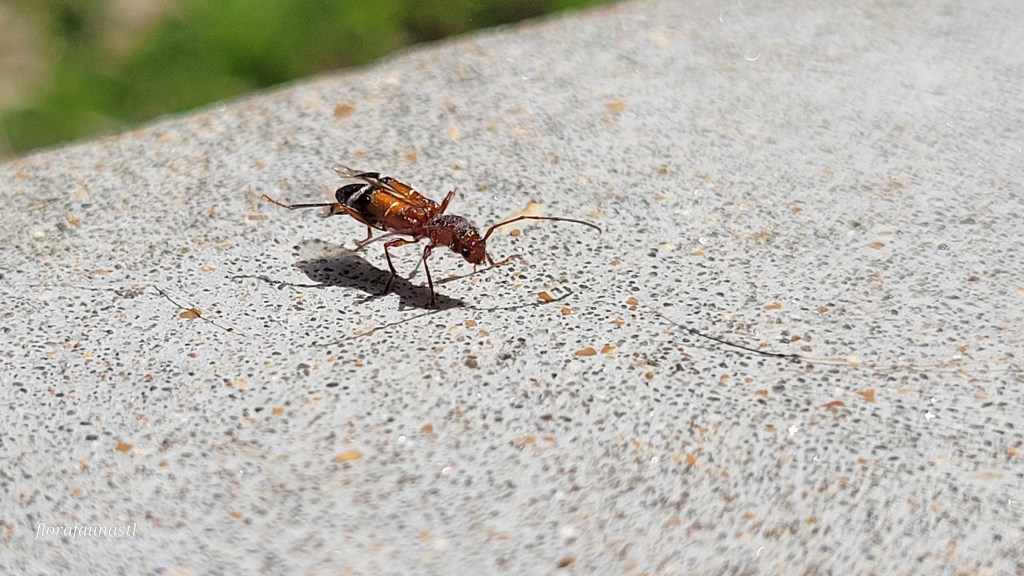
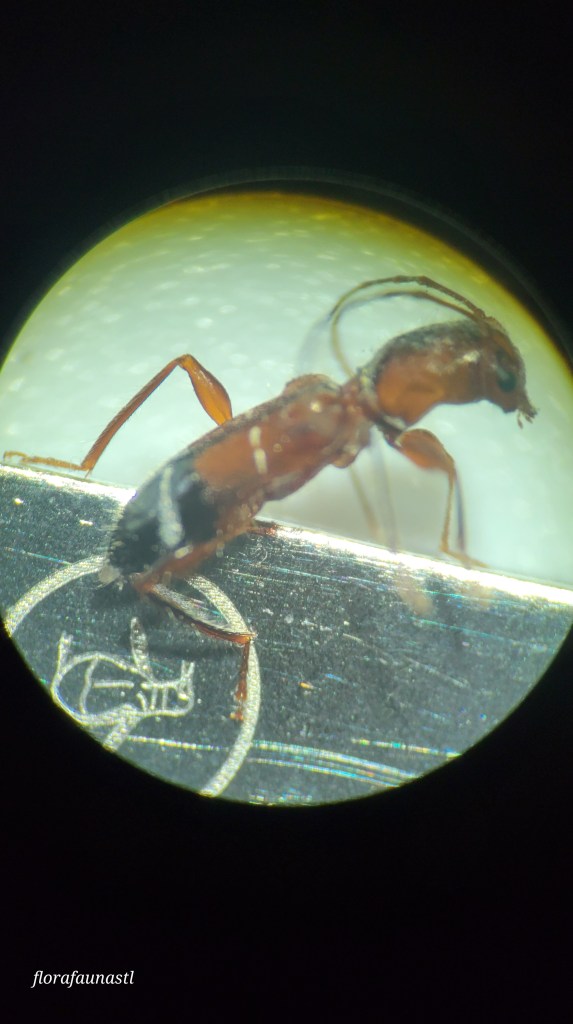
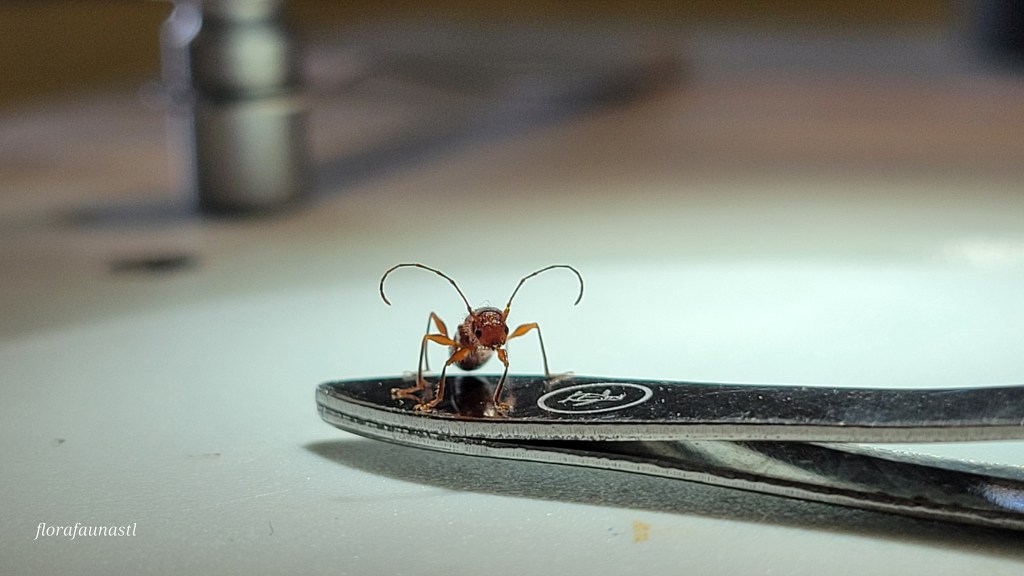
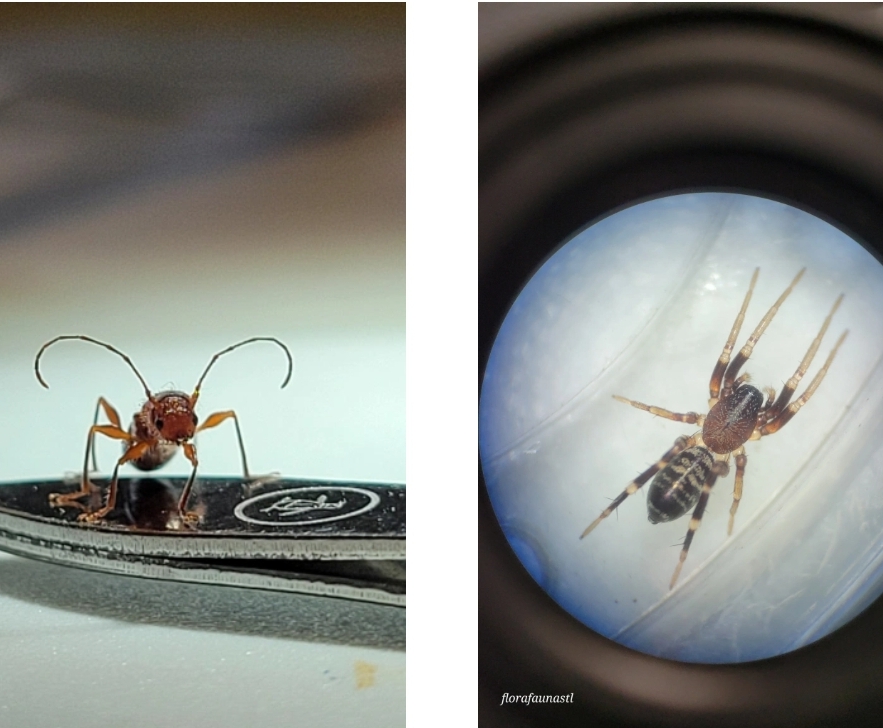
Let’s first examine the innocent, and arguably the cuter of our two examples of ant mimicry. This is Euderces Pini, a small long-horned beetle, measuring a mere 3-9 mm when full grown. This little guy (or girl) is found from the East Coast to Arizona. The larvae are deposited into their host species (elm, oak, etc.) where they burrow into dead or dying trees and mature within the wood. They emerge in early spring and are found as adults until mid-summer. They are often found hanging out on the flowers of aster, honeysuckle, mint, and many other varieties of wild flowering plants. In the case of this specimen, they were found on my car, perhaps convinced they had stumbled upon the largest flower in the world. They are polyphagous, meaning they are able to consume a wide variety of foods including but not limited to; pollen, fungi, bark, vegetables, fruits, decaying foliage, etc. Euderces Pini are Batesian mimics, which means that they mimic ants solely for protection as they do not have any other means of defense. Their body structure and locomotion resemble that of an ant and their antennae are typically held up and curled, again resembling an ant’s antennae. They do have wings but tend to scurry away rather than take flight, playing the part of the ant very well. This Euderces Pini is taking advantage of the ant’s fierce reputation and hoping that it will simply be left alone to eat, procreate, and live in mystery.
On the other side of the mimicry spectrum we have the Castianeira variata, which is very similar to the Many-banded ant mimic spider (Castianeira longipalpa). These spiders are both ant mimics but differ ever so slightly; C. Variata has narrower and fewer light bands on the abdomen, but outside of this they are nearly identical. In fact, the determining factor for me to classify this specimen as C. Variata instead of C. Longipalpa comes down to the quirky characteristic of waving around the abdomen while at rest. This was observed in 1969 by Jon Reiskind, although I was unable to uncover any information on why they do this. I have a few theories though, some ants will wave their stingers in the air for communication with eachother as well as a show of defense, perhaps C. Variata is mimicking this behavior. I also wonder if maybe it is meant to attract prey. Lastly, it could simply be that they have a very catchy tune stuck in their cephalithorax.
Ant mimic spiders fall under Batesian mimics, as they gain protection from parasitic wasps and other would-be predators due to their ant-like appearance, but they also fall under Aggressive mimicry due to their occasional predation of ants. C. Variata can be found from summer through fall (if the temperature allows) with a range from central to Southeastern North America. They live in a wide array of habitats using foliage, rocks, and debris as cover for their tubular web homes. Their coloration can vary from gray, reddish-brown to black and they have multiple white bands on their abdomen. The legs are striped and the cephalothorax is speckled with white hairs.
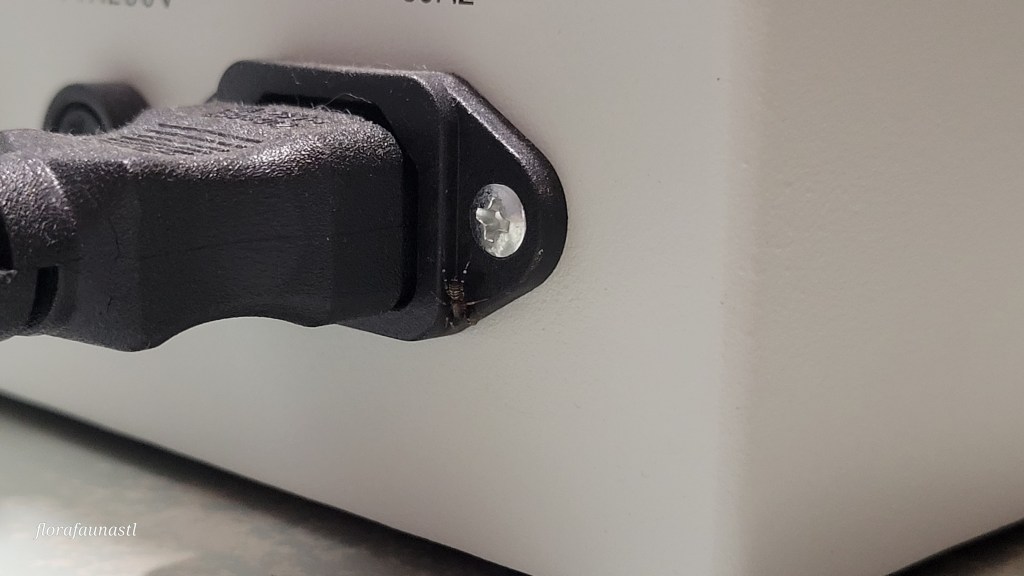
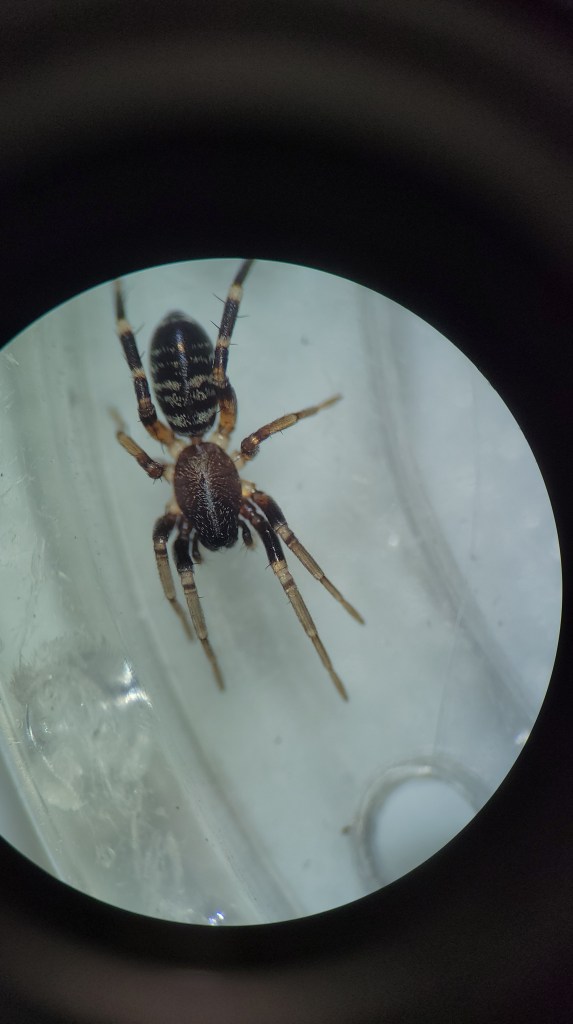
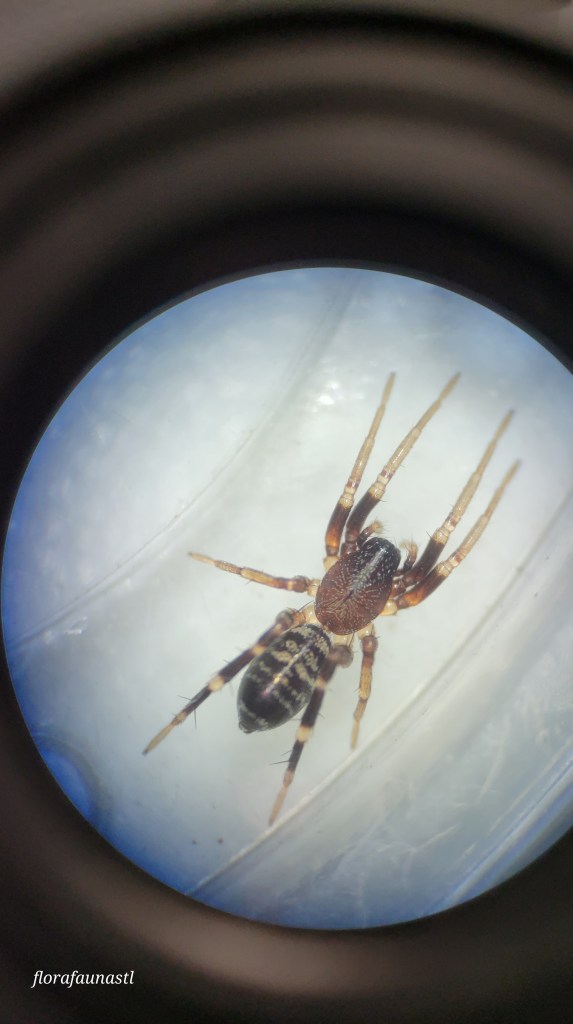
Due to their ant-like bodies their abdomens are thinner than one would expect for a spider. This allows for them to be more agile but also results in the inability to lay as many eggs as some of their spider kin. These are fast-running spiders that move in zigzag patterns, mirroring ants’ locomotion when following a scent trail. As is the case with the majority of spiders there is some sexual dimorphism, with females being slightly larger than males. Reaching total lengths of 9.3mm for females and 5.8mm for males. Despite their tiny stature they are active hunters, skilled at stalking and ambushing their prey. Their masquerading as ants allows them to get closer to prey that would otherwise not fear an ant being near, including ants themselves. Which, imagine how frightening that would be, it’s like a real-life version of Invasion of The Body Snatchers.
These are only two of thousands of ant mimic species that exist on our diverse planet. They are quite literally hiding in plain sight, and you have more than likely come across more than just these two and never even knew it. Perhaps the next time you are in your garden or out for a picnic and you see a lone ant, it might be wise to do a double take, for it may just be a master of disguise.
References:
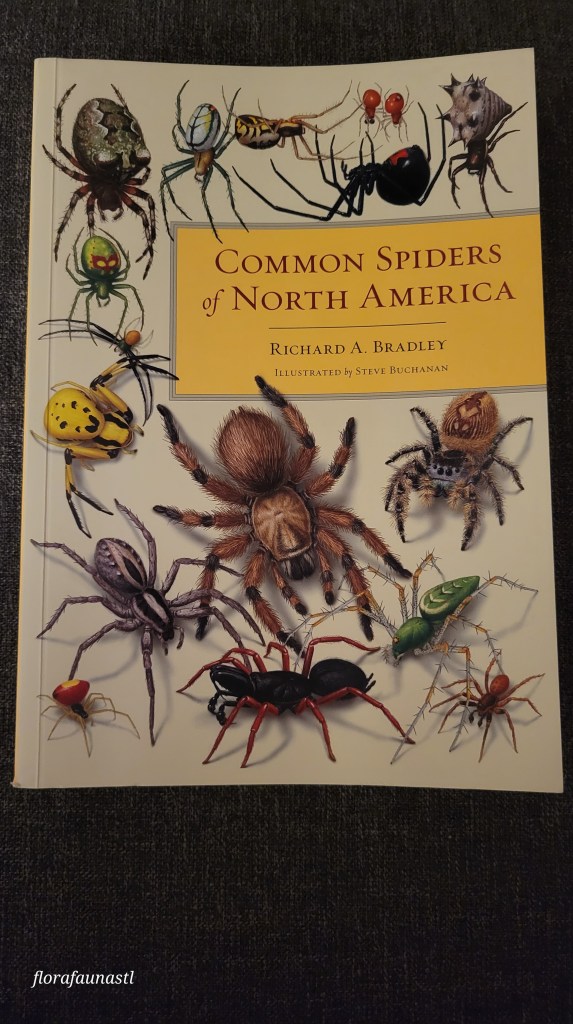
Bradley, R. A., & Buchanan, S. (2013). Common Spiders of North America (1st ed.). University of California Press.
https://bugguide.net/node/view/12795
https://en.m.wikipedia.org/wiki/Euderces_pini
Euderces picipes Beetle


 Flora Fauna STL
Leave a comment