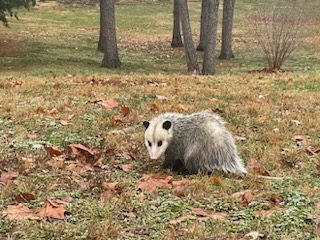
When I think of the only marsupials native to North America two things come to mind. First is the scene from the film Tiny Toons Adventures, in which the main characters are kidnapped by a family of opossums (pronounced ah-possum) who plan to eat them for dinner. There is a silly dueling banjo musical between the opossum family’s son and Buster, which is an ode to the film Deliverance. I watched this film often as a child (on laser disc) and although opossums are omnivores and would eat rabbit carrion if found, they are not avid rabbit hunters nor skilled banjo players for that matter. However, to this day, I still envision them to be practicing banjo in their secretive little lives. The second thing that comes to mind is my first face to face encounter with a massive opossum when I was four or five years old and living in Washington, Missouri. It was summer and I just got to the bottom of the stairs of our back porch and heard a hissing sound, as I turned around and looked under the deck there was a huge and agitated opossum showing its teeth through drooling jowels. Its black eyes piercing through the Batman bravado I had originally descended into the yard with, I ran back up the stairs screaming for my parents. As they came to my aid, a shirtless man in overalls came running through our fenceless yard toting a pitchfork with a bloodhound in tow. While asking us if we’d seen an opossum his dog made a dash for the creature under our porch. The opossum took off running for its life, the dog ran until the leash stopped it, the man yelled that he had been “Hunting all over for this damn thing!” and ran off after his prey. I never saw that Opossum, the bloodhound, nor that man ever again. As I type this story out, I realize how made up it all sounds, but this was, oddly enough, not out of the ordinary in Wash-MO.
Since then, I have had many run-ins with Didelphis virginiana, but none had been of enough significance to stamp a special place in my memory, until now. I decided that I had to capture footage of this fairly elusive creature for this site. I have seen a few scurrying across roads here and there and their carcasses speckle the roads around town. There was no doubt in my mind a healthy population size exists in my neck of the city and we are in fact in much closer proximity to opossums than most realize. My wife was ridding the fridge of food that was past its prime and I took advantage of some expired (only a few days) turkey. I set the bait on the front porch and sat inside by the window, waiting semi-patiently for my nocturnal target. It was getting late, around midnight and I was brushing my teeth and getting ready to call it a night when I noticed some of the turkey was gone. I thought I might have missed whoever took the bait but just then, a rather scraggly looking opossum came back for the rest of the free protein, gobbled it up and then darted off into the night in search of more food.
At the time, I was not sure I would even see an opossum as it was December and I assumed they hibernated. That assumption was wildly incorrect, not only do they not hibernate, but they also are very poorly equipped for winter to begin with. Often, opossums bare ears, feet and tails showing signs of frostbite if they live in areas with harsh winters. You see, our good friend the opossum actually came from the southern hemisphere, and has since migrated to new territories. Prior to the early 1900s, they were not found north of Illinois nor were they found west of central Texas. Although they are still much more predominant in the southern regions of the United States, they can now be found as far northeast as the Canadian border and there are also populations along the Pacific coast, the latter being from introduction by man. They were brought to the Pacific Northwest as novelty pets and a few made their way to the great outdoors. Now I know what you are thinking, but before you scoff at a pet opossum, they are actually ranked slightly more intelligent than dogs, and are about on par with pigs. Personally, I would take the opossum over the pig, and not just because they can hang from their tails.
We have all heard the phrase “playing possum” which is actually an involuntary act, in reference to their ability to feign death. When this happens the opossum will drop to the ground, stick out its tongue, its eyes glaze, and it produces a foul pungent odor to detract predators. As if that wasn’t enough they also go limp and it’s almost impossible to get them out of that state, known as tonic immobility. My dad once encountered a thought to be dead opossum that his dogs were playing with. Not wanting to throw a living animal in the dumpster he took a stick and poked at the corpse. He spun it around a few times, rolled it over….nothing, no signs of breathing or life. He went inside with his dogs and grabbed a plastic bag to dispose of the dead opossum and he came out to find it had scurried away. I can’t help but wonder what that opossum told its friends and how much PTSD came from that experience.
Although “Playing Possum” is fairly common, it is not the only method of evading being someones dinner. Opossums proudly claim the title for most teeth of any land mammals with a whopping 50 teeth! So if they are feeling frisky they will sometimes show off their teeth and drool uncontrollably while hissing and swaying. Creating an appearance of being both ferocious and diseased. This ability to turn the drool faucet on full gush is part of the reason people have a misconception that opossums are often rabid. Although they can have rabies it is fairly uncommon for marsupials to be good hosts for the virus given they have a lower body temperature than their placental cousins. Lastly, opossums are fantastic climbers and will retreat to a tree to escape predators, although they lazily, or tauntingly, will climb just far enough out of reach of their pursuer before resting and staring back with those black eyes. ⚫️ ⚫️
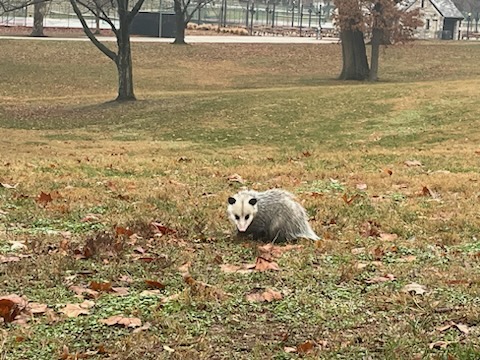
Part of what makes these creatures so good at climbing is their opposable thumb…just like ours. Their back feet look like a human hand, but with nice long claws for climbing. These back feet allow them to hold on to branches much easier and hang upside down. They also sport a prehensile tail, which they use for holding on to branches or, more amazingly, carrying bundles of leaves and branches while they travel. The opossum will gather leaves for their bedding into a pile, push it under their bellies, and wrap their tail around the debris to transport it to their dens. They themselves do not make their own dens but will utilize old burrows or dens made by other animals.
Being hopeless romantics, they begin their mating season in February. With a gestation period lasting only twelve to thirteen days, opossums also hold the record for the shortest gestation period. The reason it is so short is because they are marsupials and their babies grow outside of the womb. The babies are about the size of a honeybee when they are born and crawl into their mother’s pouch where they will latch onto one of her thirteen nipples and stay attached for two to three months, at which point they are too big to fit inside the pouch and will climb out and ride on their mother’s back. In the next few months, they will learn from their mother how to avoid predators and find food. Opossums are omnivores and eat a wide array of food, mainly anything they can catch or find. They love fruits and vegetables but will also eat carrion. They are particularly fond of snakes and are immune to snake venom. They will catch and hunt snakes, frogs, rats, mice, insects and many other small critters most folks consider pests. The young will leave their mother at around the four or five-month mark and will be sexually mature at eight months for males and six months for females. Typically they will have two litters a year unless they are in the southernmost United States, in which case they can have up to three litters.
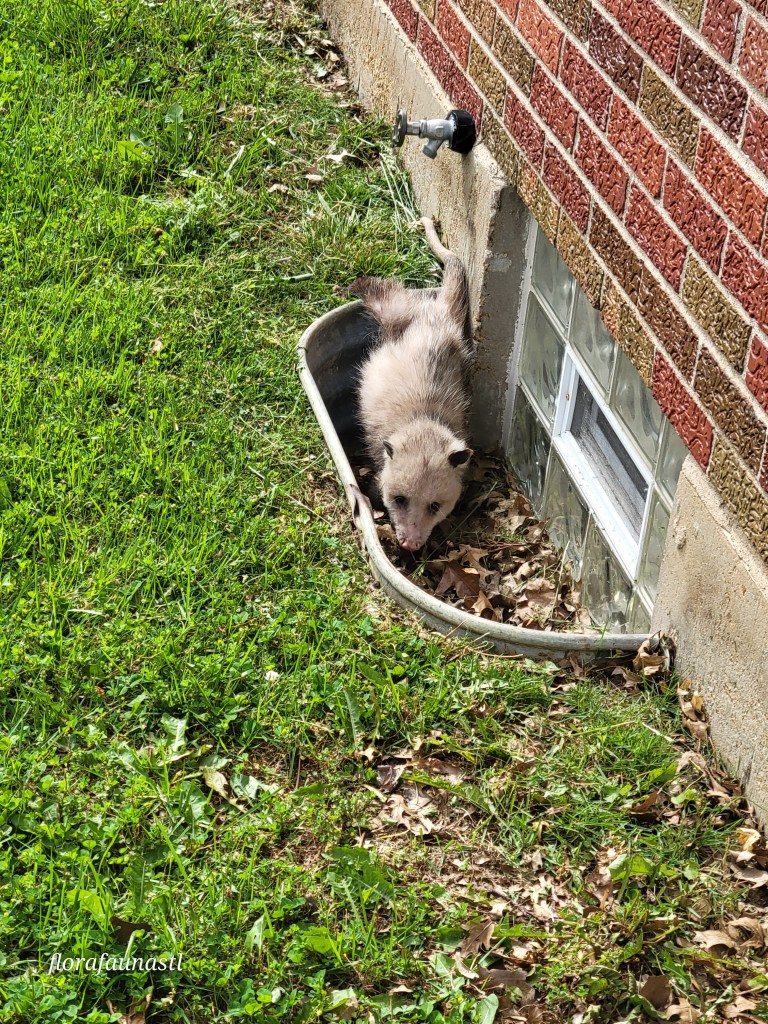
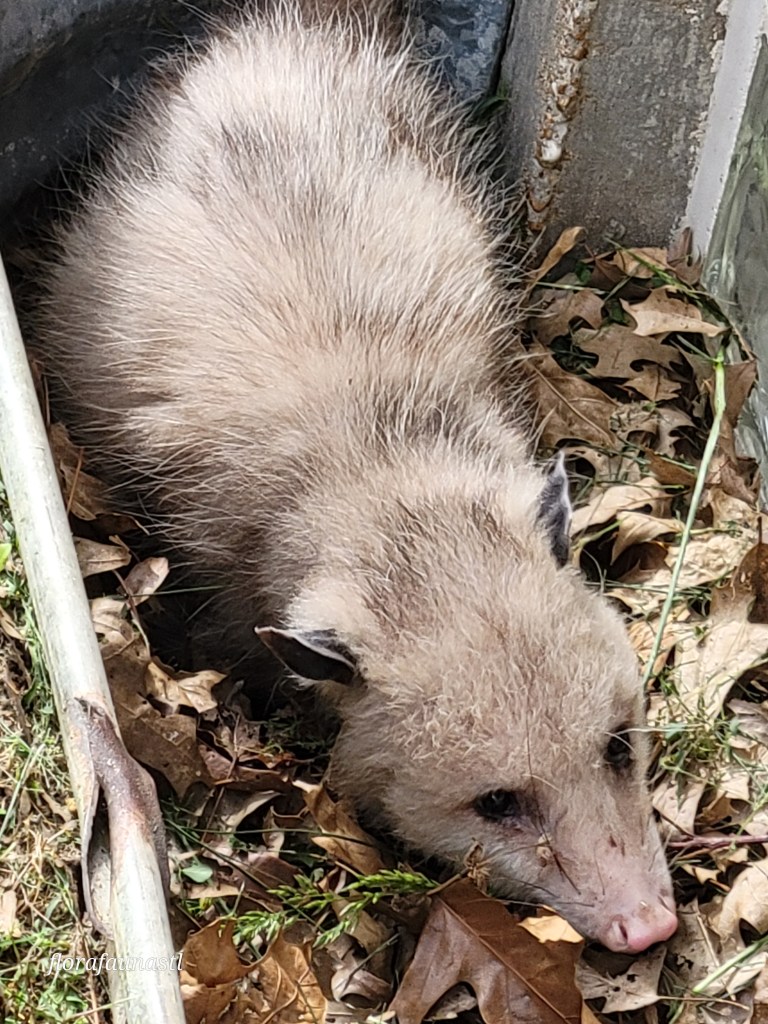
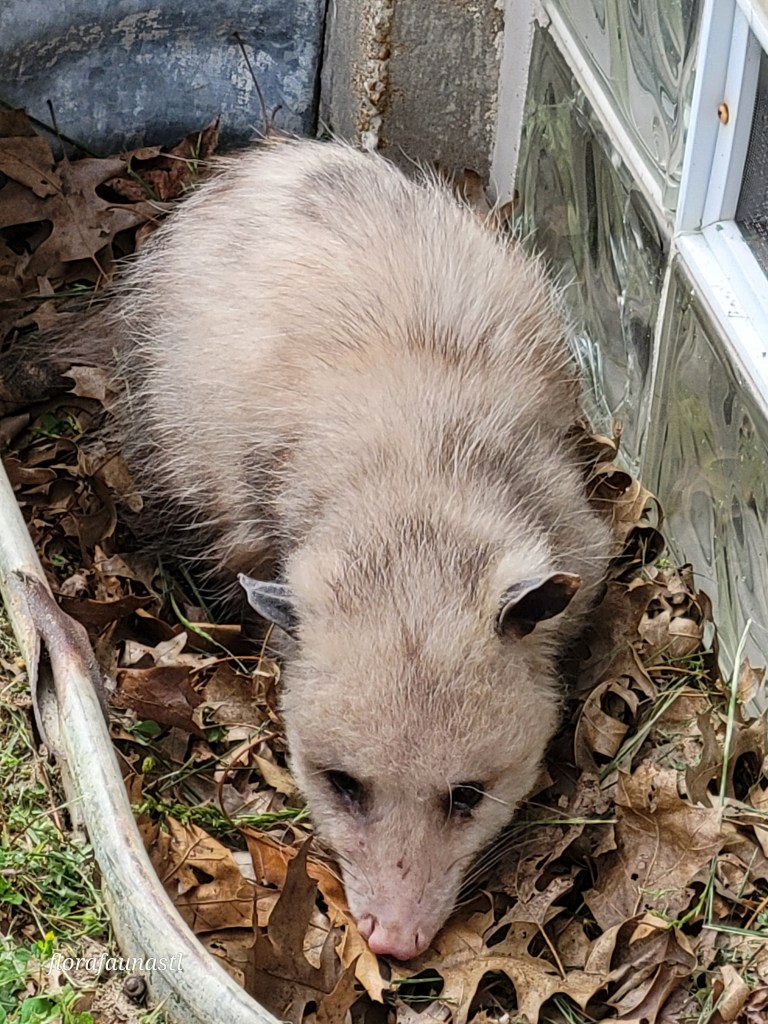
The average lifespan of the opossum is around two years, although in captivity, some individuals have celebrated their fourth birthday. Their natural predators include but are not limited to wolves, coyotes, foxes, bobcats, owls, and dogs. Unfortunately, mankind, more specifically our cars, is their biggest danger. I have seen numbers ranging from eight to nineteen MILLION opossums are converted to roadkill each year. That is a huge number of fallen opossums, thankfully they reproduce so quickly and are highly adaptable creatures. Despite their sometimes rugged appearance, the opossum is actually a great animal to have around. Not only are they fun to observe and pose no real threat to humans, they help keep our neighborhoods free of pests and they pick up and eat our trash and those dead animals none of us want to touch. If you come across one of these magnificent marsupials, enjoy them from afar and appreciate them for what they are, for they are truly unique creatures.
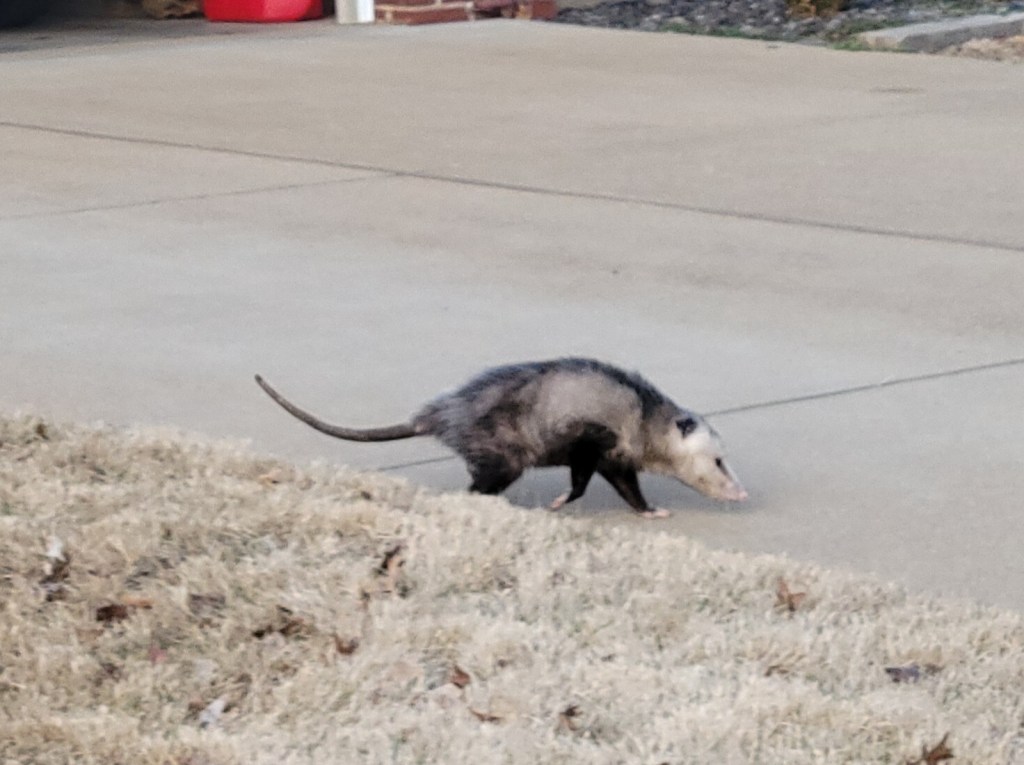
References:
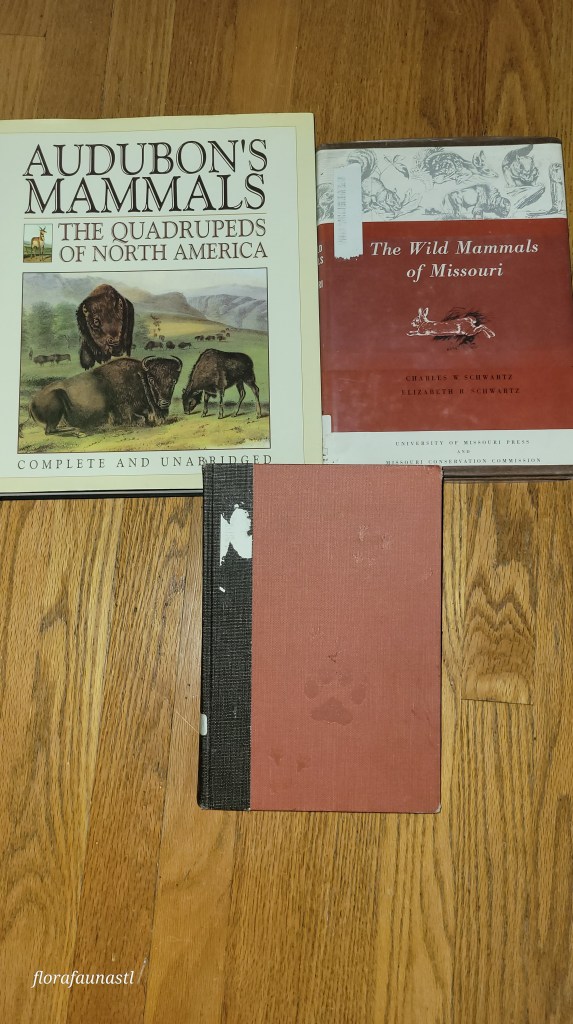
Shwartz, C. W. and Schwartz, E. R., THE Wild Mammals of Missouri, (1956), Smith-Grieves Co., Kansas City, Missouri
National Geographic Society, Wild Animals of North America, (1960), R.R Donnelley and Sons Co., Chicago
https://mdc.mo.gov/discover-nature/field-guide/virginia-oposs


 Flora Fauna STL
Leave a comment