With autumn approaching, the family has been trying to capture as many of those warm summer nights as possible. We spend a lot of time in the backyard reading, meditating, and nature watching. The kids run wild, pacing from the sandbox to the jungle gym to the garden. Switching from one imagination world to the next while also looking for bugs, flowers, or anything they can incorporate into their game. We once had a collection of roly-polys in our outdoor play kitchen, crowded into toy pots and pans. Although they looked to be prisoners, my daughter, being the amazing hostess she is, fed them carrots and spinach, hosting a dinner party of sorts.
It was on one of these outdoor evening jamborees that my son and I first saw this marvel of aerodynamics. We were sitting at the patio table near the honeysuckle and 4 O’clocks when it zipped right over my boy’s head. “DAD!” he exclaimed, “What the hell was that!?”. Although I had the same thought he had, I told him that he is not allowed to say “hell” while holding back chuckles. Meanwhile, the creature hovered around flapping its wings at great speed, going from flower to flower, and then zipped off into the evening.
I had seen him perusing the flowers at high speed a few times before and had never been able to capture him in a net or on film. This night was no different. I told my son: “Believe it or not, that is not a hummingbird, it is a moth.”. He gave me one of those wide-eyed comical looks that kids give when they are excited and in disbelief, something akin to the Warhead candy logo. I knew this species of moth from an encounter I had with one in my early twenties. I was out biking in the Central West End and it flew into me then made a dash to the ground and posed for a picture. It was the first and last time I had seen one until this year.

This moth is a Hyles lineata, more commonly known as a White-Lined Sphinx Moth, which belongs to the Sphingidae family of moths. These are sometimes referred to as Sphinx Moths, Hawk Moths, or Hummingbird Moths. The title of hummingbird moth is pretty accurate as they are relatively close in size to hummingbirds. They have heavy fuzzy bodies and a 2.5 to 3.5-inch wingspan, they also fly, eat, and hover (forwards, sideways, and backwards) like hummingbirds do. In fact, they are one of four species that can hover while eating nectar, the other three being some bats, hummingbirds, and hoverflies. Convergent evolution is in full effect here, and that is why these moths are so often misidentified and assumed to be hummingbirds. Chances are you have seen one in your lifetime and just never knew it.

They are common from the southern portion of Canada to the tip of South America, spanning from the Atlantic to the Pacific. They can sometimes be seen during the day but are more crepuscular in nature. Crepuscular is a term used to define animals that are more common during twilight hours, time frames referred to in life sciences as matutinal (morning) and vespertinal (evening). This allows the white-lined sphinx moth to move in the cover of semi-darkness while sucking up nectar with its long proboscis (tongue). The time of day they are flying impacts what types of flowers they are in search of, opting for lighter-colored flowers in the evening and more vibrant-colored flowers during the day. This is why the white honeysuckle and white and purple 4 O’clocks attract them to my yard in the evenings.
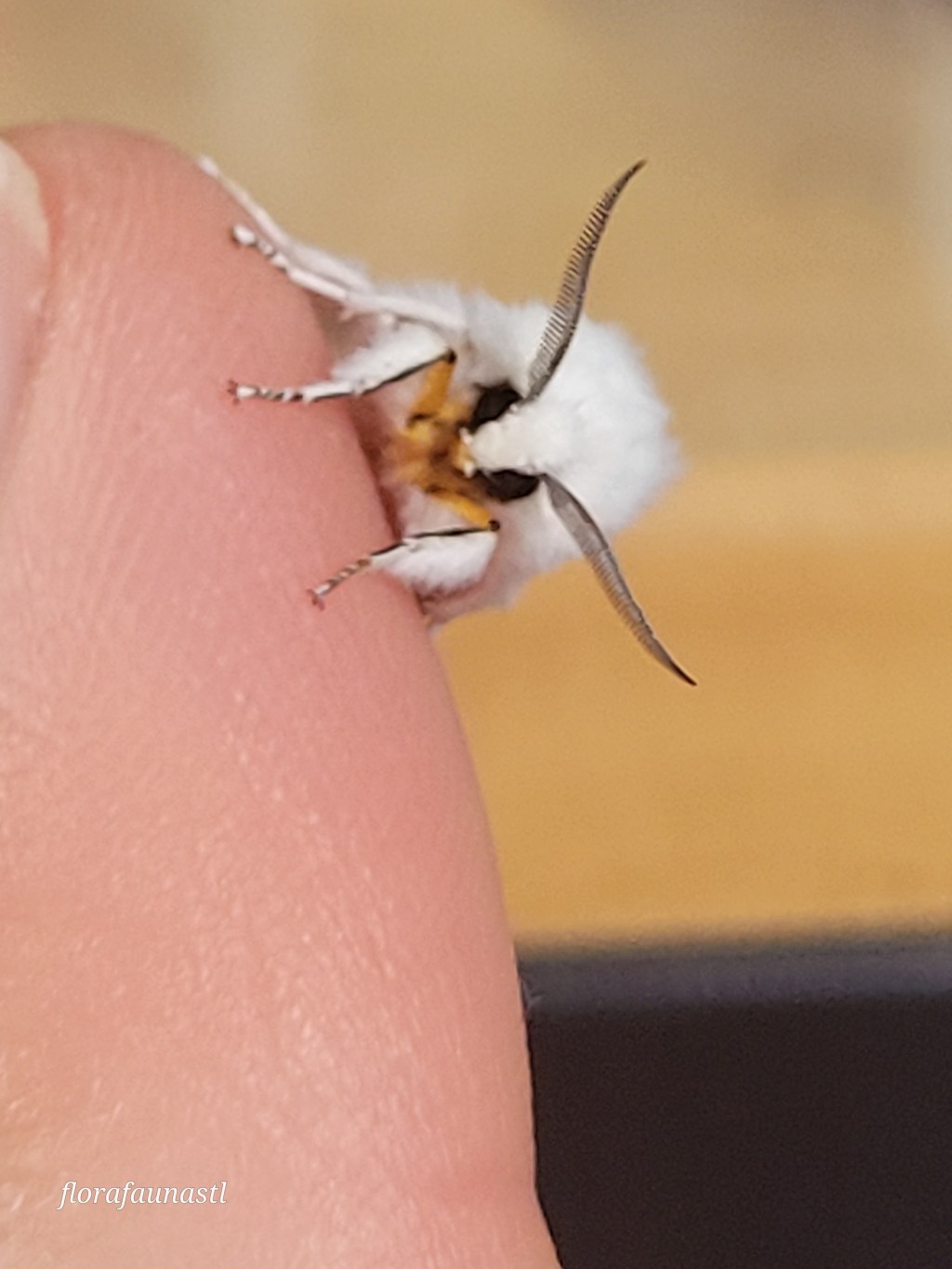
A few weeks after my son’s initial sighting, I happened to be outside with my net looking for a different insect and saw out of the corner of my eye a white-lined sphinx moth hovering over the honeysuckle. This time I was able to capture him and get some good footage and pictures, and he even hung out on my hand for a little bit. The kids clearly did not trust my initial ruling that what they saw was a moth and not a bird, as the phrase “It really was a moth.” was said with an air of disbelief a few times.
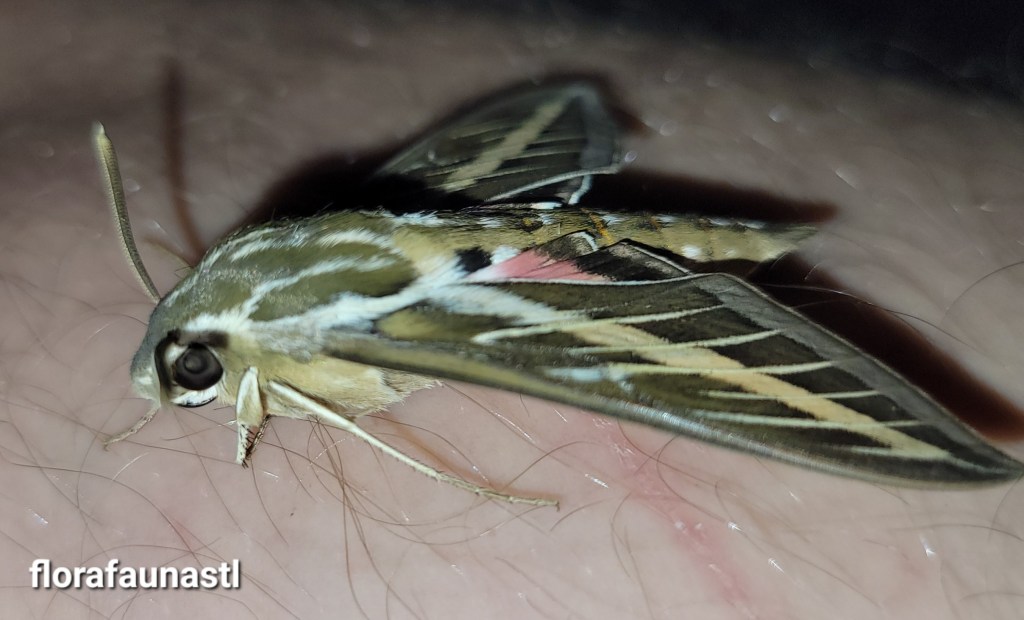
With these moths having ten to thirty days to live out their adult life, I did not want to keep him too long. These moths are preyed upon by a number of different species throughout their lifespan, with some of the top predators being mantids, birds, and bats. I envision the saga of predator versus prey being akin to a high-speed WW2 dogfight. The white-lined sphinx moth’s jet-styled wings beat up to 80 times per second, and they can travel at speeds of up to 30mph! This places them just behind dragonflies and lands them as some of the fastest-flying insects in the world. You can see why they are hard to catch, let alone get close to.
They have a wide variety of plants they will feed from, and their long proboscis (tongue) allows them to get into flowers with deep corolla tubes. As with all moths, they start their life off (after the egg) as caterpillars and maintain the reputation of having voracious appetites. Emerging from spring through fall, the caterpillars are not too picky and will eat a wide variety of plants. My garden has two of their favorite host plants: tomatoes and 4 O’clocks. The caterpillars can vary in colors ranging from bright green to brown and sport spots along their sides with a horned tail at the end, hence their nickname “hornworms”. Though this horned tail looks rather daunting, it is just for show and is actually soft to the touch. Please don’t tell the hornworms this, though, as they think they are pretty rad and dangerous.
When not eating and pretending to be dangerous, the caterpillars rest with their front legs raised and head tucked in. This is known as the “praying position”. This pose reminded a certain French zoologist, Pierre Andre’ Latreille, of the Great Sphinx of Egypt, thus the family name of Sphinx Moths (Sphingidae). The caterpillars have one other defense, besides that “horn”…they regurgitate their stomach contents along with a toxic goo. (This will keep coming up time and time again with insects, as we have already seen this with grasshoppers.) This, however, is typically not enough of a deterrent for birds or mantids but will stop ants.
Once they have had enough to eat, the caterpillars will dig a few inches into the earth and pupate. After a few weeks, they emerge as the fastest moth in the world, drinking nectar and mating. The larvae overwinter, and the lifecycle starts all over again. These moths are multivoltine, which means they will have multiple generations per year. The white-lined sphinx moth became my favorite moth the first time I saw one over ten years ago. After learning more about it and hanging out with one, I can safely say this will always be my favorite moth. While resting on my hand, its giant moth eyes looked deeply into my soul, and I realize now it was challenging me to a race. Keep an eye out next time you see a hummingbird feeding. I’ve learned quickly things aren’t always what they seem.

References:
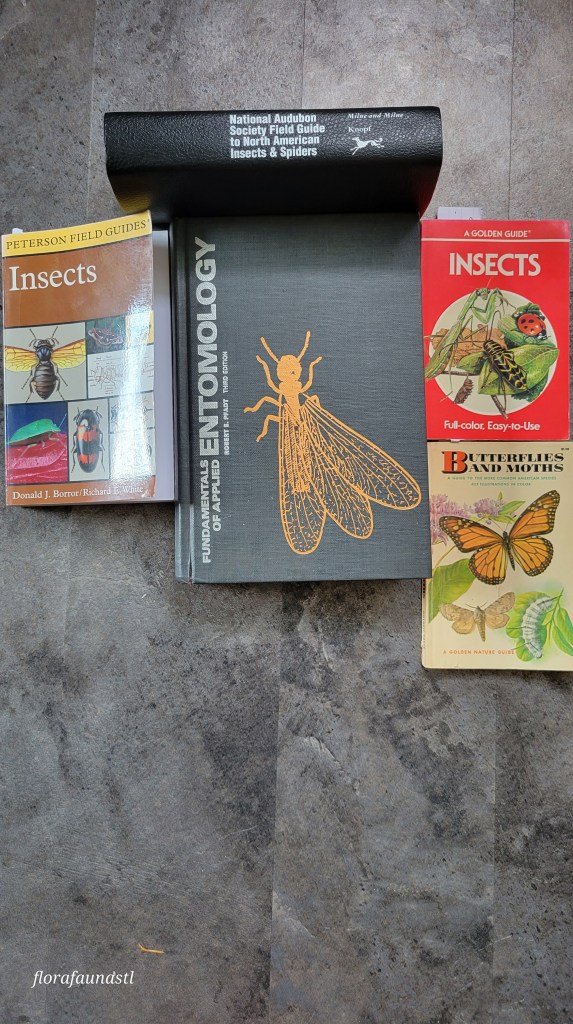
Milne, Lorus and Margery. (1980), The Audubon Society Field Guide to North American Insects and Spiders. Alfred A. Knopf, Inc., New York
Zim, H.S. and Cottam, C. (2001), Insects, St. Martin’s Press, New York
Borror, D. J. and White, R. E., (1970), Peterson Field Guides: Insects, Houghton Mifflin Company, Boston, New York
Pfadt, R. E., ( 1978), Fundamentals of Applied Entomology (3rd edition), Macmillan Publishing Co., INC., New York
Mitchell, R.T. and Zim, H. S., (1964), Butterflies and Moths A Guide To The More Common American Species, Golden Press, New York.
https://mdc.mo.gov/discover-nature/field-guide/white-lined-sphinx
 Flora Fauna STL
Leave a comment